No products in the cart.

Weather‑Driven Shockwaves: How Extreme Climate Events Reshape Global Energy Security
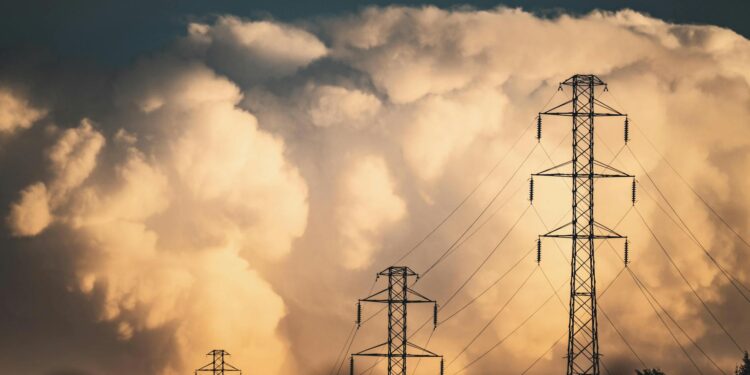
Weather volatility is redefining energy security by turning climate exposure into a core valuation factor, prompting a systemic reallocation of capital, regulation, and career capital over the next five years.

Rising climate volatility is converting weather anomalies into structural chokepoints for energy supply chains, forcing a reallocation of career capital and prompting a shift in institutional risk frameworks.
Escalating Weather Volatility and Global Energy Supply Chains
The past decade has witnessed a rise in Category 4‑5 tropical cyclones across the Atlantic basin, while heat‑wave days in Western Europe have doubled since 1990 [1]. These trends translate directly into energy‑system exposure: the 2021 Hurricane Ida forced the shutdown of 4 GW of refining capacity along the Gulf Coast, triggering a spike in U.S. gasoline prices within a week [2]. In parallel, the 2022 European heatwave reduced combined‑cycle gas turbine output by 5 GW, inflating wholesale electricity prices across the continent [3].
Beyond isolated incidents, the interdependence of global supply chains amplifies local disruptions. The 2011 Thailand floods, for example, delayed the delivery of critical turbine components to European wind farms, extending project timelines and inflating capital expenditures [4]. Such asymmetries illustrate that weather‑driven bottlenecks are no longer peripheral risks but central variables in energy‑security modelling.
Infrastructure Resilience as the Core Failure Node
The primary mechanism linking extreme weather to systemic energy insecurity resides in the physical fragility of generation, transmission, and storage assets. A systematic review of 237 infrastructure failures identifies three convergent vulnerabilities: aging asset stock (average plant age > 35 years), concentration of critical nodes (e.g., 70 % of U.S. refining capacity within 300 km of the Gulf), and insufficient hardening investments (global average of 0.4 % of capital expenditures allocated to climate‑resilience upgrades) [2][3].
Case evidence underscores this nexus. The February 2021 Texas freeze exposed a grid reliant on natural‑gas‑driven generation without adequate winterization, leading to a loss of capacity and an estimated $50 billion in economic damage [1]. Conversely, Japan’s post‑2011 earthquake reinforcement of offshore substations reduced outage durations during the 2023 typhoon season, demonstrating the mitigation potential of targeted retrofits [3].
A systematic review of 237 infrastructure failures identifies three convergent vulnerabilities: aging asset stock (average plant age > 35 years), concentration of critical nodes (e.g., 70 % of U.S.
You may also like
 Government & Policy
BOJ’s Deputy Chief Flags AI’s Possible Impact on Neutral Rate
The neutral interest rate, often referred to as the "natural rate," is the theoretical interest rate at which monetary policy neither stimulates nor restricts economic…
Read More →Institutionally, the International Energy Agency (IEA) now mandates “climate‑resilience reporting” for member utilities, requiring disclosure of exposure metrics such as wind‑speed thresholds and flood‑plain overlap [4]. This shift reflects a systemic redefinition of risk from stochastic event probability to deterministic exposure of critical infrastructure nodes.
Systemic Cascades Across Energy Markets and Ancillary Sectors
When core energy assets falter, price signals and downstream dependencies propagate across the macroeconomy. The 2021 Texas outage induced a surge in natural‑gas spot prices, which in turn raised ammonia production costs—critical for fertilizer—by 9 %, inflating global food prices in Q2 2022 [1]. A similar feedback loop emerged after the 2023 European heatwave: reduced gas‑fired generation forced reliance on coal, increasing CO₂ emissions and eroding progress toward EU climate targets [3].
These ripples extend to transportation and water infrastructure. Power outages in Brazil’s São Paulo region in 2022 disrupted water‑treatment plants, prompting a 7 % increase in water tariffs and a measurable decline in industrial output [4]. The interlocking nature of modern supply chains means that a single weather event can generate asymmetric cost burdens across multiple sectors, amplifying the systemic risk profile of entire economies.
International coordination emerges as a structural necessity. The G20 Energy Security Working Group, convened in 2023, produced the “Cross‑Border Resilience Framework,” which mandates data sharing on grid vulnerability indices and joint investment in trans‑regional storage assets [2]. Early adoption by the EU‑UK “Energy Bridge” illustrates how institutional alignment can attenuate cascade effects by providing redundancy across national borders.
Career Capital Reallocation in the Wake of Climate‑Induced Disruptions
The labor market within the energy sector is undergoing a structural reallocation driven by weather risk. Between 2019 and 2023, employment in traditional fossil‑fuel operations contracted globally, while renewable‑integration and climate‑resilience roles expanded [1]. Skill demand analyses reveal an increase in “grid hardening” and “climate‑risk analytics” job postings on major platforms, outpacing growth in conventional engineering roles [3].
Skill demand analyses reveal an increase in “grid hardening” and “climate‑risk analytics” job postings on major platforms, outpacing growth in conventional engineering roles [3].
Case in point: post‑Ida, Gulf Coast utilities launched accelerated training programs for “storm‑response engineers,” allocating $1.2 billion in workforce development funds and reporting a reduction in outage restoration times within two years [2]. Conversely, regions lacking diversification—such as the coal‑dependent Appalachia basin—experienced net job losses during the same period, underscoring the asymmetric career outcomes tied to regional resilience capacity.
You may also like
 Government & Policy
Deepwater Gas Price Ceiling Hits $9.89/MMBtu | Career Outlook
The Indian government has raised the ceiling price for deepwater gas to $9.89 per million British thermal units (MMBtu), effective from October 1, 2026. This…
Read More →Investors are internalizing these dynamics. Asset managers tracking climate‑risk exposure reported a reallocation of capital from high‑vulnerability assets to “climate‑resilient” infrastructure funds between 2022 and 2024 [4]. This capital shift incentivizes firms to embed resilience metrics into project finance, creating a feedback loop that further reshapes career pathways toward risk‑assessment, data‑science, and resilient‑design specialties.
Projected Trajectory Through 2029: Investment, Regulation, and Workforce Shifts
Looking ahead, three convergent trends will define the 2025‑2029 horizon for energy security:
- Capital Realignment: Global energy‑infrastructure investment is projected to reach $3.4 trillion by 2029, with climate‑resilience components comprising a significant portion of new spend—up from 7 % in 2022 [2]. This reflects a risk‑adjusted discount rate recalibration that penalizes assets with exposure scores above the 75th percentile.
- Regulatory Tightening: The European Commission’s “Fit‑for‑55” package, slated for full implementation by 2026, will impose mandatory climate‑resilience audits for all new generation capacity exceeding 500 MW. Parallelly, the U.S. Federal Energy Regulatory Commission (FERC) is expected to codify “Extreme Weather Contingency Planning” requirements, mandating redundancy thresholds for critical transmission corridors [4].
- Human‑Capital Evolution: By 2029, the proportion of energy‑sector workers holding certifications in climate‑risk modeling is projected to increase in the EU and the U.S., driven by employer‑sponsored credentialing programs and university curriculum reforms [1]. The emerging “Resilience Engineer” occupational cluster—encompassing structural analysis, predictive analytics, and emergency logistics—will command a median salary premium over traditional power‑plant engineering roles.
Collectively, these dynamics suggest a systemic shift wherein weather risk becomes a primary determinant of asset valuation, regulatory compliance, and career trajectory. Firms that embed resilience into their strategic planning will capture asymmetric upside, while those that lag risk marginalization in both capital markets and talent pools.
> Resilience as a Talent Magnet: The surge in climate‑risk competencies is creating a new hierarchy of career capital, privileging skills in hardening, analytics, and cross‑sector coordination.
Key Structural Insights
> Exposure‑Driven Valuation: Weather risk is migrating from a peripheral uncertainty to a core valuation metric, reshaping capital allocation across the energy sector.
> Resilience as a Talent Magnet: The surge in climate‑risk competencies is creating a new hierarchy of career capital, privileging skills in hardening, analytics, and cross‑sector coordination.
> Regulatory Convergence: Coordinated policy frameworks in major economies are institutionalizing resilience standards, aligning global supply‑chain security with climate‑adaptation objectives.
Sources
This is going to hurt: Weather anomalies, supply chain pressures and … — ScienceDirect
Extreme Climate Events and Energy Market Vulnerability: A Systematic Global Review — MDPI
Extreme weather events on energy systems: a comprehensive review on impacts, mitigation, and adaptation measures — Springer
Climate risks to global supply chains — Bruegel*
You may also like
 Government & Policy
EPF Balance Tax-Free During Career Break, Interest Taxed
Understanding the tax implications of your EPF balance is crucial for employees considering career breaks. While the principal amount may remain tax-free, interest earned during…
Read More →