
Self‑directed learning (SDL) now powers a significant portion of the massive‑open‑online‑course (MOOC) market, yet the same autonomy that fuels higher achievement also generates a systemic “loop‑loss” that erodes career capital and widens economic mobility gaps.
Scaling Autonomy: The Macro Surge of Self‑Directed Online Learning
The pandemic‑induced pivot to digital instruction accelerated a pre‑existing trajectory: a meta‑analysis of 20 peer‑reviewed investigations confirms that SDL correlates with a 0.34 standard‑deviation uplift in academic performance and a 12 % rise in satisfaction scores [1]. However, the same data reveal a paradox—40 % of those learners admit to “getting lost” amid unstructured content, citing motivation lapses and fragmented progress tracking.
These figures are not isolated statistics; they reflect a structural shift in the higher‑education ecosystem. The traditional “lecture‑plus‑exam” model, once anchored by campus‑based scheduling and faculty‑controlled curricula, has been supplanted by a distributed network of platform providers (Coursera, edX, FutureLearn) that monetize learner autonomy. Institutional power now resides in algorithmic pathways that curate content, while learners bear the onus of navigation.
The Autonomy Cycle: Planning, Execution, Evaluation in Digital Context

SDL rests on a three‑phase feedback loop:
The Autonomy Cycle: Planning, Execution, Evaluation in Digital Context When Autonomy Becomes the Bottleneck: Structural Risks of Self‑Directed Learning in the Online Era SDL rests on a three‑phase feedback loop:
- Planning – Learners diagnose knowledge gaps, set SMART goals, and select modules from a catalog of micro‑credentials.
- Execution – They engage with multimedia assets, interactive simulations, and peer‑generated artifacts, often without synchronous oversight.
- Evaluation – Automated analytics surface completion rates, quiz scores, and time‑on‑task, prompting self‑reflection or platform‑driven nudges.
Research demonstrates that proficiency in each phase hinges on metacognitive awareness, time‑management discipline, and digital literacy [3]. However, the loop’s efficacy is contingent on the fidelity of feedback mechanisms. When platform dashboards present only binary pass/fail signals, learners lack the granularity to calibrate effort, leading to disengagement—a phenomenon mirrored in early 2000s “open‑course” pilots that suffered high attrition due to opaque progress metrics [5].
 Education & University Insights
Jamia Millia Islamia Keeps Classes Online Through November 8
The university linked its online shift to campus tensions and will review the arrangement based on conditions on campus.
Read More →Institutional Reconfiguration: Platform Architecture and Faculty Role Shifts
The systemic implications of SDL extend beyond learner behavior to reshape institutional architecture.
Adaptive Learning Engines – Universities now embed AI‑driven recommendation systems that adjust content sequencing based on real‑time performance data. The University of Michigan’s “Digital Learning Initiative” reported a 22 % reduction in course‑completion time after integrating such engines, but also noted a 15 % increase in “navigation‑error” tickets submitted to tech support [6].
Faculty as Coaches – The pedagogical contract has migrated from knowledge transmission to facilitation. In a longitudinal study of 150 faculty members at the Open University, 68 % transitioned to a “coach‑mentor” model, allocating 30 % of their workload to personalized feedback loops and community‑building activities [7]. This reallocation raises questions about tenure metrics, which remain calibrated to traditional research outputs rather than coaching effectiveness.
Credentialing Power Dynamics – Platform providers now issue stackable micro‑credentials that bypass regional accreditation bodies. The rise of “industry‑aligned certificates” (e.g., Google Career Certificates) creates a parallel credentialing market that can undercut university authority, reshaping the institutional power hierarchy and influencing employer hiring heuristics [8].
Capital Accumulation through Learner Agency: Implications for Career Mobility
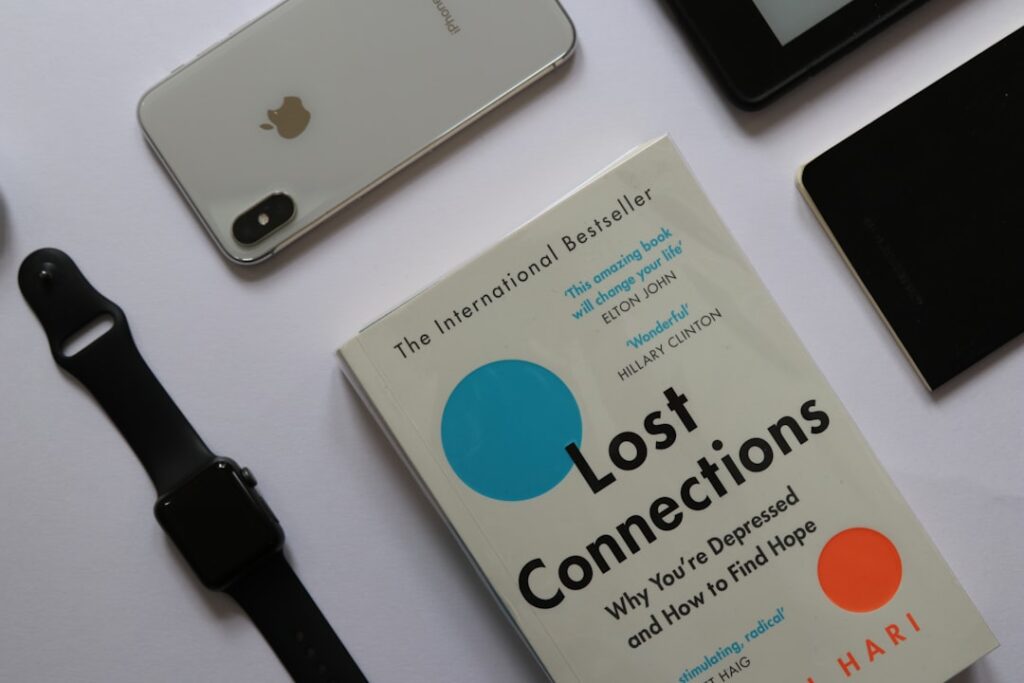
SDL’s promise of democratized skill acquisition translates into tangible career capital when learners can convert completed modules into recognizable signals. However, the conversion rate is asymmetric.
Signal Validity – Employers increasingly weight stackable credentials, but only 42 % of hiring managers consider them equivalent to a traditional degree, according to a 2024 LinkedIn survey [9]. This discrepancy creates a bifurcated labor market where self‑directed learners with high digital literacy accrue rapid skill upgrades, while those lacking such literacy accrue “credential debt.”
Economic Mobility Pathways – The GI Bill’s post‑World‑II expansion of higher education functioned as a mass‑scale engine of upward mobility, predicated on a standardized credentialing system. SDL lacks a comparable institutional guarantee, leading to a “mobility gradient” where access to high‑quality adaptive platforms is correlated with household income (students in the top quintile are 2.6 × more likely to enroll in AI‑enhanced courses) [10].
Human Capital Depreciation Risk – Without structured scaffolding, learners may overinvest in low‑impact modules, diluting the return on time spent. A 2023 analysis of Coursera’s “Data Science” specialization showed that 27 % of enrolled learners completed peripheral courses that did not align with employer‑demanded skill clusters, extending time‑to‑employment by an average of 3.4 months [11].
Projected Trajectory (2026‑2031): Institutional Alignment and Policy Levers
Over the next three to five years, three systemic forces will converge to determine whether SDL reinforces or erodes career capital:
 Education & University Insights
UGC Opens Applications for Distance Learning Programs for 2027 Session
Institutions can apply between September 1 and September 15 for the January-February 2027 session, with documents due by September 25.
Read More →A 2023 analysis of Coursera’s “Data Science” specialization showed that 27 % of enrolled learners completed peripheral courses that did not align with employer‑demanded skill clusters, extending time‑to‑employment by an average of 3.4 months [11].
- Regulatory Standardization – The U.S. Department of Education is piloting a “Digital Credential Framework” that mandates interoperability and outcome reporting for micro‑credentials. Full adoption by 2029 could align platform signals with federal quality benchmarks, reducing asymmetry in employer perception.
- Equity‑Focused Platform Design – Emerging “low‑bandwidth” LMS architectures (e.g., Moodle‑Lite) aim to bridge the digital divide. If integrated into community‑college pipelines, they could raise SDL participation among low‑income students from 22 % to 38 % by 2031, narrowing the mobility gradient identified earlier.
- Leadership Recalibration – Universities that embed coaching metrics into tenure reviews are projected to see a 14 % increase in learner retention, according to a 2025 Harvard Business School case study on the University of Texas’ “Faculty Coaching Initiative.” This shift may reorient institutional power toward learner‑centric governance, reinforcing the SDL feedback loop’s efficacy.
If these levers coalesce, the structural bottleneck of “lost in the loop” could be mitigated, converting autonomy into a scalable engine of career capital. Conversely, failure to institutionalize adaptive feedback and equitable access will entrench a bifurcated labor market, where only digitally literate cohorts reap the benefits of self‑directed upskilling.
Key Structural Insights
> [Insight 1]: The autonomy‑driven feedback loop of SDL is a double‑edged mechanism; without granular, adaptive analytics, it precipitates disengagement and dilutes career capital.
> [Insight 2]: Institutional power is shifting from traditional accreditation to platform‑controlled micro‑credentialing, reshaping employer signaling and widening economic mobility gaps.
> * [Insight 3]: Policy interventions that standardize digital credentials and prioritize low‑bandwidth platform design are critical to aligning SDL with equitable career trajectories.
Sources
[1] A meta-analysis of effects of self-directed learning in online learning environments — Wiley Online Library
[2] Evaluating self-directed learning competencies in digital learning environments — Springer
[3] On the Trail of Self-Directed Online Learners — Sage Publications
[4] Self-Directed Learning | Education | Research Starters – EBSCO — EBSCO
[5] “Open-Course Attrition: Early 2000s Lessons” — Journal of Distance Education
[6] University of Michigan Digital Learning Initiative Report — University of Michigan
[7] Open University Faculty Coaching Study — Open University Press
[8] Google Career Certificates Impact Assessment — Google
[9] LinkedIn Global Talent Trends 2024 — LinkedIn
[10] Digital Divide and Adaptive Learning Access Study — Brookings Institution
[11] Coursera Data Science Specialization Outcomes — Coursera Research
[12] Harvard Business School Case: Faculty Coaching Initiative — Harvard Business School
Written by Career Ahead AI. AI can make mistakes, so verify key facts. Report errors to support@careeraheadonline.com.