No products in the cart.

Why Physical AI is Revolutionizing Manufacturing Efficiency

Discover how physical AI is transforming manufacturing by enhancing efficiency, trust, and human collaboration. Learn about its advantages and future impact.

“`html
The Rise of Physical AI in manufacturing
For decades, factories aimed for machines that never tire, continuous production, and lower costs. While automation achieved these goals, labor shortages, product complexity, and rapid innovation have challenged traditional robotics and AI. Enter physical AI—intelligent systems that can perceive, reason, and act in the complex world of manufacturing.
Physical AI combines sensors and actuators with high-resolution perception (like vision and lidar) and real-time decision-making. When a robot detects a misaligned component, it doesn’t just stop; it assesses the issue, adjusts its actions, and, if safe, corrects the problem immediately. This represents a shift from isolated AI tools to reliable intelligence that can handle the uncertainties of manufacturing.
Boosting Efficiency: Moving Beyond Traditional Automation
The New Industrial Challenge: Intelligence and Trust
Initial AI applications in factories focused on narrow tasks like scheduling and maintenance, yielding cost savings but also creating new challenges, such as skill gaps and governance issues. Now, manufacturers are shifting their focus from how much work machines can replace to how AI can enhance human capabilities, speed up innovation, and create new value while remaining trustworthy.
Success in this new landscape hinges on two key factors:
- Intelligence: AI must understand the specific data flows, workflows, and safety requirements of the factory, rather than relying on generic models.
- Trust: In high-stakes environments, manufacturers need security, governance, and transparency at every level. Explainability and accountability are as crucial as efficiency.
Physical AI integrates these elements. By embedding perception into the control loop, it minimizes delays between detection and response, allowing machines to adapt without human intervention. For example, a semiconductor factory used vision-enabled robotic arms to detect particle contamination in real time, rerouting affected wafers without stopping production, thus saving days in cycle time and maintaining yield.
Success in this new landscape hinges on two key factors:
You may also like
 AI & Technology
AI‑driven skill churn reshapes career capital
A measurable share of mid‑skill roles face redesign, prompting a race between talent pipelines and corporate retraining.
Read More →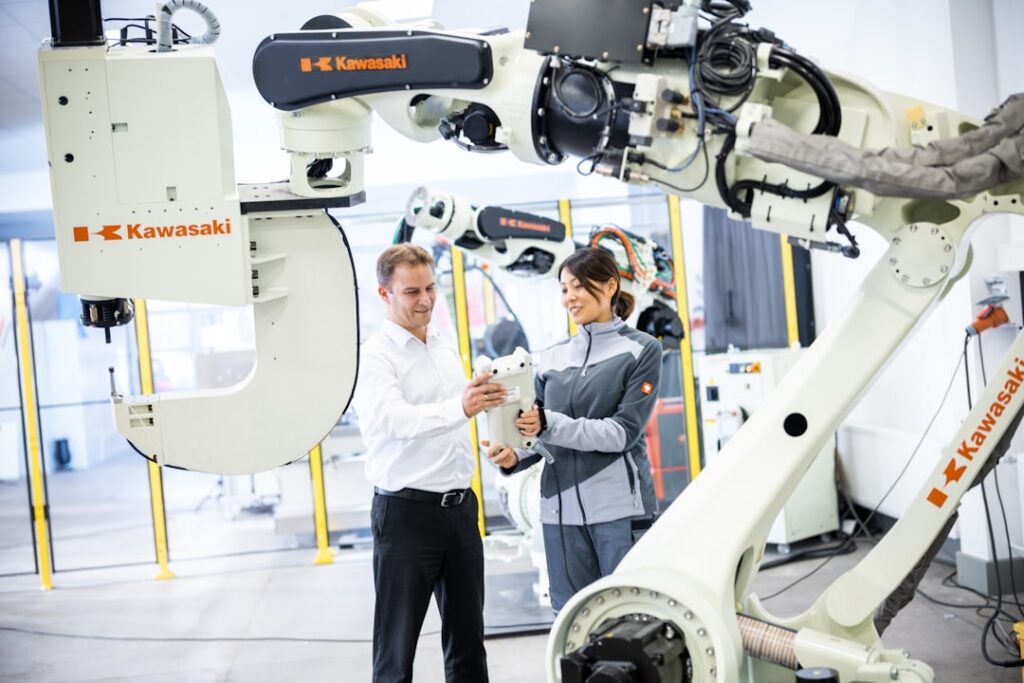
Manufacturing as a Testing Ground
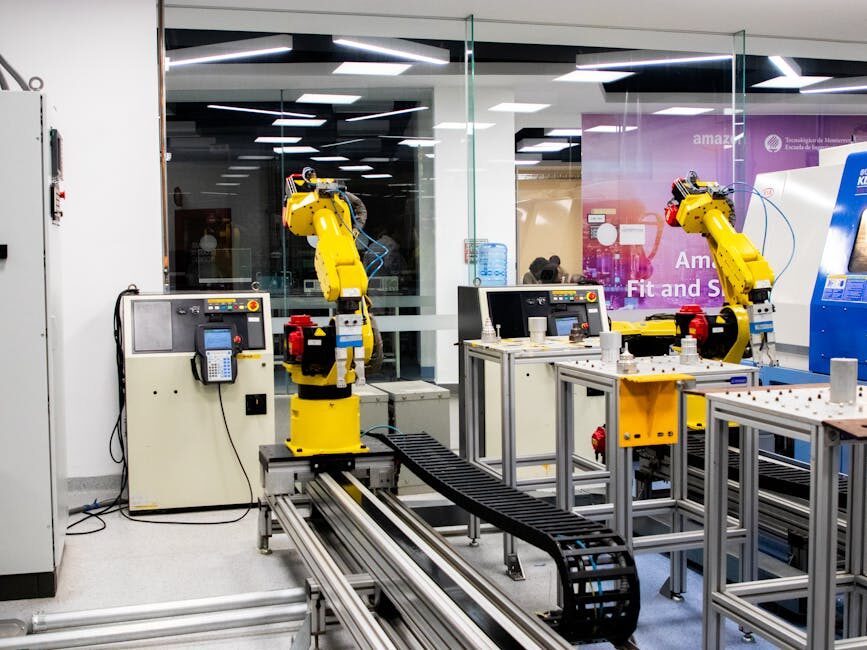
The manufacturing sector is ideal for testing physical AI at scale. Unlike digital environments, factories have strict constraints—safety, material properties, and regulations—that require thorough validation. An AI that can coordinate machines, adapt to real-world changes, and work alongside operators shows a robustness hard to find elsewhere.
Partnerships like Microsoft and NVIDIA are advancing this ecosystem. Cloud-based AI services, powered by GPUs, are now paired with edge-ready runtimes for real-time processing on the factory floor. This shift enables manufacturers to move from small pilots to large-scale deployments, transforming physical AI from a novelty into a strategic asset.
Building Trust: Essential for AI Adoption in Factories
Security, Governance, and Observability
Trust is built through concrete measures. Security starts with robust edge devices to protect sensor data. Governance frameworks must clarify who can modify models, how changes are tracked, and how model drift is monitored. Observability—tracking decisions, sensor inputs, and actuator outputs—allows engineers to trace every AI action.
Manufacturers with these controls see higher adoption rates. For instance, an automotive supplier that implemented a layered access model and real-time dashboards saw a 30% increase in operators willing to delegate routine inspections to AI systems.
Workforce Evolution: Skills and Human-AI Collaboration
The rise of physical AI is reshaping jobs. Traditional roles like machine operator and technician are evolving into hybrid positions that combine domain expertise with data skills. Workers now interpret AI recommendations, intervene when necessary, and provide feedback to improve AI performance.
Upskilling programs are emerging to fill this gap. Companies are investing in training that covers sensor calibration, edge computing, and AI ethics. For example, a midsize aerospace parts manufacturer trained its maintenance crew in model validation, resulting in a 22% reduction in unscheduled downtime as technicians diagnosed AI alerts before they escalated.
You may also like
 AI & Technology
Apple’s AI Strategy Excluded from Trump’s Guest List
This absence is notable for several reasons. First, it highlights Apple's unique approach to AI compared to its competitors.
Read More →Workforce Evolution: Skills and Human-AI Collaboration The rise of physical AI is reshaping jobs.
This partnership model emphasizes augmentation, not replacement. Physical AI takes on repetitive tasks, allowing skilled workers to focus on problem-solving and innovation. This shift reduces the risk of job loss and fosters a culture where human intuition and machine precision enhance each other.
Transparency and Explainability in Action
Explainability is crucial for trust. When an AI robot adjusts a setting, operators need to understand why. Modern physical AI platforms include explainable AI (XAI) modules that display relevant sensor data and confidence levels behind decisions. Visual dashboards highlight the features that triggered actions.
This transparency fosters collaboration. In a pilot at a consumer electronics plant, operators who understood the AI’s reasoning reported greater confidence and were more willing to accept automated adjustments, speeding up technology adoption.
Strategic Outlook: Physical AI as the Future of Manufacturing
Physical AI is set to be a key driver of manufacturing competitiveness in the coming decade. By integrating perception, reasoning, and action into a single, trustworthy system, it achieves efficiencies beyond traditional automation. The impact spans three key areas:
- Operational agility: Factories can quickly adjust production lines, respond to supply chain issues, and customize products without costly retooling.
- Quality improvement: Real-time defect detection and autonomous corrections enhance yield rates and reduce waste, boosting profits.
- Faster innovation: Engineers receive immediate feedback from AI-enhanced prototypes, shortening the design-to-production cycle.
Companies that invest early in this intelligence-trust framework will capture these advantages and help shape industry standards. As physical AI evolves, we can expect a new ecosystem of service providers—hardware vendors, AI marketplaces, and compliance auditors—contributing to a resilient and high-performing manufacturing landscape.
<img width="1024" height="784" src="https://careeraheadonline.com/wp-content/uploads/2026/03/dRMQiAubdws-1024×784.jpg" class="oaa-inline-image" alt="" style="display:block; margin:20px auto; max-width:100%; height:auto; border-radius:8px;" decoding="async" srcset="https://careeraheadonline.com/wp-content/uploads/2026/03/dRMQiAubdws-1024×784.jpg 1024w, https://careeraheadonline.com/wp-content/uploads/2026/03/dRMQiAubdws-300×230.jpg 300w, https://careeraheadonline.com/wp-content/uploads/2026/03/dRMQiAubdws-768x
You may also like
 AI & Technology
Feds Cook sees AI inflationary push as a top 2027 risk
Federal Reserve Governor Lisa Cook highlights AI as a significant inflationary risk for 2027, emphasizing the potential for persistent supply shocks and the need for…
Read More →