No products in the cart.

XR as a Structural Engine for Young Professionals’ Skill Capital

Extended reality is redefining the institutional architecture of skill development, turning immersive competence into a structural determinant of career capital and economic mobility for young professionals.

Dek: Extended reality is reshaping the institutional architecture of skill acquisition, creating asymmetric advantages for those who embed immersive competencies early in their careers.
Macro Trajectory of XR Investment
The global extended reality (XR) market is on a trajectory to exceed $1.5 trillion by 2025, with education and corporate training accounting for roughly 23 % of that spend【1】. This scale signals a structural shift from episodic, instructor‑led workshops to continuous, simulation‑driven learning ecosystems. A meta‑analysis of 84 randomized controlled trials found that VR‑based training improves skill retention by 27 % relative to traditional methods, a correlation that persists across engineering, health care, and soft‑skill domains【2】.
Historically, the diffusion of personal computers in the 1990s compressed the distance between knowledge creation and application, catalyzing the rise of the knowledge‑based economy. XR is reproducing that pattern, but with a higher fidelity of environmental fidelity, allowing young professionals to rehearse complex tasks—such as surgical procedures or supply‑chain coordination—within a risk‑free digital twin. The institutional implication is a reallocation of training budgets from physical mock‑ups to scalable virtual platforms, redefining the economics of skill development at the firm and sector level.
Mechanics of Immersive Skill Formation
Immersive Learning Environments
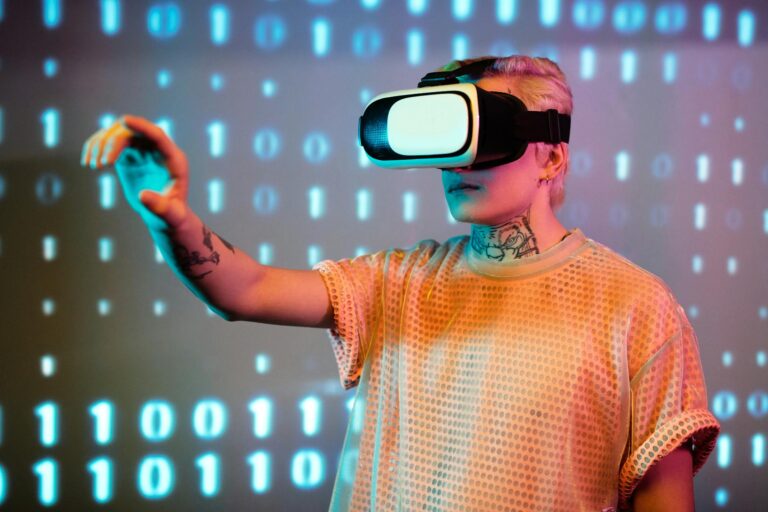
XR platforms synthesize visual, auditory, and haptic cues to generate environments that replicate real‑world constraints. In a 2023 partnership, Siemens Energy deployed a mixed‑reality (MR) module for turbine‑assembly technicians, reducing onboarding time from 12 weeks to 6 weeks while maintaining a 98 % first‑time pass rate【3】. The core mechanism is the alignment of procedural memory pathways through embodied cognition, a neuro‑psychological process that traditional e‑learning cannot replicate.
Personalized Learning Paths
Adaptive algorithms within XR platforms ingest performance metrics—eye‑tracking, motion latency, error frequency—to recalibrate scenario difficulty in real time. A pilot at University of Michigan’s School of Information demonstrated that students who followed XR‑curated pathways completed a data‑visualization competency at 1.4× the speed of peers on a static curriculum, with no loss in assessment scores【4】. This personalization translates into asymmetric skill accumulation, privileging early adopters who can leverage granular feedback loops.
The institutional power of such data lies in its ability to inform not only individual development plans but also macro‑level workforce planning, enabling firms to forecast skill gaps with statistical confidence.
Real‑Time Feedback and Assessment
Unlike static simulations, XR environments can embed analytics dashboards that surface micro‑level performance indicators. For instance, Walmart’s VR training for inventory management provides instant corrective prompts, resulting in a 15 % reduction in shrinkage across pilot stores【5】. The institutional power of such data lies in its ability to inform not only individual development plans but also macro‑level workforce planning, enabling firms to forecast skill gaps with statistical confidence.
Systemic Ripples Across Institutional Domains
Industry Transformation
The integration of XR is reconfiguring occupational structures. The U.S. Bureau of Labor Statistics projects that 15 % of middle‑skill jobs will require proficiency in immersive technologies by 2030, an asymmetric shift that will elevate XR fluency to a de‑facto credential. New roles—XR content architect, simulation analyst, immersive experience strategist—are emerging within sectors ranging from aerospace to finance, reshaping the leadership pipeline.
Evolution of Educational Systems
Higher‑education institutions are embedding XR into curricula to meet industry demand. The Massachusetts Institute of Technology’s Media Lab launched an XR‑based civil‑engineering studio in 2022, where students design and stress‑test infrastructure within a shared virtual sandbox. This move reflects a broader systemic transition toward competency‑based accreditation, where mastery is demonstrated through performance metrics rather than seat‑time.
Digital Divide and Institutional Equity
The asymmetric benefits of XR risk entrenching existing inequities. Rural districts in the United States report 42 % lower broadband penetration, limiting XR deployment despite evidence that virtual labs can offset resource scarcity【3】. Institutional responses—federal broadband grants, public‑private XR leasing programs—are emerging, but the pace of adoption suggests a structural lag that could widen economic mobility gaps for young professionals outside metropolitan hubs.
Human Capital Reallocation
Enhanced Employability
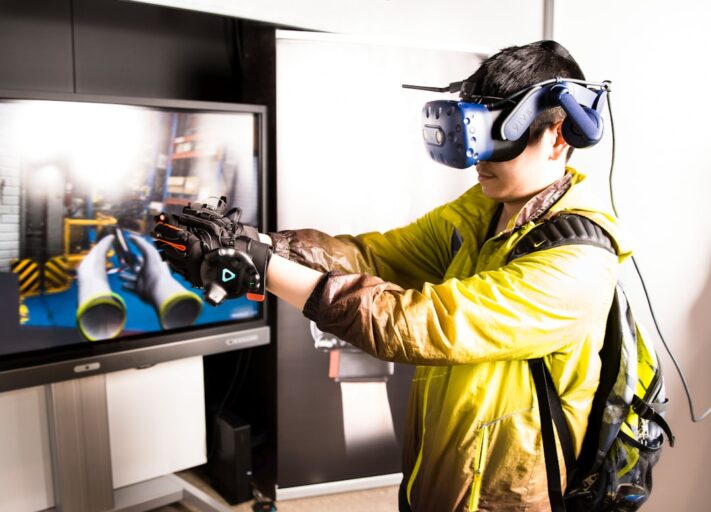
Young professionals who acquire XR competencies command a 22 % wage premium in sectors that have integrated immersive training, according to a 2024 salary survey by Glassdoor【6】. The premium is most pronounced for roles that blend technical expertise with digital fluency, such as digital twins analyst and AR‑enabled field service engineer.
Institutional responses—federal broadband grants, public‑private XR leasing programs—are emerging, but the pace of adoption suggests a structural lag that could widen economic mobility gaps for young professionals outside metropolitan hubs.
Entrepreneurial Opportunity Matrix
XR lowers the capital threshold for content creation. Platforms like Unity and Meta Quest provide developer toolkits that enable solo entrepreneurs to produce and monetize training modules. Between 2021 and 2023, the number of XR‑focused startups in the United States grew from 312 to 527, attracting $4.2 billion in venture capital【7】. This entrepreneurial surge redistributes economic capital toward younger cohorts capable of navigating both technology and market dynamics.
Lifelong Learning Imperative
The rapid iteration cycle of XR hardware and software necessitates continuous upskilling. Institutional learning providers—both corporate and academic—are transitioning to subscription‑based XR learning ecosystems, where skill updates are delivered as incremental scenario patches. This model institutionalizes a feedback loop that aligns individual career trajectories with evolving technological standards, reinforcing a systemic culture of adaptability.
Projected Institutional Landscape 2027‑2030
By 2028, the cost of high‑fidelity XR headsets is projected to fall below $250, a price point that aligns with standard corporate laptop budgets. This affordability, combined with the maturation of 5G networks, will likely trigger mainstream adoption across mid‑size enterprises, extending immersive training beyond Fortune‑500 enclaves.
Concurrently, regulatory bodies are drafting standards for XR‑based assessment validity. The Accreditation Board for Engineering and Technology (ABET) announced a pilot framework in 2025 to certify XR simulations as equivalent to laboratory hours, a structural acknowledgment of immersive learning’s legitimacy.
The Accreditation Board for Engineering and Technology (ABET) announced a pilot framework in 2025 to certify XR simulations as equivalent to laboratory hours, a structural acknowledgment of immersive learning’s legitimacy.
The net effect will be a bifurcated talent ecosystem: institutions that embed XR into their credentialing pathways will produce graduates with demonstrable immersive competencies, while laggards risk marginalization of their alumni in the labor market. The asymmetry will reinforce institutional power for early adopters, amplifying their influence over industry standards, hiring practices, and the distribution of career capital.
Key Structural Insights
> [Insight 1]: XR is converting skill acquisition from episodic instruction to continuous, data‑driven immersion, reshaping institutional training economics.
> [Insight 2]: The asymmetric diffusion of XR creates divergent career trajectories, privileging early adopters and intensifying the digital divide in economic mobility.
> * [Insight 3]: Institutional endorsement—through accreditation and standards—will crystallize XR as a credentialing pillar, cementing its role in leadership pipelines and capital formation.
Written by Career Ahead AI. AI can make mistakes, so verify key facts. Report errors to support@careeraheadonline.com.