No products in the cart.

VR Mentors: How Immersive Training Is Redefining Soft-Skill Learning

Virtual reality delivers measurable gains in communication, teamwork, and conflict-resolution, yet it cannot fully replace the nuanced guidance of human mentors. Hybrid programs that combine immersive simulations with live coaching are emerging as the most effective path for soft-skill development.

Virtual reality is delivering measurable gains in communication, teamwork, and conflict-resolution, but it still can’t replace the nuance of a human coach.
The Limits of Traditional Soft-Skill Training
Conventional seminars often rely on lecture-style delivery, role-play scripts, and generic case studies. This approach leads to low engagement and retention rates, with only 30% of learners retaining information, according to Cornerstone’s 2025 L&D benchmark. Soft skills, such as communication, empathy, and teamwork, are essential for future-ready workers, but they remain the hardest to teach.
The Rise of Virtual Reality in Learning and Development
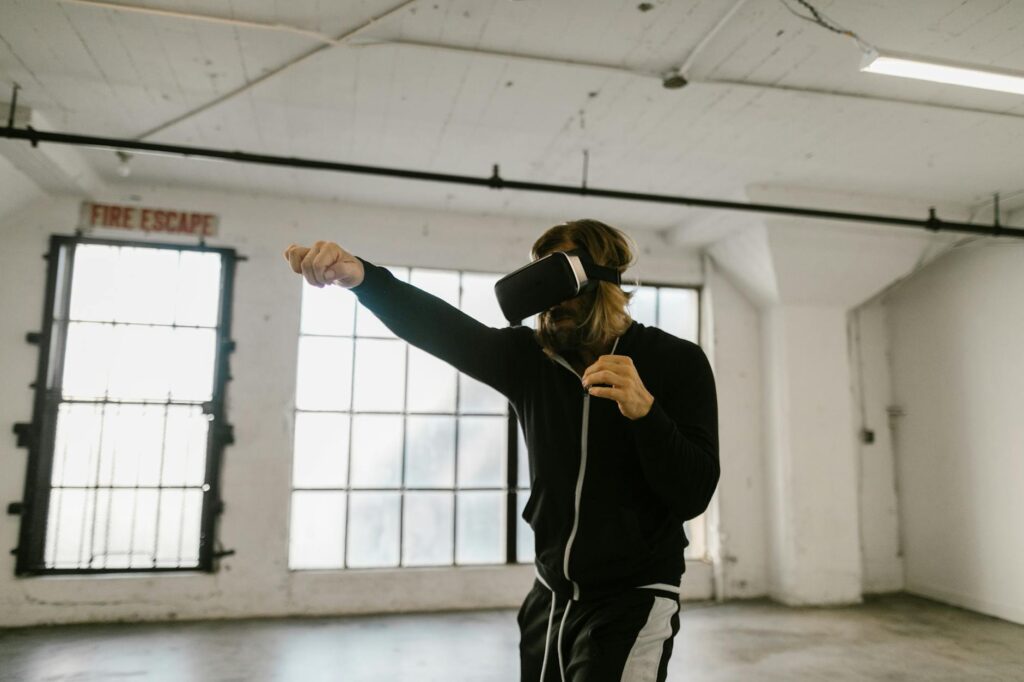
Virtual reality is changing the game. In 2023, a police department piloted a full-body VR system to train officers in de-escalation. Participants reported a 22% reduction in physiological stress markers, and post-training assessments showed a 15% improvement in verbal negotiation scores. Companies like Accenture and Walmart have rolled out VR modules for onboarding and customer-service simulations.
The Future of Work and Skill Development The future of work hinges on continuous learning.
The Future of Work and Skill Development
The future of work hinges on continuous learning. A 2024 Gartner survey found that 68% of CEOs plan to double investment in soft-skill development over the next three years. Failure to close the soft-skill gap can cost organizations up to 12% of annual revenue in lost productivity and turnover.
Implementing Virtual Reality Training for Soft Skills

Forward-thinking organizations are tackling the challenges of VR adoption. A joint venture between IBM and the nonprofit Learning Equality launched a low-cost VR kit that runs on a smartphone and a cardboard headset. Pilot programs in Kenyan call centers showed a 30% increase in customer-satisfaction scores after four weeks of VR role-play.
The Hybrid Approach
Human mentors remain in the loop. Many firms pair VR sessions with live debriefs led by senior coaches. The coach interprets the data, adds context, and helps learners translate virtual experiences into real-world actions. This hybrid model appears to capture the best of both worlds: the scalability and repeatability of VR, and the empathy and judgment of a human guide.
Career Angle
You may also like
 Career Guidance
TS Inter Results 2026 LIVE and the New Career Landscape in 2026
The TS Inter Results 2026 reveal significant trends in pass rates and gender disparities among students in Telangana, India. With Class 11 and Class 12…
Read More →For job seekers, VR certifications are gaining traction. Platforms like Coursera now offer a “VR-Enabled Soft-Skill Certificate” that includes a portfolio of recorded simulations. Recruiters at tech firms report that candidates who can demonstrate VR-based conflict-resolution scores receive a 15% boost in interview ratings.
Outlook – The Potential of Virtual Reality to Revolutionize Soft-Skill Training
As headsets become lighter and cloud rendering cuts hardware costs, VR is poised to become a mainstream training tool. The next generation of avatars will be powered by large-language models, enabling more natural, culturally aware interactions. Researchers anticipate that by 2030, VR-based soft-skill curricula will account for at least 25% of corporate L&D budgets.