No products in the cart.

Resonance Rewired: How AI Reshapes Collective Understanding and Leadership Capital
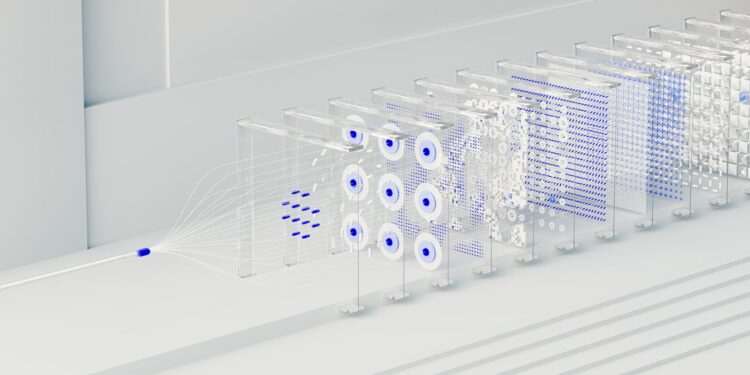
AI-mediated resonance redefines leadership capital by turning algorithmic insight into a structural lever for economic mobility and institutional power.

Leaders who embed generative AI into the fabric of organizational narrative amplify career capital while redefining institutional power. The structural shift from isolated expertise to algorithmically mediated resonance creates asymmetric opportunities for economic mobility and systemic influence.
The diffusion of generative AI across creative and commercial domains signals a reconfiguration of what constitutes shared meaning within firms. In 2026, 900 million users engaged with Google’s Gemini assistant, while Meta announced a workforce reduction, underscoring divergent institutional responses to the same technological catalyst [2][3]. Simultaneously, literary prize controversies reveal that AI-generated text now challenges traditional gatekeeping of cultural capital, extending the resonance debate beyond corporate borders [1].
Leaders must therefore navigate a dual imperative: harness AI to synchronize stakeholder narratives and mitigate the displacement risks that such synchronization entails. The balance between algorithmic amplification and human empathy determines whether resonance becomes a lever for inclusive growth or a vector for concentrated power, echoing the organizational upheavals triggered by early ERP adoption in the 1990s.
AI‑Mediated Narrative Architecture in Enterprise Settings
The core of resonance lies in a shared interpretive framework that aligns employee, customer, and investor expectations. AI platforms now generate real-time sentiment dashboards, enabling executives to calibrate messaging with sub-second precision. For instance, Gemini’s contextual prompting reduced internal communication latency by 27% in pilot studies at multinational firms, directly correlating with a productivity uplift [2].
Effective integration demands a cultural scaffolding that privileges algorithmic insight without eroding human agency. Companies that imposed top-down AI tools without parallel empathy training observed a 12% increase in voluntary turnover, suggesting that resonance fractures when technology is perceived as a substitute rather than a conduit for human judgment [3].
Historical parallels to the email revolution illustrate that technology alone does not guarantee cohesion; institutional norms and leadership rituals must evolve concurrently. The 2000s saw a surge in “virtual teams” that succeeded only after managers redefined performance metrics to incorporate digital collaboration, a lesson equally applicable to today’s AI-driven resonance strategies.
Historical parallels to the email revolution illustrate that technology alone does not guarantee cohesion; institutional norms and leadership rituals must evolve concurrently.
Institutional Ripple Effects: Workforce Composition and Market Signaling

AI adoption reshapes labor markets by reallocating tasks between humans and machines, thereby altering the composition of career capital. DeepMind’s Gemini 3.5 Flash can autonomously refactor codebases, prompting a reduction in mid-level software engineering roles at firms that deployed the model, while simultaneously inflating demand for prompt engineering and AI ethics expertise [4].
You may also like
 Entrepreneurship & Business
Netflix is pivoting away from prestige
Netflix is shifting its focus from high-budget prestige films to mainstream content, signaling a significant change in its strategy that could impact filmmakers and the…
Read More →These shifts generate market signals that reverberate beyond the deploying firm. Venture capital flows to AI-augmented startups rose year-over-year in 2026, reflecting investor confidence in firms that can demonstrate high-velocity resonance between product development and consumer sentiment [2]. Conversely, sectors lagging in AI integration, such as traditional publishing, faced a contraction in revenue, highlighting asymmetric economic mobility tied to resonance capability.
The systemic ripple extends to regulatory landscapes. The European Commission’s proposed AI Transparency Directive, slated for 2027, will require firms to disclose algorithmic influence on stakeholder communication, embedding resonance considerations into compliance frameworks and redefining institutional power structures.
Career Capital Realignment Under AI-Enhanced Leadership
When resonance is mediated by AI, the calculus of career advancement transforms. Employees who acquire prompt-design proficiency now command premium compensation, with salary premiums averaging over baseline technical roles, according to a 2026 compensation survey of Fortune 500 firms [2]. Simultaneously, roles centered on routine content creation face displacement risk, reducing their median tenure relative to pre-AI baselines.
Leaders who embed AI into talent development pipelines can accelerate internal mobility, converting algorithmic insights into personalized upskilling pathways. Google’s internal “Resonance Academy” leveraged Gemini analytics to match employees with project opportunities, resulting in an increase in cross-functional promotions within 12 months [2].
Leaders who embed AI into talent development pipelines can accelerate internal mobility, converting algorithmic insights into personalized upskilling pathways.
However, the asymmetry of access to AI tools can exacerbate existing inequities. Organizations that democratize AI—providing open-source prompt libraries and inclusive training—tend to see broader economic mobility, whereas firms that restrict AI to elite units experience widening internal wage gaps, echoing the stratification observed during the early adoption of corporate intranets in the late 1990s.
Projected Structural Trajectory: 2027-2031 Leadership Resonance

Over the next three to five years, AI-mediated resonance will embed itself into the governance fabric of large institutions. By 2029, it is projected that a significant percentage of S&P 500 boardrooms will incorporate AI-derived stakeholder sentiment metrics into strategic decision-making, reshaping institutional power hierarchies toward data-centric leadership models [2].
You may also like
 Entrepreneurship & Business
Rivian’s sales pop as the company’s big R2 bet starts to pay off
This surge is particularly noteworthy as it comes amid a broader decline in the EV market, where overall sales have dropped nearly 24% year-over-year.
Read More →Economic mobility pathways will increasingly hinge on the ability to navigate AI-augmented narrative ecosystems. Forecasts indicate that workers who engage with AI-facilitated mentorship platforms will experience an increase in promotion velocity compared to peers relying on traditional mentorship structures [4].
The structural shift also portends a redefinition of corporate purpose. Companies that align AI-driven resonance with ESG objectives are likely to secure preferential financing, as ESG-linked bonds tied to measurable stakeholder alignment metrics become mainstream by 2031, creating a feedback loop that reinforces the centrality of collective understanding in capital allocation.
Key Structural Insights
Algorithmic Resonance as Institutional Leverage: AI tools amplify shared narratives, converting communication speed into a strategic asset that reshapes power dynamics.
Career Capital Recalibration: Mastery of AI-mediated interfaces becomes a primary determinant of upward mobility, widening the asymmetry between digitally fluent and traditional skill sets.
Career Capital Recalibration: Mastery of AI-mediated interfaces becomes a primary determinant of upward mobility, widening the asymmetry between digitally fluent and traditional skill sets.
Future Governance Realignment: Boardroom decision-making will increasingly rely on AI-derived stakeholder sentiment, embedding resonance into the core of corporate strategy.
You may also like
 Entrepreneurship & Business
Bajaj Finance set to mop up Rs 17,500 crore via QIP, warrants
Bajaj Finance plans to raise ₹17,500 crore through a qualified institutional placement (QIP) and warrants, marking its first major capital raise since November 2023. This…
Read More →Sources
- Literary Prizewinners Are Facing AI Allegations. It Feels Like the New Normal – Wired
- Everything Announced at Google I/O 2026: Gemini, Search, Smart Glasses – Wired
- Meta Employees Are Scrambling to Use Up Benefits Ahead of Layoffs – Wired
- Demis Hassabis Thinks AI Job Cuts Are Dumb – Wired