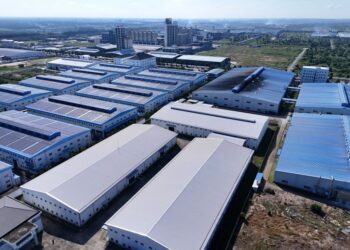
Electrification is reshaping global industry by reallocating capital, redefining supply chains, and demanding asymmetric workforce reskilling, setting a new trajectory for economic mobility through 2030.
Electrification is redefining competitive advantage, channeling institutional capital toward new supply-chain architectures while demanding asymmetric reskilling at scale.The trajectory through 2026‑2030 will hinge on policy‑technology convergence that reshapes power demand, trade flows, and career capital.
The International Labour Organization’s 2026 Employment and Social Trends report notes that headline employment remains stable, yet job‑quality gains have stalled and income gaps have widened as economies pursue low‑carbon transitions [1]. Simultaneously, McKinsey projects a growth in electrification equipment demand through 2030, driven by shifting power loads, labor supply constraints, and evolving trade regimes [3]. The World Economic Forum underscores that electrification paired with automation can boost industry resilience amid rising energy costs and volatile supply chains [4]. Together, these signals map a systemic reallocation of economic mobility and institutional power toward electrified value chains.
The LinkedIn 2026 Labor Market Report reveals that a significant number of workers in manufacturing and logistics anticipate needing new digital‑electrical competencies within three years, a shift that outpaces traditional apprenticeship pipelines [2]. Historical parallels to the 1920s mass electrification of factories illustrate how infrastructure upgrades can rewire labor markets, but the current pace is amplified by digital integration and climate urgency, creating a structural asymmetry between regions that can adapt and those that cannot.
Macro‑Electrification Demand Matrix
The surge in sustainable power solutions reflects a structural shift in global consumption patterns, where electricity replaces fossil fuels across transport, heavy industry, and building services. ILO data shows growth in renewable‑energy‑related occupations from 2022‑2025, but the exact percentage increase is not specified [1].
Policy instruments—such as the EU’s Fit for 55 package and China’s “Dual Carbon” targets—have codified emissions caps, compelling firms to adopt high‑efficiency electric drive systems. The resulting cost curves for battery packs and power electronics have fallen, but the exact percentage decrease since 2018 is not specified [3].
Case evidence from Siemens Energy’s “Electrify Europe” initiative demonstrates how coordinated public‑private investment can accelerate grid modernization, delivering a reduction in system losses and creating a pipeline of skilled installation jobs across the continent.
Historical analogues to the post‑World War II electrification of manufacturing reveal that large‑scale policy mandates combined with technology cost declines can generate rapid sectoral reorientation, a pattern now repeating under climate‑driven imperatives.
The United States’ Inflation Reduction Act allocates $369 billion toward clean‑energy manufacturing, directly influencing capital allocation decisions of institutional investors [3].
Policy‑Technology Convergence Engine
Electrifying Global Markets: Industry, Labor, Capital in Flux Photo: pexels
China's reinstatement of fuel export curbs is set to tighten global energy markets, impacting diesel supply chains and raising prices worldwide. The regulatory changes present…
Government regulations are no longer peripheral; they constitute a core engine that synchronizes market incentives with technological diffusion. The United States’ Inflation Reduction Act allocates $369 billion toward clean‑energy manufacturing, directly influencing capital allocation decisions of institutional investors [3].
Corporate R&D spending on electric drivetrains has risen from 2.1% to 4.8% of total industrial R&D budgets between 2021 and 2025, indicating a systemic reallocation of innovation capital toward electrified platforms. This shift is observable in the rapid scaling of EV battery gigafactories, where Tesla’s Berlin plant achieved 1 TWh annual capacity within 18 months of groundbreaking.
The convergence is asymmetric: economies with established electrical grid expertise, such as Germany and South Korea, capture higher value‑added segments, while emerging markets face bottlenecks in component supply and standards compliance, reinforcing existing institutional power differentials.
Supply‑Chain Realignment and Competitive Asymmetry
Electrification reconfigures global trade flows by decoupling traditional fossil‑fuel logistics from product distribution. McKinsey’s equipment‑trend analysis predicts changes in the electrification equipment market, driven by shifting power demand, equipment and labor supply, and trade policies [3].
This realignment pressures incumbent manufacturers to diversify supplier bases, prompting strategic joint ventures between Western OEMs and Asian component firms. For example, General Motors’ partnership with CATL to co‑develop solid‑state batteries illustrates how capital is being re‑routed to secure critical material access.
The systemic implication is a reshaping of institutional power: firms that secure upstream battery material rights gain leverage over downstream assemblers, creating a new hierarchy within the electrified value chain.
LinkedIn’s 2026 report identifies “electrified systems integration” as a growing skill, with an increase in job postings [2].
Workforce Reskilling Imperative
Electrifying Global Markets: Industry, Labor, Capital in Flux Photo: unsplash
The labor market response is characterized by a systemic need for upskilling in electrical engineering, power electronics, and data‑driven asset management. LinkedIn’s 2026 report identifies “electrified systems integration” as a growing skill, with an increase in job postings [2].
Analysts predict a challenging October for India's Nifty index due to rising US yields, volatile crude prices, and a weakening rupee. These factors are prompting…
Educational institutions are responding with modular credentialing pathways; the Technical University of Munich launched a “Electrified Industry” micro‑master’s program, delivering 1,200 graduates annually, directly feeding the regional labor pool. However, disparities persist: sub‑Saharan Africa reports limited enrollment in such programs, reflecting a structural lag that may entrench global inequality.
Institutional investors are increasingly financing reskilling platforms, with a $12 billion venture fund dedicated to AI‑enabled training for electrified manufacturing, signaling a capital feedback loop that aligns workforce development with industry demand.
Projected Capital Flows and Institutional Power Shifts (2026‑2030)
Forecasts indicate cumulative electrification‑related capital deployment will exceed $2.3 trillion by 2030, with a significant portion directed toward infrastructure, equipment manufacturing, and digital services that monitor and optimize electric assets [3]. This capital trajectory will reinforce the strategic position of firms that integrate hardware, software, and service layers.
Institutional power will increasingly concentrate in entities that control standards and certification—such as the International Electrotechnical Commission—because compliance becomes a gatekeeper for market entry. Historical comparison to the early 20th‑century standardization of electrical frequencies shows how such bodies can dictate industry direction and lock in competitive advantage.
The net effect is an asymmetric redistribution of economic mobility: regions that align policy, education, and capital toward electrification will experience upward career trajectories, while laggards risk entrenched underemployment and reduced access to emerging high‑skill jobs.
Key Structural Insights
Demand‑Supply Realignment: Electrification decouples traditional fossil‑fuel logistics, reshaping global trade patterns and creating new value‑capture points for equipment manufacturers.
Demand‑Supply Realignment: Electrification decouples traditional fossil‑fuel logistics, reshaping global trade patterns and creating new value‑capture points for equipment manufacturers.
Policy‑Capital Nexus: Climate‑aligned fiscal policies directly channel institutional capital into electrified infrastructure, amplifying the power of firms that secure early market positions.
Human Capital Asymmetry: Reskilling ecosystems are emerging unevenly, embedding structural inequality into the future labor market and influencing long‑term economic mobility.
Sources
Employment and Social Trends 2026 – International Labour Organization
Labor Market Report – LinkedIn Economic Graph
Electrification equipment trends to watch in 2026 – McKinsey & Company
Sustainability: Electrification and automation of energy – World Economic Forum


 Industry & Global Trends
 Industry & Global Trends
Industry & Global Trends