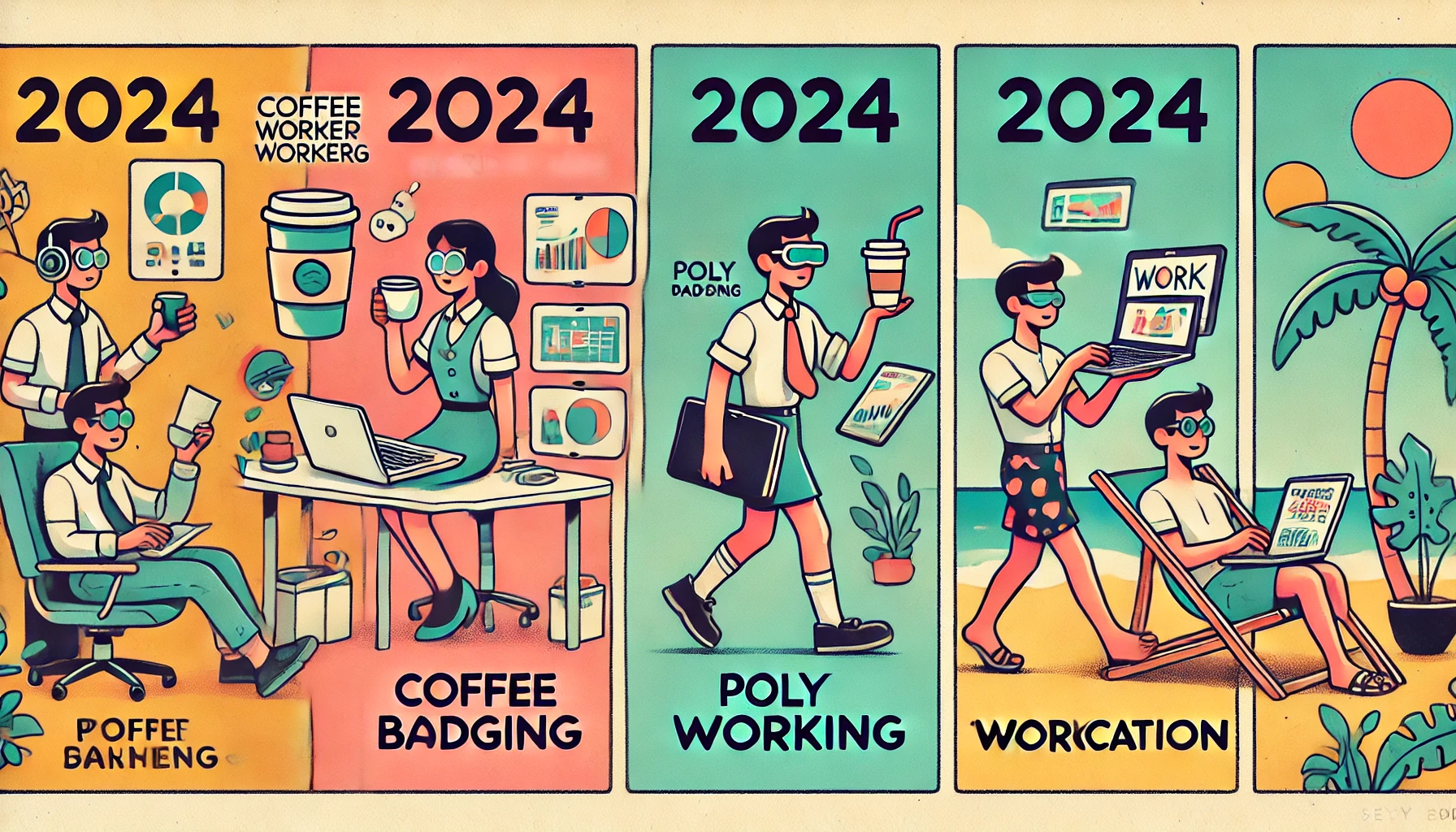
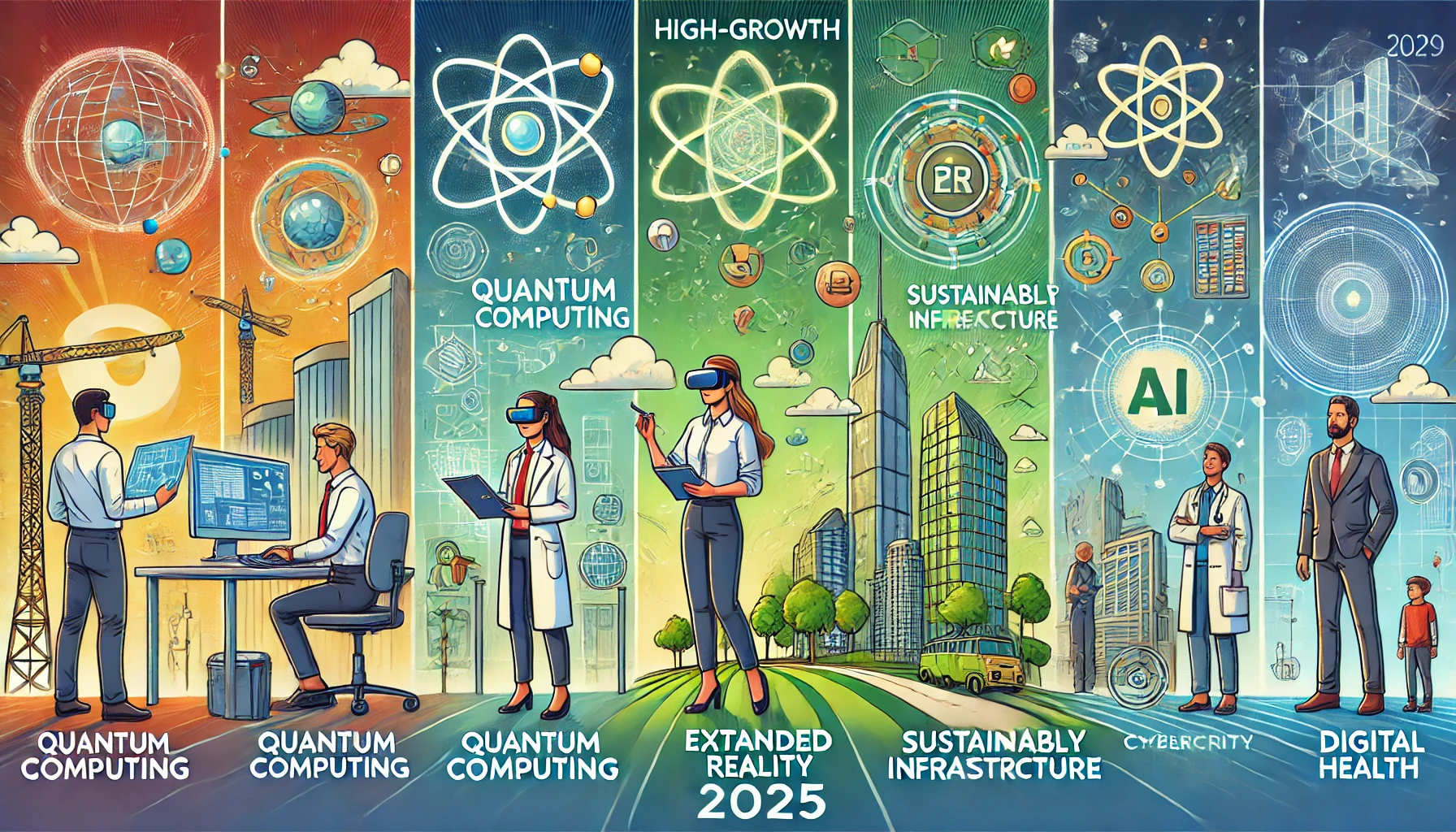
The shift from scarcity‑driven employment to abundance‑enabled portfolios forces workers to convert “job security” into “career resilience,” reshaping human capital, institutional incentives, and mobility pathways.
The Post‑Scarcity Macro Landscape
The convergence of generative AI, autonomous logistics, and universal broadband has moved the global economy toward a functional post‑scarcity state. In 2025, AI‑augmented productivity added an estimated 1.8 % to U.S. GDP, while the share of fully automated processes in manufacturing rose from 22 % to 34 % year‑over‑year [4]. Simultaneously, the World Economic Forum reports that 38 % of the global workforce now engages in gig or portfolio work, up from 24 % in 2019 [4]. These macro‑level trends erode the traditional scarcity‑based labor contract, where employers controlled scarce skill sets and workers exchanged labor for security.
The 2026 Career Identity Report documents a cultural pivot: 62 % of respondents aged 25‑34 describe themselves as “strategic stayers,” deliberately occupying “good‑enough” roles while cultivating parallel projects [1]. This reflects a systemic reorientation from linear career ladders to multidimensional identity matrices, where purpose, network, and skill diversity outweigh tenure‑based status.
Historically, the post‑World War II expansion of the service sector produced a similar decoupling of employment from identity, as workers moved from factory floors to knowledge‑intensive roles. Yet the current abundance of digital tools accelerates that decoupling, creating a feedback loop between technology adoption and identity fluidity.
Abundance‑Driven Skill Reallocation

The core mechanism of the post‑scarcity transition is the reallocation of labor from routine execution to uniquely human competencies. Forbes’ 2026 Workplace Trends analysis shows that demand for creativity, empathy, and complex problem‑solving grew by 27 % between 2023 and 2025, while demand for routine data entry fell by 41 % [4].
Automation’s displacement effect is not uniform. A Randstad case study revealed that in a European logistics firm, AI‑driven routing reduced driver hours by 18 % but generated a new “human‑in‑the‑loop” role focused on exception handling, customer experience, and continuous process improvement [4]. The net effect was a 12 % increase in average employee earnings, driven by higher‑value skill premiums.
Abundance‑Driven Skill Reallocation Redefining Career Identity in a Post‑Scarcity Economy The core mechanism of the post‑scarcity transition is the reallocation of labor from routine execution to uniquely human competencies.
This shift mirrors the 1970s transition from manual drafting to computer‑assisted design (CAD). CAD displaced repetitive drawing tasks but spawned a new class of design architects who leveraged software to explore creative solutions, ultimately raising the sector’s value‑added contribution. The current AI wave replicates that pattern at scale across industries, prompting a systemic revaluation of human capital.
 Future Skills & Work
AI Disrupts Labor Markets, Alters Career Paths
Labor economists and AI policy analysts are now tasked with understanding these shifts. The podcast features insights from industry experts who highlight the urgency of…
Read More →Institutional Ripple Effects on Employment Structures
The abundance of automated capacity destabilizes legacy employment contracts, prompting institutions to redesign incentive structures. Gig platforms such as Upwork reported a 15 % rise in “portfolio‑career” contracts—simultaneous engagements across three or more distinct client categories—between 2023 and 2025 [4]. This diversification reduces reliance on a single employer’s wage floor, but it also fragments traditional benefits provisioning.
In response, the U.S. Department of Labor introduced the “Portable Benefits Act” (PBA) in 2026, mandating that platform‑mediated earnings be eligible for prorated health, retirement, and training credits. Early adoption data show that PBA‑compliant workers experience a 9 % lower volatility in net income compared with non‑compliant peers [1].
Educational institutions are recalibrating curricula to align with this new labor topology. Carnegie Mellon’s “Human‑Centric AI” certificate, launched in 2025, integrates modules on ethical design, collaborative robotics, and narrative intelligence. Within its first cohort, 84 % secured portfolio contracts within six months, illustrating a direct pipeline from skill acquisition to diversified employment [2].
These institutional adaptations echo the 1990s shift toward “flexicurity” in Scandinavia, where labor market flexibility was paired with robust social safety nets to preserve mobility without sacrificing security. The current post‑scarcity reforms constitute a digital‑era flexicurity, leveraging data‑driven benefits portability to sustain workforce resilience.
The Career Identity Report quantifies this by showing a 23 % correlation between the breadth of self‑reported skill sets (technical, interpersonal, and entrepreneurial) and perceived career stability among workers under 40 [1].
Human Capital Recalibration in an AI‑Dominant Era

Career resilience now hinges on the ability to orchestrate multiple skill vectors. The Career Identity Report quantifies this by showing a 23 % correlation between the breadth of self‑reported skill sets (technical, interpersonal, and entrepreneurial) and perceived career stability among workers under 40 [1].
Case in point: Maya Patel, a senior data analyst at a fintech startup, transitioned in 2025 to a hybrid role combining algorithmic auditing, community education, and freelance consulting. Her annual compensation rose from $112 k to $148 k, while her “purpose index” (a proprietary Bloomberg metric aggregating engagement, autonomy, and impact) climbed from 62 to 81. Patel’s trajectory illustrates how portfolio diversification translates into both financial and intrinsic returns.
 Future Skills & Work
How Unions Are Confronting A.I. Threats in the Workplace | Career Outlook
The growing concern over AI's potential to displace jobs has led to a surge in union negotiations. For instance, labor leaders are pushing for new…
Read More →From an institutional perspective, firms are incentivizing internal portfolio development. Google’s “20 % Time” program, restructured in 2026, now allocates a portion of employee performance reviews to cross‑functional project outcomes, effectively embedding portfolio thinking into corporate promotion pathways. Early results indicate a 14 % increase in employee‑initiated AI‑ethics projects, suggesting that institutional endorsement of portfolio work amplifies human‑skill deployment.
The systemic implication is a redefinition of “career capital.” Traditional capital—seniority, title, and tenure—now competes with “skill capital” (breadth and depth of human competencies) and “network capital” (cross‑organizational connections). The composite metric predicts upward mobility more accurately than any single legacy indicator, reshaping talent acquisition models across sectors.
Projected Trajectory Through 2029
Looking ahead, three interlocking trends will dominate the career identity landscape:
Key Structural Insights > [Insight 1]: The post‑scarcity economy transforms “job security” into “career resilience,” compelling workers to diversify skill sets and income streams.
- Scaling of Portable Benefits – By 2029, the PBA is projected to cover 68 % of gig earnings, reducing income volatility by an additional 6 % and encouraging broader adoption of portfolio careers.
- AI‑Augmented Skill Certification – The International Association for Continuing Education forecasts that AI‑validated micro‑credentials will account for 34 % of all professional certifications by 2029, accelerating the feedback loop between skill acquisition and market demand.
- Institutionalization of Purpose Metrics – Bloomberg’s internal “Purpose Index” will be adopted by 45 % of Fortune 500 firms for compensation decisions, embedding meaning‑based evaluation into the core of talent management.
Collectively, these dynamics suggest that the post‑scarcity economy will cement a structural shift from employment‑centric identity to portfolio‑centric identity. Workers who master the coordination of human skills, network assets, and flexible benefits will accrue disproportionate career capital, while institutions that fail to adapt their benefit architectures risk talent attrition and productivity gaps.
Key Structural Insights
> [Insight 1]: The post‑scarcity economy transforms “job security” into “career resilience,” compelling workers to diversify skill sets and income streams.
> [Insight 2]: Institutional reforms—portable benefits, AI‑validated certifications, and purpose‑based compensation—are the primary levers that will align human capital with abundant technological capacity.
> * [Insight 3]: Historical parallels to post‑WWII flexicurity and 1990s CAD adoption illustrate that systemic revaluation of human skills follows disruptive productivity gains, reinforcing the predictability of this transition.
Sources
2026 Career Identity Report: The Age of Strategic Staying — Resume Genius
Redefining Work in a Post‑Scarcity World: A New Dawn for Human Purpose … — Gerald Alba Daquila
Work, Purpose, and the Post‑Scarcity Puzzle: Life After “Jobs” — Janisse (Medium)
2026 Workplace Trends: Human Skills, AI, And Talent Scarcity — Forbes
 Future Skills & Work
Workers Invest Billions in AI for Career Growth
UK workers are investing nearly £1 billion in AI tools to enhance job performance, revealing a significant trend in personal investment in technology. This shift…
Read More →Written by Career Ahead AI. AI can make mistakes, so verify key facts. Report errors to support@careeraheadonline.com.