No products in the cart.

Google adds AI Skills to Chrome to help you save favorite workflows

Google has introduced AI Skills to its Chrome browser, enabling users to save and automate their favorite workflows. This feature enhances productivity by allowing for the reuse of AI prompts across various web pages, catering to the growing demand for streamlined digital solutions.

In a world where efficiency is paramount, Google’s recent addition of AI Skills to its Chrome browser stands out as a transformative move. This feature allows users to save and automate their favorite workflows, significantly enhancing productivity. As digital tasks become increasingly complex, the need for streamlined solutions has never been more pressing. Google’s AI Skills not only promises to simplify user interactions but also redefines how we approach our daily online activities.
The introduction of AI Skills is a response to the growing demand for automation in everyday tasks. With the rise of artificial intelligence, users seek tools that can adapt to their needs, making their online experiences more intuitive. Google’s integration of its Gemini AI into Chrome is a key component of this strategy, enabling users to create reusable AI prompts that can operate seamlessly across various web pages. This innovation is not just about saving time; it’s about enhancing the overall user experience, allowing individuals to focus on what truly matters.
Enhancing User Experience with AI Skills
Google’s AI Skills feature allows users to save specific prompts that can be reused effortlessly. For example, if a user frequently asks for vegan recipe substitutions, they can save that prompt as a Skill. This capability streamlines the process, enabling users to access their personalized workflows with just a click. Such features are particularly beneficial in fast-paced environments where time is of the essence.
According to TechCrunch, early adopters have utilized Skills in diverse areas such as health and wellness, shopping comparisons, and document summarization. This versatility illustrates the feature’s potential to cater to various user needs, making it a valuable tool for both casual users and professionals alike. The Skills library further enhances this utility by providing pre-programmed tasks in areas like budgeting and productivity, ensuring that users can find relevant workflows easily.
The Skills library further enhances this utility by providing pre-programmed tasks in areas like budgeting and productivity, ensuring that users can find relevant workflows easily.
Competing in the AI Productivity Space
You may also like
 Business
Ford’s $19.5 Billion EV Retreat: What It Means for Workers
Ford's $19.5 billion writedown and shift away from electric vehicles raises concerns for workers and the industry. Discover the implications for your career.
Read More →The global landscape of AI and productivity tools is rapidly evolving. Companies such as OpenAI and Perplexity are also entering this space, introducing their own AI-driven solutions. Google’s decision to integrate AI Skills into Chrome is part of a broader trend where tech giants are competing to provide the most efficient tools for users. This competition is driving innovation, pushing companies to continuously improve their offerings.
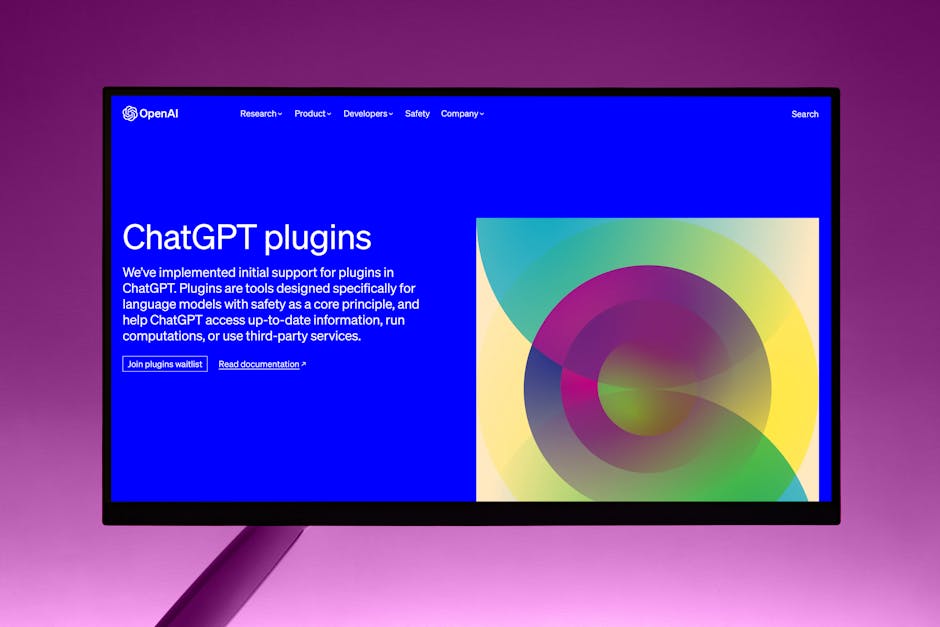
In this context, Google’s AI Skills can be seen as a strategic move to maintain its dominance in the browser market. By enhancing user experience through automation, Google not only attracts new users but also retains existing ones. As Google’s blog notes, the integration of AI into everyday tools has significant implications for education and skill development. As students and young professionals increasingly rely on these technologies, there is a need for educational institutions to adapt their curricula. Teaching digital literacy and AI competency will be essential to prepare the next generation for a workforce that is increasingly intertwined with technology.
Future Implications of Automation
The introduction of AI Skills also raises questions about the future of work and the role of automation. As users become more reliant on these tools, there is a growing debate about the implications for job roles and responsibilities. Will automation lead to job displacement, or will it create new opportunities for innovation? The answer may depend on how effectively individuals and organizations adapt to these changes.
Additionally, there is an ongoing debate about data privacy and security. As users save more personal prompts and workflows, concerns about data management and protection become paramount. How companies handle user data, especially in light of increasing cyber threats, will be a critical factor in determining the success of AI-driven products.
As students and young professionals increasingly rely on these technologies, there is a need for educational institutions to adapt their curricula.

Sources:TechCrunch, Google Blog, The Verge, Bloomberg.
You may also like
 Career Development
Cultural Translation in a Polarized World: Bridging Divides
Explore how cultural translation can impact your career amid polarization. Discover actionable insights and future opportunities.
Read More →