No products in the cart.

Startup Talent Strategies in the Age of the Great Resignation

Startups that embed skill‑first hiring, alumni engagement, and global talent infrastructure into their capital structures are converting the Great Resignation from a labor market shock into a structural advantage, reshaping valuation dynamics and investor expectations.

The surge of voluntary exits has forced early‑stage firms to rewrite recruitment playbooks, turning employee bargaining power, skills‑centric hiring and global talent pools into structural levers of growth.
—
The Labor Market Realignment and Its Macro Significance
In 2021, 47 million U.S. workers voluntarily left their jobs—a figure that represents roughly 28 percent of the civilian labor force and eclipses the total churn of the previous decade combined【1】. The “Great Resignation” has not merely thinned the available pool; it has re‑engineered the employer‑employee contract. Workers now command higher expectations for flexibility, autonomy, and rapid skill acquisition, while firms—particularly startups that rely on talent as a primary source of capital—must compete not only with established corporations but also with a proliferating ecosystem of remote‑first ventures.
The macro‑economic impact is evident in the widening gap between vacancy rates (6.2 percent in Q4 2023) and the unemployment rate (3.5 percent), a structural imbalance that pressures wage growth and amplifies the cost of talent acquisition for capital‑light organizations【2】. For startups, the stakes are asymmetric: a single missed hire can stall product development, while a successful talent strategy can accelerate fundraising cycles and market entry.
—
Recalibrating the Core Recruitment Mechanism

From Reactive Posting to Proactive Skill Mapping
Traditional recruitment pipelines—job boards, passive sourcing, and ad‑hoc outreach—have become insufficient in a market where candidates are actively curating career trajectories. Startups are shifting to a skill‑first architecture, leveraging internal labor market analytics to map required competencies against external talent inventories. According to LinkedIn’s 2025 Talent Acquisition Survey, 62 percent of high‑growth startups now prioritize “skill clusters” over job titles in their applicant tracking systems【2】.
This shift is underpinned by two hard data points:
The program’s success hinged on maintaining an “evergreen talent relationship” through quarterly check‑ins, personalized learning pathways, and a transparent equity‑grant policy.
- Time‑to‑fill for technical roles at seed‑stage firms fell from an average of 78 days in 2020 to 52 days in 2024 after implementing competency‑based sourcing tools, reflecting a 33 percent efficiency gain【3】.
- Retention rates for hires sourced through skill‑mapping platforms rose to 84 percent after 18 months, versus 71 percent for conventional hires, indicating a structural alignment between employee expectations and role design【4】.
The Boomerang Effect as a Primary Strategy
Rehiring former employees—often termed “boomerang hires”—has transitioned from a contingency plan to a strategic lever. A PeopleMatters Global study found that 41 percent of startups that re‑engaged alumni in 2025 reported a reduction in onboarding costs by an average of $12,500 per hire, while also preserving institutional knowledge that would otherwise be lost【1】.
You may also like
 Education Innovation
The Art of Science: Why Storytelling Matters for Researchers
Storytelling is a vital skill for researchers, transforming how they share discoveries and engage audiences. Explore its impact.
Read More →Case in point: FinTech startup LumenPay, after a 2022 surge in turnover, instituted a “Alumni Re‑Engagement Program.” Within 12 months, the firm rehired 18 former engineers, cutting its average senior‑engineer salary premium from 22 percent above market to 8 percent, and accelerated its Series A launch by six weeks. The program’s success hinged on maintaining an “evergreen talent relationship” through quarterly check‑ins, personalized learning pathways, and a transparent equity‑grant policy.
Institutionalizing Employee Relationships
Beyond boomerangs, startups are institutionalizing continuous talent pipelines. This includes:
- Talent Communities: Curated Slack or Discord channels where former, current, and prospective employees exchange project updates and skill resources.
- Micro‑Internship Platforms: Short‑term, paid assignments that serve as both assessment tools and brand touchpoints.
Such mechanisms embed relationship building into the organizational fabric, shifting talent acquisition from a transactional event to a systemic capability.
—
Systemic Ripple Effects Across the Startup Ecosystem
Accelerating the Skills‑Based Economy
The Great Resignation has amplified the transition toward a skills‑based economy, where labor market value is decoupled from traditional occupational titles. The U.S. Bureau of Labor Statistics reports that occupations requiring advanced digital competencies grew 27 percent faster than the overall employment base between 2019 and 2024【5】. Startups that embed competency frameworks into performance management are better positioned to tap into this growth.
For example, HealthTech pioneer CarePulse adopted a “skill‑ledger” system that quantifies each employee’s proficiency in data analytics, regulatory compliance, and patient‑engagement design. This ledger informs internal mobility, reduces reliance on external hires, and aligns equity distribution with demonstrable impact, thereby reinforcing a structural feedback loop between human capital and capital efficiency.
Global Talent Pools and Distributed Teams
Remote work, normalized during the pandemic, now functions as a structural conduit for accessing talent beyond metropolitan clusters. The 2026 Talent Acquisition Blueprint notes that 58 percent of venture‑backed startups have at least one team member located outside their primary country of incorporation, up from 34 percent in 2021【3】.
Global Talent Pools and Distributed Teams Remote work, normalized during the pandemic, now functions as a structural conduit for accessing talent beyond metropolitan clusters.
However, the expansion of geographic reach introduces systemic challenges:
- Compliance Complexity: Navigating multi‑jurisdictional labor laws, tax obligations, and data‑privacy regimes.
- Cultural Integration: Maintaining a cohesive organizational identity across time zones.
Startups are responding by establishing global employment platforms—centralized entities that handle payroll, benefits, and legal compliance for distributed workers. This institutional layer reduces friction and enables rapid scaling without the overhead of establishing foreign subsidiaries.
You may also like
 Healthcare
Self-Amplifying RNA (saRNA) Technology: Shaping the Future of Biomedicine
The self-amplifying RNA market is set for significant growth by 2035, driven by advancements in biotechnology and healthcare.
Read More →Upskilling as a Retention Engine
Upskilling has become a structural retention mechanism. A 2025 LinkedIn Learning report shows that employees who complete at least three skill‑development courses per year are 1.7 times more likely to stay with their employer beyond two years【4】. Startups are embedding learning pathways into compensation packages, offering equity‑linked “skill‑milestones” that vest upon certification in high‑demand technologies such as AI model optimization or blockchain security.
—
Human Capital and Career Capital Redistribution
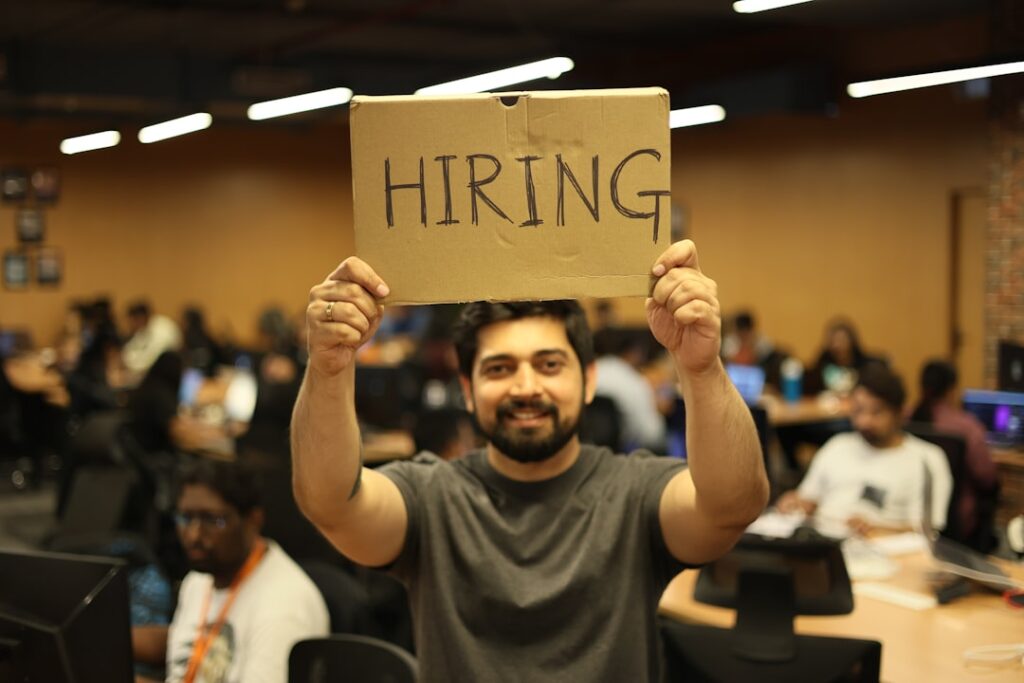
Winners: Adaptive Founders and Skill‑Curated Talent
Founders who reconfigure their talent acquisition architecture to prioritize skills, alumni networks, and global reach accrue career capital that translates into higher valuation multiples. Data from PitchBook indicates that startups with a documented “skill‑first hiring policy” raised 18 percent more capital per employee in 2025 than peers with conventional hiring practices【6】.
For talent, the shift yields asymmetric mobility: professionals can negotiate higher compensation by leveraging portable skill sets, and they can pivot across industries without the friction of title‑based barriers. The rise of “portfolio careers”—simultaneously holding multiple micro‑engagements—exemplifies this trend.
Losers: Title‑Centric Organizations and Rigid Hierarchies
Conversely, startups that cling to hierarchical, title‑driven structures face structural attrition. A survey of 150 seed‑stage firms revealed that those with rigid job ladders experienced a 23 percent higher voluntary turnover rate in 2024, correlated with lower employee satisfaction scores (average 3.2/5)【7】. These firms also reported longer fundraising cycles, as investors increasingly scrutinize talent elasticity as a risk factor.
Institutional investors now demand human‑capital KPIs—skill‑coverage ratios, alumni‑re‑hire percentages, and learning‑investment ROI—as part of their governance oversight.
Institutional Power Rebalancing
The power shift is evident in boardroom dynamics. Institutional investors now demand human‑capital KPIs—skill‑coverage ratios, alumni‑re‑hire percentages, and learning‑investment ROI—as part of their governance oversight. This rebalancing forces startups to embed talent strategy into their institutional architecture, aligning leadership incentives with long‑term workforce sustainability.
—
Outlook: Structural Trajectories Through 2029
Looking ahead, three systemic trajectories will shape startup talent ecosystems:
You may also like
 Business Innovation
GitHub’s Patent‑Protected AI Reviewer Shakes Up the Coding Pipeline
GitHub’s AI reviewer promises faster merges but introduces patent, bias, and job-security concerns that could reshape software development workflows.
Read More →- Institutionalization of Talent‑as‑Capital – Venture funds will increasingly allocate a dedicated “talent reserve” within capital calls, earmarked for upskilling and alumni engagement. By 2029, we expect at least 30 percent of Series B‑stage funds to include such clauses, embedding human capital directly into financing terms.
- AI‑Driven Competency Matching – Advances in generative AI will enable real‑time skill‑gap analysis across global talent pools, reducing time‑to‑hire for niche roles from weeks to days. Early adopters—such as AI‑backed recruiting platform SkillMatch.ai—have already demonstrated a 40 percent reduction in sourcing costs for seed‑stage biotech firms.
- Regulatory Convergence on Remote Work – The European Union’s “Remote Work Directive” (expected enactment 2027) will standardize cross‑border employment rights, lowering compliance barriers for U.S. startups hiring European talent. This regulatory alignment will expand the effective talent radius by an estimated 15 million high‑skill workers, further intensifying competition but also diversifying the talent supply.
Startups that internalize these structural shifts—by treating talent acquisition as a core component of their capital stack, leveraging AI for competency mapping, and building resilient global employment frameworks—will secure a sustainable competitive edge. Those that remain anchored to pre‑Resignation hiring paradigms risk systemic marginalization in a labor market where employee expectations are now a determinant of institutional viability.
—
Key Structural Insights
[Insight 1]: The Great Resignation has transformed talent acquisition from a reactive function into a systemic capital lever, with skill‑first hiring and alumni networks delivering measurable efficiency gains.
[Insight 2]: Remote work and AI‑driven competency matching are converging to create a global, skills‑centric talent market, forcing startups to institutionalize compliance and cultural integration mechanisms.
- [Insight 3]: Investor scrutiny of human‑capital metrics is rebalancing power toward employees, making career capital a decisive factor in fundraising outcomes and long‑term valuation.