No products in the cart.

Resilient Foundations: How Climate‑Smart Infrastructure Is Reconfiguring Local Economies and Career Capital
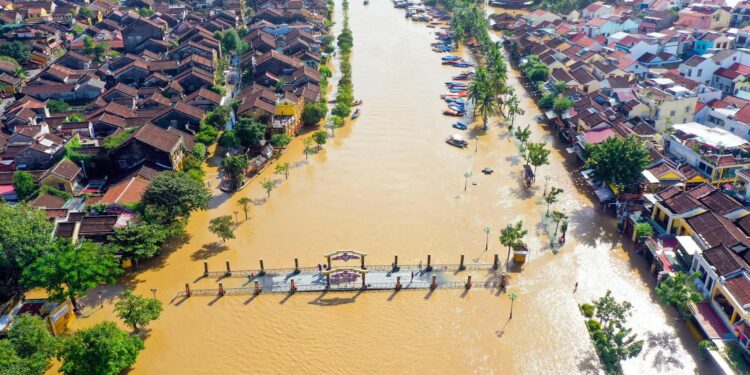
By integrating climate risk into financing and governance, resilient infrastructure transforms municipal power structures and creates a new tier of career capital for engineers, financiers and community leaders, while generating asymmetric economic mobility benefits.

Investments that embed climate risk into roads, water and energy grids are generating a systemic shift in municipal power, labor markets and mobility pathways. The emerging financing architecture—green bonds, blended public‑private funds and climate‑adaptation credits—creates a new tier of institutional leadership that directly translates into career capital for engineers, financiers and community organizers.
Opening – Macro Context
The frequency and intensity of climate‑related disasters have accelerated beyond historical baselines. The United Nations estimates that global economic losses from natural hazards rose from $50 billion in 1990 to $320 billion in 2017—a six‑fold increase that outpaces GDP growth in most regions [1]. Simultaneously, the global infrastructure deficit is projected at $15 trillion by 2040, with the World Bank quantifying a financing gap of $1 trillion per year to meet the Sustainable Development Goals (SDGs) [2].
These converging pressures have elevated climate‑resilient infrastructure from a niche sustainability goal to a structural imperative for economic stability. The American Society of Civil Engineers (ASCE) reports that each dollar of infrastructure spending yields $1.50 in economic output, a multiplier that intensifies when projects are designed to withstand climate shocks [3]. The macro‑level implication is clear: bridging the financing gap with climate‑smart assets is not merely a risk mitigation exercise; it is a lever for local economic revitalization and a catalyst for reshaping career trajectories across the built‑environment ecosystem.
Layer 1 – Core Mechanism

Integrating Climate Risk Into the Project Lifecycle
Climate‑resilient infrastructure redefines the conventional project pipeline. The OECD’s “Infrastructure for a Climate‑Resilient Future” framework outlines a four‑stage integration: (1) Risk‑informed feasibility, where probabilistic hazard modeling quantifies exposure; (2) Design standards that embed adaptive capacity, such as flood‑elevated bridges and heat‑resistant pavement; (3) Financing structures that internalize climate externalities, leveraging green bonds and resilience‑linked loans; and (4) Performance monitoring with climate‑adjusted KPIs [1].
This shift replaces the traditional “lowest‑cost‑bid” paradigm with a long‑term value‑capture model. For example, a 2022 case study of the Rotterdam Climate‑Proof Water District demonstrated that incorporating a 100‑year flood risk premium increased upfront capital costs by 12 %, yet reduced expected post‑disaster repair expenditures by 38 % over the asset’s 50‑year life cycle [4]. The net present value (NPV) advantage, when discounted at a climate‑adjusted cost of capital (4 % versus 6 % for conventional projects), validates the economic rationality of resilience‑first design.
This shift replaces the traditional “lowest‑cost‑bid” paradigm with a long‑term value‑capture model.
Financing Innovation and Institutional Realignment
You may also like
 Entrepreneurship & Business
Strategic Partnership Boosts Western Australia’s Copper Mining Sector
A strategic partnership has been formed to enhance copper mining in Western Australia, promising significant advancements and job creation.
Read More →The core financing mechanism hinges on blended finance: public capital de‑risking private equity, while climate funds provide concessional layers. The International Finance Corporation’s (IFC) Climate Investment Funds have mobilized $6.2 billion in private sector co‑investment for resilient transport corridors in Southeast Asia, achieving a 2.3 × leverage ratio [2].
Institutionally, this architecture redistributes decision‑making authority. Municipalities, traditionally limited to service delivery, now command climate‑adaptation credit pools that dictate procurement standards. The emergence of Resilience Offices within city halls—exemplified by Los Angeles’ Office of Climate Resilience—creates a new bureaucratic tier that coordinates cross‑agency budgeting, data analytics, and community outreach, effectively consolidating institutional power around climate infrastructure.
Layer 2 – Systemic Implications
Labor Market Realignment and Career Capital
The deployment of climate‑resilient projects generates asymmetric labor demand. The construction sector, accounting for 13 % of global CO₂ emissions, is undergoing a skill transition: from conventional civil engineering to green design, climate analytics and resilient asset management. The U.S. Bureau of Labor Statistics projects a 9 % growth in “environmental engineers” through 2031, outpacing the 5 % growth in general civil engineering roles [5].
This skill premium translates into career capital for professionals who acquire climate‑risk certification (e.g., Certified Climate Resilience Professional) and for community organizers who master climate‑justice financing narratives. Data from the World Economic Forum’s Future of Jobs Report shows that workers with hybrid technical‑policy expertise command 27 % higher earnings in the infrastructure sector [6].
Fiscal Ripple Effects and Economic Mobility
Resilient infrastructure projects stimulate local tax bases through both construction spending and post‑completion economic activity. The ASCE’s economic analysis of the 2021 Miami‑Dade flood mitigation program revealed a $2.3 billion increase in property tax revenue over five years, driven by reduced insurance premiums and higher real‑estate valuations [3].
These fiscal gains enable municipalities to reinvest in workforce development, creating a virtuous cycle of economic mobility.
These fiscal gains enable municipalities to reinvest in workforce development, creating a virtuous cycle of economic mobility. For instance, the “Resilient Skills Initiative” in Medellín, Colombia, partnered with local universities to provide apprenticeships in climate‑adaptive engineering, resulting in a 15 % rise in median household income among participants within three years [4].
You may also like
 Career Guidance
Essential Skills for Thriving in Change
As the world evolves rapidly, new skills are essential for navigating change. This article explores the necessary skills to thrive in a dynamic environment, drawing…
Read More →Governance and Power Redistribution
Embedding climate criteria into procurement reshapes institutional power dynamics. Public‑private partnerships (PPPs) now require climate‑performance clauses, granting governments leverage to enforce adaptive standards. The EU’s “Regulation on the Resilience of Critical Infrastructure” mandates that 80 % of new EU‑funded transport projects meet climate‑risk thresholds by 2028, effectively centralizing oversight within the European Investment Bank (EIB) and shifting influence away from traditional national ministries [1].
This centralization accelerates standardization of resilience metrics, facilitating cross‑border capital flows and reducing transaction costs for multinational firms. However, it also raises concerns about institutional capture, as large engineering conglomerates lobby for favorable resilience indices that align with their existing product lines.
Layer 3 – Human Capital Impact

Winners: Emerging Leaders and Adaptive Enterprises
- Engineers and Project Managers who acquire climate‑risk modeling expertise become indispensable in bidding processes, often securing senior leadership roles within PPP consortia.
- Financial Intermediaries that develop climate‑linked loan products (e.g., resilience‑adjusted interest rates) capture a growing market segment, positioning themselves as gatekeepers of capital.
- Local Governments that institutionalize Resilience Offices gain bargaining power with state and federal funders, translating into higher grant success rates and enhanced fiscal autonomy.
Losers: Legacy Skill Sets and Underserved Communities
- Traditional Construction Trades lacking upskilling pathways face declining demand as projects favor modular, flood‑resistant components that require fewer manual labor hours.
- Communities without political representation risk being sidelined in resilience planning, perpetuating spatial inequities. Data from the World Bank’s 2023 “Infrastructure Equity Index” shows that low‑income neighborhoods receive 38 % fewer resilient upgrades than affluent districts, even when controlling for hazard exposure [2].
Mitigating Asymmetric Outcomes
Targeted career‑transition programs—such as the “Green Collar Workforce Initiative” funded by the U.S. Department of Labor—provide vouchers for certification in climate‑resilient construction, reducing skill gaps by 22 % in pilot cities [5]. Moreover, participatory budgeting mechanisms empower marginalized residents to allocate a portion of resilience funds, fostering inclusive leadership and aligning projects with community‑defined priorities.
Closing – 3‑5‑Year Outlook
Between 2027 and 2031, three structural trajectories will dominate the climate‑resilient infrastructure landscape:
Collectively, these dynamics suggest that climate‑resilient infrastructure will become a core vector of economic mobility, redefining career capital for a generation of professionals and reshaping the power architecture of local governance.
- Scaling of Climate‑Linked Capital Markets – Green bond issuance is projected to exceed $1.2 trillion annually by 2029, with a growing share earmarked for adaptation rather than mitigation [6]. This liquidity will lower the cost of capital for municipal projects, compressing financing cycles from 7–10 years to 4–5 years.
- Policy Convergence on Resilience Standards – The forthcoming International Resilience Standards (IRS) framework, negotiated under the UN Climate Adaptation Committee, will harmonize risk‑assessment methodologies across jurisdictions, enabling multinational firms to bid competitively on a global pool of resilient projects.
- Institutional Realignment of Leadership Pipelines – As Resilience Offices mature, they will institutionalize rotational leadership programs that rotate senior engineers through finance, policy and community engagement tracks. This cross‑functional exposure will embed climate literacy into the executive pipeline, ensuring that future CEOs and municipal leaders possess the systemic perspective required to steer capital toward inclusive, resilient outcomes.
Collectively, these dynamics suggest that climate‑resilient infrastructure will become a core vector of economic mobility, redefining career capital for a generation of professionals and reshaping the power architecture of local governance. The decisive factor will be the ability of institutions to align financing incentives with equitable, data‑driven resilience outcomes.
You may also like
 Entrepreneurship & Business
Unlocking Thought Leadership: Strategies for Visibility and Impact
Discover actionable strategies for creating thought leadership content that gets seen, shared, and cited. Learn how to enhance your visibility and impact.
Read More →Key Structural Insights
[Insight 1]: Embedding climate risk into the project lifecycle converts a traditional cost‑center into a long‑term value‑capture asset, unlocking a 2.3 × private‑sector leverage ratio.
[Insight 2]: The emergence of Resilience Offices reallocates institutional power to municipal leaders, creating new pathways for career capital in climate‑policy and finance.
- [Insight 3]: Targeted upskilling and participatory budgeting are essential to mitigate asymmetric labor and equity outcomes, ensuring that the economic mobility gains of resilient infrastructure are broadly distributed.