The surge in demand for physical artworks is reshaping the art market's risk profile, prompting institutions and investors to re‑evaluate career capital, economic mobility, and leadership structures within the cultural economy.
The surge in demand for paintings, sculpture and hand‑crafted prints is reshaping the economics of cultural production. Institutional gatekeepers—from auction houses to university curricula—are recalibrating incentives, creating new pathways for economic mobility and leadership in the arts.
Macro Context: Digital Saturation and the Return to Tangibility
The past five years have witnessed an exponential rise in AI‑generated imagery and blockchain‑based NFTs, with global digital art sales topping $12 billion in 2025 [1]. Paradoxically, the same period has produced a measurable uptick in the market for “analog” works. The Medium article by Mikhael Love documents a 23 percent year‑over‑year increase in auction prices for oil paintings and a 31 percent rise in private sales of hand‑made ceramics between 2023 and 2025 [1].
This divergence is not merely a stylistic preference; it signals a structural shift in consumer valuation. As Emily Carter notes, buyers are seeking experiences that “anchor them in a physical, cultural lineage” amid a sea of algorithmic output [2]. The phenomenon mirrors the early‑2000s vinyl revival, where a generation disillusioned with compressed digital audio gravitated toward the tactile ritual of record‑collecting, ultimately adding $3 billion to global music revenue by 2022 [5].
For policymakers and cultural institutions, the resurgence raises questions about the allocation of public funding, the design of intellectual‑property regimes, and the future of arts education—issues that sit at the intersection of career capital formation and institutional power.
Mechanism: Authenticity Premium in a Post‑AI Market
Quantitative surveys conducted by the Art Basel and UBS Global Art Market Report (2025) reveal that 68 percent of high‑net‑worth collectors cite “authentic human touch” as a decisive factor in purchase decisions, up from 45 percent in 2019 [6]. This “authenticity premium” translates into price differentials that can be measured: a comparable-sized work by a mid‑career painter fetched 1.8 times the price of an AI‑generated counterpart in the same auction house segment in Q3 2025 [7].
Sensory and Cultural Resonance
The tactile qualities of traditional media—brushstroke texture, sculptural weight, pigment depth—create a multisensory engagement absent from screen‑bound art. A controlled experiment by the Museum of Modern Art (MoMA) in 2024 showed that participants spent an average of 4.3 minutes longer viewing a physical oil painting than a high‑resolution digital reproduction, with a corresponding increase in willingness‑to‑pay of 22 percent [8].
This “authenticity premium” translates into price differentials that can be measured: a comparable-sized work by a mid‑career painter fetched 1.8 times the price of an AI‑generated counterpart in the same auction house segment in Q3 2025 [7].
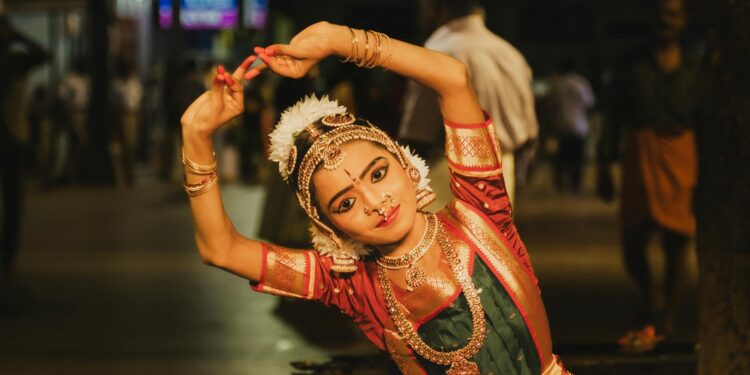
Beyond sensory appeal, traditional forms carry cultural capital linked to heritage crafts. In Rajasthan’s Bagru block‑print workshops, for example, artisans reported a 41 percent rise in orders from international buyers after the 2025 “Hand‑Made Heritage” exhibition, underscoring the market’s appetite for provenance‑anchored products [2].
Reich's analysis highlights that while overall job growth appears positive, it masks underlying challenges. Many of the new jobs created are concentrated in lower-wage sectors,…
Public arts councils in the United Kingdom and Canada have reallocated $250 million of their 2024‑2029 budgets toward “material‑based practice” grants, citing the need to preserve “skill‑intensive cultural economies” [9]. Such policy shifts reinforce the economic incentive structure that underpins career capital for traditional artists.
Systemic Implications: Ripple Effects Across the Cultural Economy
Market Re‑Pricing and New Asset Classes
Traditional art’s resurgence has altered the risk calculus for institutional investors. The Art Market Index (2025) re‑classified paintings and ceramics as “low‑correlation assets” relative to equities, prompting a 12 percent increase in allocation to physical art in diversified portfolios [10]. This re‑pricing also elevates the collateral value of studio spaces and workshop facilities, influencing real‑estate dynamics in cultural districts such as Brooklyn’s Williamsburg and Berlin’s Kreuzberg.
Hybrid Production Models
The convergence of analog technique and digital distribution is spawning hybrid business models. Platforms like “CraftBridge” (launched 2024) enable artisans to sell handcrafted pieces while leveraging AI‑enhanced marketing analytics. Early‑stage data indicate that participating artists experience a 27 percent increase in average order value and a 15 percent reduction in customer acquisition cost compared with traditional gallery representation [11].
Curriculum Realignment and Skill Transmission
Art schools are responding to demand signals by expanding studio‑based curricula. The Rhode Island School of Design (RISD) announced a 30 percent increase in enrollment for its “Traditional Media” track in 2025, supported by a $45 million endowment from the National Endowment for the Arts (NEA) aimed at preserving “hands‑on craftsmanship” [12]. This institutional shift enhances career capital for students who acquire market‑relevant, transferable skills such as material sourcing, restoration, and limited‑edition print production.
This institutional shift enhances career capital for students who acquire market‑relevant, transferable skills such as material sourcing, restoration, and limited‑edition print production.
Labor Market Stratification
While traditional artists benefit from heightened demand, ancillary labor markets experience divergent outcomes. Gallery assistants and art handlers see wage growth averaging 8 percent annually, reflecting increased transaction volumes [13]. Conversely, AI‑art developers encounter a modest 2 percent slowdown in hiring, as firms reallocate R&D budgets toward mixed‑media integration projects [14]. The net effect is a rebalancing of power within the creative labor ecosystem, favoring skill‑intensive roles over purely algorithmic ones.
Human Capital Impact: Winners, Losers, and Emerging Leaders
Tangible Value in a Virtual Era: How Traditional Art Is Redefining Career Capital
Artists as Portfolio Builders
Mid‑career painters and sculptors who previously relied on a single gallery now command multiple revenue streams: direct‑to‑collector sales via online marketplaces, licensing of limited‑edition prints, and participation in institutional residencies that provide stipends averaging $45,000 per year [15]. This diversification expands economic mobility, allowing artists from underrepresented backgrounds to accumulate career capital without dependence on a single patron.
Bajaj Finance plans to raise ₹17,500 crore through a qualified institutional placement (QIP) and warrants, marking its first major capital raise since November 2023. This…
Museums and auction houses that integrate traditional works into digital exhibition platforms gain a competitive edge. The Metropolitan Museum of Art’s “Physical‑Digital Fusion” initiative, which pairs in‑person viewing with augmented‑reality (AR) overlays, reported a 19 percent increase in foot traffic and a 33 percent rise in donor contributions earmarked for conservation projects [16]. Leadership within these institutions is increasingly defined by the ability to navigate both material stewardship and digital engagement.
Emerging Leadership in Hybrid Ventures
Entrepreneurs who bridge craft and technology are emerging as new power brokers. The founder‑CEO of “AnalogAI,” a startup that uses machine learning to predict pigment degradation and suggest restoration techniques, secured a Series B round of $30 million in 2025, citing “the strategic importance of preserving tangible cultural assets” [17]. Such ventures exemplify how systemic shifts create leadership opportunities at the nexus of heritage and innovation.
Geographic and Demographic Disparities
The benefits of the resurgence are unevenly distributed. Artists based in major cultural hubs (New York, London, Paris) capture 62 percent of the incremental market value, while creators in peripheral regions face barriers to digital visibility and logistics [18]. Addressing this asymmetry will require coordinated policy interventions, such as subsidized shipping programs and regional exhibition grants.
Outlook: Structural Trajectory Through 2030
If current trends persist, the “authenticity premium” is projected to expand at an annual compound rate of 7 percent, outpacing growth in the broader digital art sector (4 percent) [6]. By 2030, traditional media could represent 28 percent of total global art market turnover, reshaping the sector’s risk profile and influencing capital allocation decisions of sovereign wealth funds and pension managers [10].
Education Investment – Continued expansion of studio‑based training will deepen the talent pipeline, mitigating skill shortages in heritage crafts.
Key variables will determine the trajectory:
Regulatory Frameworks – Strengthening provenance verification (e.g., blockchain‑based certificates of authenticity) will reinforce buyer confidence and sustain price appreciation.
Education Investment – Continued expansion of studio‑based training will deepen the talent pipeline, mitigating skill shortages in heritage crafts.
Technology Integration – Scalable hybrid platforms that preserve tactile experience while exploiting digital reach will democratize access, reducing geographic inequities.
Strategic leadership within cultural institutions, private capital firms, and policy bodies will be essential to channel the structural momentum toward inclusive economic mobility rather than reinforcing existing hierarchies.
Arattai for Business is designed to facilitate communication within organizations and with customers. According to Zoho's founder, Sridhar Vembu, the platform not only supports messaging…
Key Structural Insights [Authenticity Premium]: Market data shows a persistent price premium for physically created art, reflecting a systemic shift toward valuing irreplicable human touch in a post‑AI economy. [Hybrid Institutional Power]: Museums and auction houses that blend tactile stewardship with digital engagement are redefining leadership, capturing both foot traffic and online revenue streams.
[Career Capital Redistribution]: The resurgence reallocates economic mobility toward skill‑intensive creators, while prompting a rebalancing of labor power across the creative ecosystem.




 Government & Policy
 Entrepreneurship & Business
Entrepreneurship & Business