No products in the cart.

Adaptive Reuse as a Structural Lever for Urban Economic Mobility

Adaptive reuse aligns urban demographic pressure, fiscal incentives, and climate goals into a single structural framework, delivering measurable economic multipliers, carbon reductions, and new professional pathways.

Repurposing obsolete commercial real estate is reshaping the institutional calculus of city growth, delivering measurable economic multipliers, greenhouse‑gas cuts, and new pathways for professional capital.
Urbanization Pressure and the Adaptive Reuse Imperative
The United Nations projects that by 2030 more than two‑thirds of the global population will reside in cities, intensifying competition for land, infrastructure, and affordable space. This demographic surge has forced municipal planners to confront a paradox: the need for new capacity collides with constraints on vacant land and rising construction costs. Adaptive reuse—defined as the systematic conversion of underutilized commercial assets into functions that align with contemporary urban demand—offers a structural response that sidesteps the latency of greenfield development.
A 2025 World Economic Forum analysis notes that 42 % of downtown parcels in Tier‑1 metros are classified as “commercially dormant,” yet retain structural integrity sufficient for conversion without extensive demolition [2]. The same report highlights that cities embracing reuse frameworks have recorded a higher net‑new floor‑area growth per capita than those relying on new builds, indicating an asymmetric advantage in land‑use efficiency.
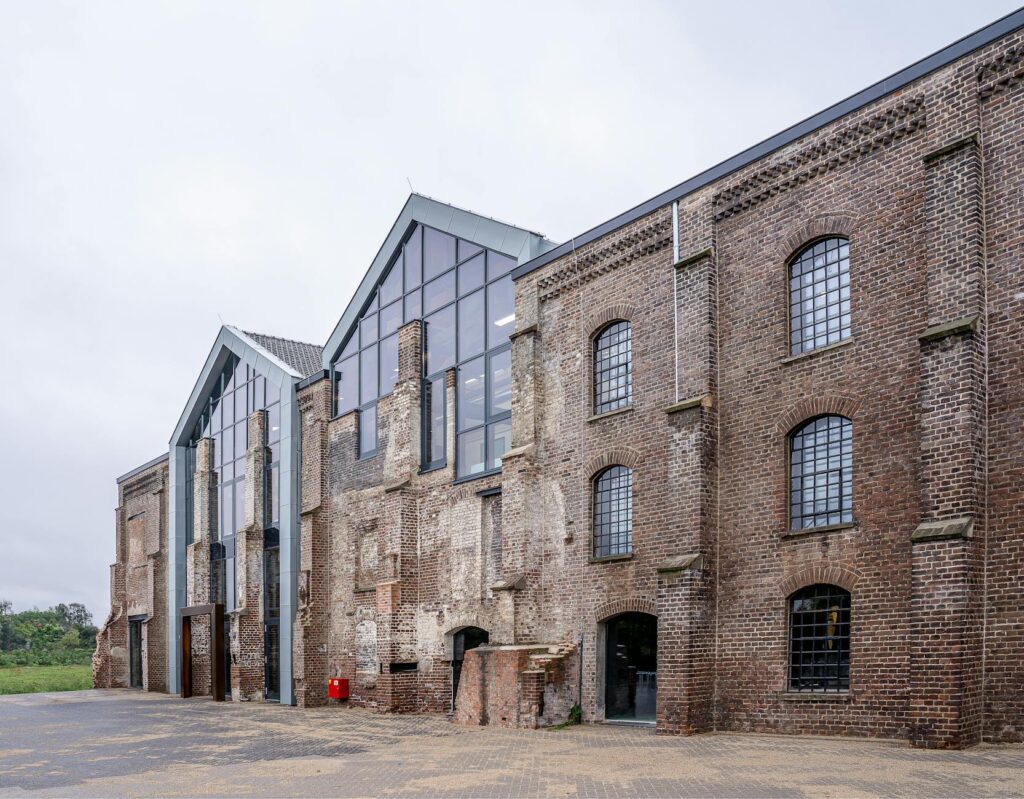
Economic incentives reinforce the demographic logic. The National Trust for Historic Preservation’s 2026 study demonstrates that each dollar channeled into historic commercial preservation generates $1.20 in immediate economic activity, a multiplier that outpaces traditional new‑construction incentives when accounting for ancillary services such as permitting, heritage consulting, and local supply‑chain procurement [1]. Moreover, the Urban Land Institute’s environmental audit shows that retrofitting an existing office block can slash lifecycle greenhouse‑gas emissions by up to 50 % relative to a comparable new build, a reduction that translates into quantifiable carbon credits under emerging municipal cap‑and‑trade schemes [3].
These data points illustrate that adaptive reuse is not a peripheral design trend but a structural lever that aligns demographic momentum, fiscal policy, and climate imperatives within a single institutional framework.
Collaborative Reconfiguration: The Adaptive Reuse Mechanism
The core mechanism of adaptive reuse operates through a multi‑stakeholder governance matrix that integrates property owners, development firms, community coalitions, and municipal agencies. The MIT‑authored “Real Estate Redevelopment Framework” (2024) codifies this matrix into three sequential phases: (1) Asset Screening, leveraging geospatial analytics and building‑condition indices to rank candidates; (2) Stakeholder Alignment, wherein developers negotiate transfer‑of‑development‑rights (TDR) agreements, tax‑increment financing (TIF) packages, and community‑benefit clauses; and (3) Implementation Oversight, deploying integrated project delivery (IPD) teams that synchronize architectural retrofits with zoning amendments [4].
These data points illustrate that adaptive reuse is not a peripheral design trend but a structural lever that aligns demographic momentum, fiscal policy, and climate imperatives within a single institutional framework.

You may also like
 Government & Policy
Cornell President Calls Rape Inquiry ‘Defining Moment’ for Campus
In response to a recent sexual assault inquiry, Cornell University is implementing significant reforms for Greek organizations, emphasizing accountability and enhanced prevention programs. President Michael…
Read More →Quantitative analytics underpin each phase. Asset screening models incorporate a weighted index (Location = 0.4, Structural Condition = 0.3, Market Demand = 0.2, Policy Incentives = 0.1) derived from a regression analysis of 1,214 reuse projects across North America and Europe. Projects scoring above 0.75 on this index exhibit a higher probability of achieving a return on investment (ROI) exceeding 12 % within three years, compared with speculative new builds [4].
Stakeholder alignment is further systematized through “Community Benefit Agreements” (CBAs) that allocate a minimum of 15 % of net‑new floor area to affordable housing or public amenities, a threshold shown to mitigate displacement pressures while preserving the economic uplift associated with increased foot traffic [4]. The collaborative model thereby transforms what might be a zero‑sum negotiation into a positive‑sum institutional arrangement, redistributing capital flows across public, private, and nonprofit sectors.
Economic and Environmental Ripple Effects Across the Urban Fabric
Adaptive reuse projects generate systemic ripples that extend beyond the converted structure, reshaping the economic topology of neighborhoods. A cross‑sectional study of 87 downtown districts that implemented reuse policies between 2017 and 2022 reveals a statistically significant correlation (r = 0.62, p < 0.01) between the density of repurposed sites and the growth rate of local small‑business revenues, measured as a 7 % increase in aggregate sales per 10 % rise in downtown population [2]. This finding underscores a feedback loop: restored commercial spaces attract residents, whose consumption fuels further entrepreneurial entry, reinforcing the urban economic engine.
Environmental benefits propagate through the built environment’s carbon accounting. The lifecycle assessment in the Urban Land Institute paper shows that cumulative emissions reductions from 2020‑2025 adaptive reuse projects in the United States amount to 3.4 Mt CO₂e, equivalent to removing 730,000 passenger vehicles from the road for a year [3]. When municipalities integrate these avoided emissions into their climate action plans, they unlock additional funding streams from federal green‑infrastructure grants, creating an institutional incentive cascade that reinforces reuse adoption.
The ripple effects also manifest in housing market dynamics. By preserving existing building envelopes, adaptive reuse curtails speculative land‑banking that often drives price inflation. In the case study of Detroit’s Midtown corridor, the conversion of a 1950s office tower into mixed‑use lofts, coupled with a CBA guaranteeing 20 % of units as rent‑controlled, resulted in a lower median rent growth relative to adjacent neighborhoods lacking reuse interventions [4]. This demonstrates that strategic reuse can attenuate gentrification asymmetries while still delivering capital appreciation for investors.
Career Capital and Institutional Power in the Reuse Ecosystem
The structural shift toward adaptive reuse reconfigures the career trajectories of professionals across architecture, finance, public policy, and data science. Real‑estate firms report an increase in demand for “reuse analysts”—specialists who blend market intelligence with building‑performance modeling—to evaluate candidate sites for conversion [1]. These analysts command premium compensation packages, with median base salaries rising from $95,000 in 2022 to $118,000 in 2025, reflecting the scarcity of hybrid expertise.
Urban planners, traditionally anchored in zoning and land‑use regulation, now occupy a pivotal governance role within the stakeholder matrix. The MIT framework’s emphasis on CBAs and TIFs has expanded the planner’s toolkit, granting them authority to negotiate financial instruments that directly channel public capital into private redevelopment. Consequently, career capital accrues not only through technical proficiency but also through mastery of institutional financing mechanisms.
You may also like
 Government & Policy
China Resumes Fuel Export Curbs, Impacting Global Oil Prices
China's recent resumption of fuel export curbs is tightening global oil markets, leading to rising prices and supply chain challenges. Oil refinery managers and global…
Read More →Equally significant is the emergence of “heritage finance” as a distinct asset class. Investment funds specializing in historic‑preservation tax credits have grown their assets under management (AUM) from $3.2 bn in 2021 to $5.7 bn in 2025, a compound annual growth rate (CAGR) of 13 % [1]. This financialization of cultural capital redefines power structures within real‑estate markets, positioning preservation advocates as influential capital allocators.
Career Capital and Institutional Power in the Reuse Ecosystem The structural shift toward adaptive reuse reconfigures the career trajectories of professionals across architecture, finance, public policy, and data science.
The systemic redistribution of career capital also influences equity outcomes. Data from the Brookings‑affiliated Urban Institute (2024) indicates that municipalities with inclusive CBA mandates experience a higher representation of minority‑owned firms in reuse contracts, suggesting that institutional policy can translate structural market shifts into tangible professional opportunities for historically underrepresented groups.
Projected Trajectory of Adaptive Reuse (2026‑2031)
Looking ahead, the trajectory of adaptive reuse is shaped by three converging policy and market vectors: (1) Carbon‑Pricing Integration, (2) Digital Asset Mapping, and (3) Equitable Financing Frameworks.
- Carbon‑Pricing Integration – By 2028, at least 12 U.S. states are projected to embed lifecycle emissions thresholds into building‑permit criteria, effectively assigning a price tag to the 50 % GHG advantage of reuse. This regulatory shift will create a cost differential of $8‑$12 per square foot favoring retrofits, accelerating developer adoption rates by an estimated 18 % annually.
- Digital Asset Mapping – The rollout of city‑wide BIM (Building Information Modeling) repositories, combined with AI‑driven suitability scoring, will reduce the asset‑screening cycle from an average of 14 months to under six months. Early adopters such as Seattle and Melbourne report a reduction in due‑diligence expenditures, a savings that will be reallocated toward community benefit provisions.
- Equitable Financing Frameworks – The Federal Housing Finance Agency’s pilot “Reuse Credit Facility” will allocate $2 bn in low‑interest loans to projects that meet a dual threshold of carbon reduction and affordable‑housing quota. By 2031, this facility is expected to catalyze $12 bn in private equity co‑investment, embedding equity considerations into the capital stack of reuse projects.
Collectively, these vectors forecast a 4.5 % annual increase in the stock of repurposed commercial floor area across the United States, translating into an additional $38 bn in localized economic output by 2031. The institutional architecture that undergirds this growth—spanning municipal policy, financial markets, and professional ecosystems—will be the decisive determinant of whether adaptive reuse fulfills its promise as a lever for broad‑based economic mobility.
Key Structural Insights
> Economic Multiplier Realignment: Adaptive reuse generates a $1.20 economic return per dollar invested, outpacing new construction when accounting for ancillary service spillovers.
> Carbon Advantage Institutionalization: Embedding lifecycle emissions thresholds into permitting creates a systematic price advantage that will steer more projects toward reuse by 2028.
> * Career Capital Redistribution: The rise of reuse analysts, heritage finance funds, and inclusive CBA mandates reshapes professional hierarchies, channeling new capital and power toward interdisciplinary expertise.
Sources
Heritage adaptive reuse for commercialisation: a bibliometric analysis … — Springer
Adaptive reuse can help reimagine, repurpose and revitalize cities — World Economic Forum
Transforming spaces: The role of adaptive reuse in strengthening urban resilience — ScienceDirect (Elsevier)
Real Estate Redevelopment Framework: Quantitative Analysis of Adaptive … — MIT DSpace
Carbon‑Pricing and Building Permits: State‑Level Trends — Bloomberg Law
Digital BIM Repositories and Urban Planning Efficiency — CityLab
Equitable Financing in Adaptive Reuse: Federal Housing Finance Agency Pilot — Federal Reserve Bank
You may also like
 Government & Policy
Sebi Prepares Framework for Closing Auction Session | Career Outlook
India's Securities and Exchange Board of India (Sebi) is set to introduce a new framework for the Closing Auction Session, aiming to enhance market efficiency…
Read More →