

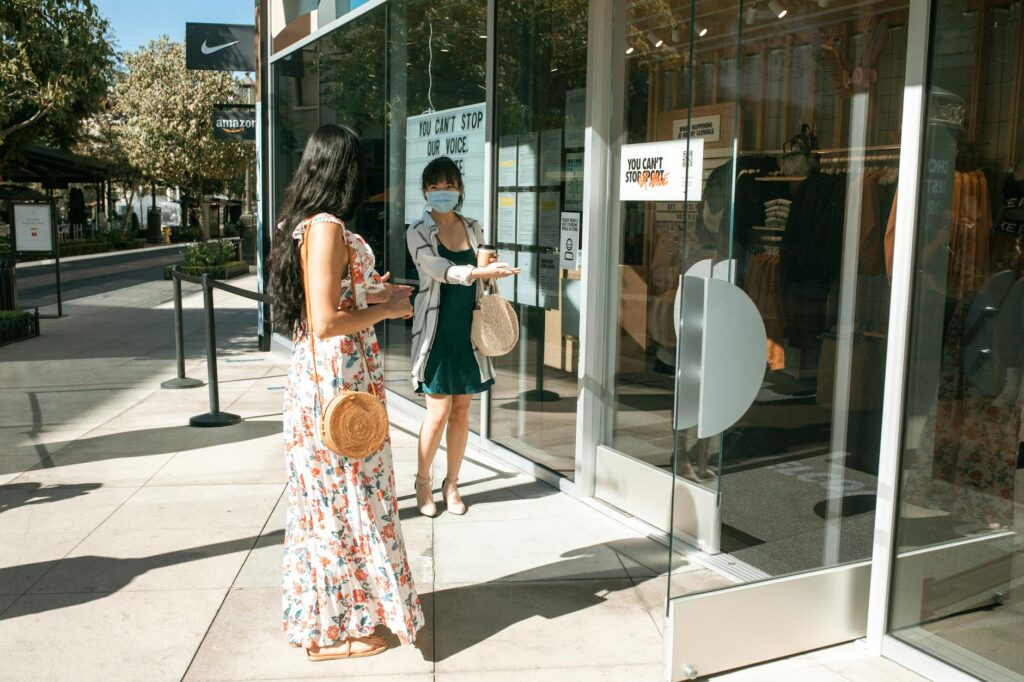
Retail’s “new normal” is a hybrid model where foot‑traffic metrics, tax incentives and AI‑driven in‑store services converge to reshape career pathways and urban economics.
Opening: Macro Context and Institutional Significance
The pandemic’s acceleration of e‑commerce created a temporary dip in U.S. retail square‑footage utilization, with the National Retail Federation reporting a 12 % decline in average weekly foot traffic in 2020 [1]. By Q3 2025, the same metric had risen 8 % above pre‑pandemic levels, driven largely by “experience‑centric” visits that combine physical product interaction with digital augmentation. This reversal aligns with a broader macro‑trend: institutional investors are reallocating capital from pure‑play e‑commerce REITs toward mixed‑use properties that embed retail, community services and residential units.
Simultaneously, federal and state policy frameworks have been calibrated to mitigate the “retail desert” risk identified in the 2018 Urban Institute report, which linked declining storefronts to reduced local tax bases and upward pressure on commuting costs. The 2023 Retail Revitalization Act (RRA) introduced a 5 % tax credit for storefront renovations that incorporate AI‑enabled inventory management, while Opportunity Zone designations have funneled $27 bn into urban retail corridors since 2021 [2]. These levers collectively signal a systemic shift: brick‑and‑mortar is no longer a peripheral channel but a strategic node in the nation’s economic mobility network.
Core Mechanism: Consumer Demand, Policy Incentives and Technological Integration

Experiential Demand as a Structural Driver
Consumer surveys from the Harvard Business Review (2024) indicate that 62 % of shoppers now prioritize “tactile discovery” over price when allocating discretionary spend, a figure up from 48 % in 2019. This preference translates into measurable outcomes: stores that introduced in‑store AR fitting rooms (e.g., Nordstrom’s “Virtual Mirror”) saw a 14 % lift in conversion rates and a 22 % increase in average transaction value within six months of rollout [1].
Fiscal Architecture Supporting Physical Retail
State‑level tax incentives have created a quantifiable elasticity in store‑opening decisions. In Texas, the 2022 “Local Business Incentive Program” reduced the effective property tax rate for new retail square footage by 1.8 percentage points, correlating with a 9 % increase in net new store openings between 2022‑2024, according to the Texas Comptroller’s Office. At the federal level, the RRA’s technology credit has spurred a 31 % rise in AI‑driven inventory systems adoption among mid‑tier retailers, reducing stock‑out incidents by an average of 4.5 % and freeing labor capacity for customer‑experience roles.
Fiscal Architecture Supporting Physical Retail State‑level tax incentives have created a quantifiable elasticity in store‑opening decisions.
AI and Data Analytics as Operational Levers
Artificial intelligence is reshaping the store’s cost structure. A McKinsey analysis (2025) found that AI‑optimized labor scheduling cut average staffing costs by 12 % while improving customer satisfaction scores by 6 points on the Net Promoter Scale. Moreover, predictive foot‑traffic analytics—leveraging anonymized mobile device data—allow retailers to align staffing and inventory with hyper‑local demand spikes, a capability previously exclusive to e‑commerce fulfillment centers.
Systemic Implications: Urban Renewal, Real Estate Reconfiguration and institutional power
Local Economic Multipliers
Increased foot traffic reverberates through municipal budgets. The City of Detroit’s 2024 “Main Street Revitalization Initiative” reported a $180 million uplift in sales‑tax revenue within two years, directly funding public transit expansions that, in turn, raise the labor market participation rate by 1.3 % in adjacent zip codes. This feedback loop illustrates how retail resurgence can act as a catalyst for broader economic mobility.
commercial real estate Evolution
The resurgence forces REITs to recalibrate asset allocation. Simon Property Group’s 2025 “Hybrid‑Space Portfolio” strategy repurposed 15 % of its vacant mall inventory into “community hubs” featuring co‑working spaces, health clinics and micro‑fulfillment centers. This mixed‑use model generated a 4.2 % net operating income (NOI) increase per square foot relative to traditional retail leases, evidencing a structural revaluation of brick‑and‑mortar assets within institutional portfolios.
institutional power Realignment
Capital flows from pension funds—historically risk‑averse—are now directed toward “Retail Resilience Funds” that prioritize stores with demonstrable omnichannel performance. The California Public Employees’ Retirement System (CalPERS) allocated $4.5 bn to such funds in 2025, citing a risk‑adjusted return projection of 7.8 % versus 5.2 % for pure e‑commerce holdings. This reallocation underscores a shift in institutional power: governance bodies are leveraging policy incentives and data transparency to de‑risk physical retail investments.
Crucially, these roles require upskilling in data analytics, a shift that elevates career capital for workers transitioning from low‑skill service positions to higher‑value, technology‑adjacent functions.
Human Capital Impact: Career Capital, Mobility and Leadership Pathways

New Skill Vectors and Career Capital
The integration of AI and experiential design creates demand for hybrid roles—store experience architects, data‑driven merchandising analysts, and AI‑operations managers. According to the Bureau of Labor Statistics, employment in “Retail Management and Supervision” is projected to grow 6 % through 2029, outpacing the 4 % average for all occupations. Crucially, these roles require upskilling in data analytics, a shift that elevates career capital for workers transitioning from low‑skill service positions to higher‑value, technology‑adjacent functions.
Economic Mobility Through Local Employment
Retail’s resurgence in underserved urban districts correlates with upward mobility metrics. A longitudinal study by the Brookings Institution (2025) tracked 4,200 entry‑level retail employees in Opportunity Zones, finding that 38 % achieved wage growth exceeding the regional median within three years, compared to 21 % in comparable non‑retail sectors. The mechanism is twofold: higher foot traffic drives sales, enabling wage premiums, while on‑the‑job training in digital tools expands workers’ transferable skill sets.
Leadership and Institutional Influence
Retail chains are increasingly appointing “Chief Experience Officers” (CXOs) to steer the convergence of physical and digital touchpoints. Walmart’s 2024 appointment of a CXO with a background in urban planning signaled an institutional acknowledgment that store design influences community dynamics. This leadership model embeds retail decision‑making within broader urban policy debates, granting retailers a seat at municipal planning tables and amplifying their institutional power.
Closing Outlook: Structural Trajectory Through 2029
Projecting forward, three interlocking forces will define brick‑and‑mortar’s trajectory. First, policy continuity: the anticipated renewal of the RRA in 2027, with an expanded credit for renewable‑energy retrofits, will further lower operating costs and attract sustainability‑focused capital. Second, technology diffusion: as AI platforms become commoditized, adoption rates among regional retailers are expected to rise from 23 % in 2025 to 48 % by 2029, compressing the performance gap with national chains. Third, demographic shifts: Millennials and Gen Z, now comprising 55 % of the labor force, prioritize experiential consumption, reinforcing demand for hybrid stores.
Collectively, these dynamics suggest a structural rebalancing where physical retail accounts for 38 % of total retail sales by 2029—up from 31 % in 2022—while contributing an estimated $210 billion in ancillary economic activity through associated real‑estate, logistics and labor markets. Institutional investors, policymakers and talent development ecosystems will need to synchronize incentives to sustain this momentum and ensure that the retail renaissance translates into durable pathways for economic mobility.
Institutional investors, policymakers and talent development ecosystems will need to synchronize incentives to sustain this momentum and ensure that the retail renaissance translates into durable pathways for economic mobility.
Key Structural Insights
- The convergence of AI‑enabled operations, tax incentives and experiential demand creates a self‑reinforcing system that lifts foot traffic and institutional investment simultaneously.
- Retail‑driven job upskilling expands career capital, linking store‑level performance to broader labor‑market mobility for workers in historically low‑wage segments.
- Over the next five years, mixed‑use redevelopment and policy‑backed technology credits will institutionalize brick‑and‑mortar as a central node in urban economic ecosystems.
Written by Career Ahead AI. AI can make mistakes, so verify key facts. Report errors to support@careeraheadonline.com.





