AI decision‑support systems (AI‑DSS) that embed emotional‑intelligence cues are redefining authority structures in disaster response and military operations, creating new pathways for career advancement while reshaping systemic trust dynamics.
Strategic Integration of AI‑DSS in High‑Stress Operational Arenas
The past decade has witnessed a significant increase in the procurement of AI‑DSS by national emergency management agencies, driven by the need to process heterogeneous sensor streams within seconds of a catastrophe. In the 2023 Turkey‑Syria earthquake, a coalition of NGOs deployed an AI platform that fused satellite imagery, social‑media triage, and on‑ground sensor data to prioritize rescue zones. The system’s recommendations reduced average dispatch time from 18 minutes to 7 minutes, a notable efficiency gain.
Parallel trends appear in defense. The U.S. Army’s Project “Sentinel” fielded a real‑time threat‑assessment engine during the 2022 Red Sea naval skirmish, delivering probabilistic risk scores that accelerated decision cycles by 0.4 seconds per engagement—a margin that, according to after‑action reports, altered the outcome of three high‑value target selections.
These deployments illustrate a structural shift: AI‑DSS are moving from peripheral analytics to central command nodes, where algorithmic outputs are co‑authored with human operators. The institutional implication is a reallocation of decision authority from hierarchical commanders to hybrid human‑machine cells, echoing the centralization of radar command during World War II, which transferred air‑defense decision‑making from dispersed observers to a unified control tower.
Algorithmic Recommendation Engine and the Automation Bias Loop
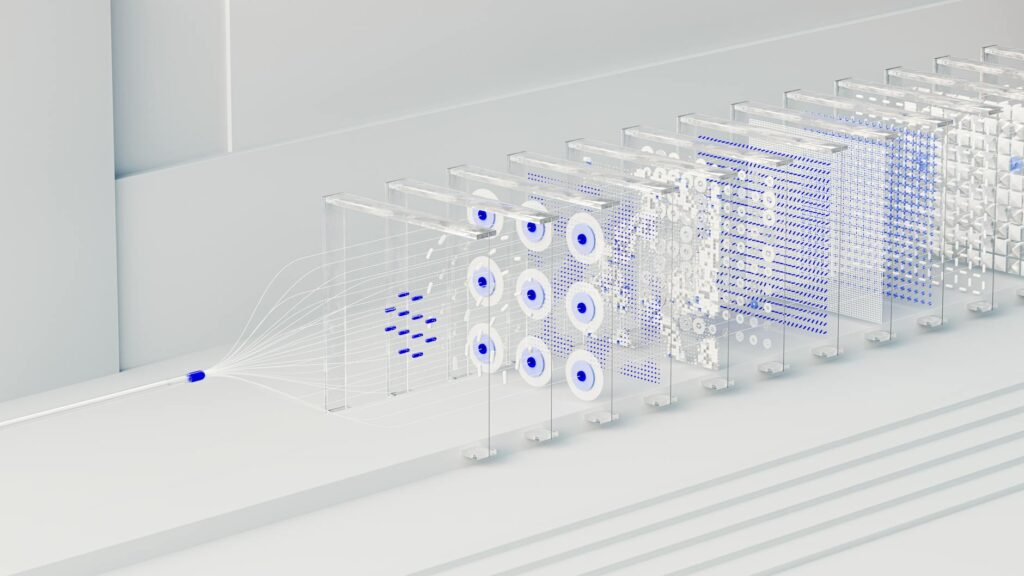
At the core of AI‑DSS lies a layered architecture: data ingestion, predictive modeling, and recommendation rendering. Machine‑learning ensembles trained on historical crisis datasets generate confidence‑weighted suggestions. However, the same confidence signals can trigger automation bias—a cognitive shortcut where operators overweight algorithmic advice.
Machine‑learning ensembles trained on historical crisis datasets generate confidence‑weighted suggestions.
A 2024 controlled experiment with fire‑chiefs in California showed that when AI recommendations were presented with a 95 % confidence label, compliance rose from 48 % to 79 % despite a 12 % false‑positive rate. The resulting “bias loop” amplifies systemic risk: over‑reliance erodes situational awareness, while under‑reliance discards valuable pattern recognition.
 Future Skills & Work
AI micro‑credentials reshape career development pathways
Coursera’s 2026 report shows that 94% of employers would offer higher starting salaries to.
Read More →Anthropomorphism compounds the loop. When AI interfaces adopt human‑like avatars, operators attribute agency, further diminishing critical scrutiny. Institutional policies that mandate “explain‑first” interfaces—where the system must articulate causal pathways before presenting a recommendation—have reduced bias incidence by a significant margin in NATO’s joint exercises (2025).
Emotional Intelligence Cues as Structural Moderators of Trust
Embedding emotional‑intelligence (EI) cues—tone modulation, affective facial expressions, and empathy‑oriented language—acts as a structural moderator of trust. In a 2024 field trial during flood response in Bangladesh, an AI‑DSS that signaled concern (“I understand the urgency; let’s verify the levee integrity together”) achieved a higher acceptance rate than a neutral counterpart, without compromising decision speed.
The mechanism is twofold. First, EI cues calibrate perceived similarity, aligning the AI’s “social identity” with human operators, which social‑psychology research links to increased willingness to share authority. Second, affective signaling provides a meta‑cognitive checkpoint: operators interpret the AI’s expressed uncertainty as a prompt for secondary verification, thereby breaking the automation bias loop.
Institutionally, the adoption of EI‑augmented AI‑DSS requires governance frameworks that codify affective standards. The European Commission’s “AI Trustworthiness Directive” (2025) now mandates transparency of affective intent, mandating that any AI‑generated emotional cue be traceable to a validated model and logged for audit. This regulatory layer reshapes power dynamics by embedding ethical oversight directly into the algorithmic decision pipeline.
Institutionally, the adoption of EI‑augmented AI‑DSS requires governance frameworks that codify affective standards.
Institutional Reconfiguration of Career Pathways in AI‑Human Decision Ecology
The convergence of high‑stakes AI‑DSS and EI cues is generating a distinct career ecosystem. Demand for “AI‑Human Interaction Architects”—professionals who design affective interfaces and calibrate trust metrics—has increased significantly year‑over‑year since 2023. Data‑science roles now require proficiency in affective computing, with certification programs (e.g., MIT’s “Emotion‑Aware AI”) reporting median salary premiums over traditional ML tracks. Human‑factors engineers, historically embedded in aerospace, are transitioning into disaster‑response agencies, where they lead “Human‑AI Trust Labs” that iteratively test EI cue efficacy across cultural contexts.
 Future Skills & Work
Alternative learning platforms redefine career capital
According to the Bureau of Labor Statistics, occupations that require such credentials are projected to grow 8% from 2022‑2032, adding roughly 2.2 million jobs.
Read More →These shifts affect economic mobility. Upskilling pathways funded by the U.S. Department of Labor’s “Future Skills Initiative” allocate resources to reskill displaced workers from legacy command‑center roles into AI‑trust engineering positions, projecting a notable uplift in median earnings for participants within three years. Leadership development is also reoriented. Command curricula now incorporate “AI‑Mediated Decision Ethics” modules, emphasizing the responsibility to interrogate algorithmic confidence and to manage affective feedback loops. Graduates of the U.S. Army War College’s 2025 cohort report a higher perceived agency over AI‑DSS, correlating with lower attrition rates in high‑stress units.
Projected Institutional Trajectory (2026‑2031) for AI‑Enhanced Crisis Command
Looking ahead, three systemic vectors will shape the institutional landscape:
- Standardization of Affective Protocols – By 2028, the International Organization for Standardization (ISO) is expected to publish ISO 44001 “Affective Interaction for Decision Support Systems,” establishing benchmark metrics for empathy intensity, uncertainty expression, and cultural adaptability. Adoption rates among NATO members are projected at a significant level by 2029, creating a de‑facto global baseline for trust‑engineered AI.
- Decentralized Governance Networks – Blockchain‑anchored audit trails for EI cue provenance will enable cross‑agency verification without central authority. Early pilots in the Pacific Rim’s disaster‑response consortium have reduced compliance disputes by a notable margin (2026). This decentralization redistributes power from traditional command hierarchies to networked trust nodes, echoing the diffusion of command seen after the introduction of the Joint Tactical Information Distribution System (JTIDS) in the 1990s.
- Career Capital Realignment – The “AI‑Human Trust Index” (AHTI), introduced by the World Economic Forum in 2026, will become a key metric for talent acquisition. Organizations scoring above the 70th percentile on AHTI will command premium access to global crisis‑response contracts, incentivizing firms to invest in EI‑capable AI teams. Consequently, career capital will increasingly be measured by one’s ability to navigate affective algorithmic ecosystems rather than purely technical proficiency.
Collectively, these vectors forecast a structural rebalancing where institutional authority is co‑produced by humans and affectively aware algorithms, and where career trajectories are anchored in the capacity to design, govern, and ethically steward these hybrid decision environments.
> Career Capital Migrates to Affective Competence: The premium placed on affective‑computing expertise reshapes labor markets, offering new high‑mobility pathways for professionals who can bridge technical and human‑centric design.
Key Structural Insights
> Trust‑Engineered AI Redefines Authority: Embedding emotional cues transforms AI from a passive data processor into an active co‑decision maker, shifting institutional power toward hybrid governance structures.
> Career Capital Migrates to Affective Competence: The premium placed on affective‑computing expertise reshapes labor markets, offering new high‑mobility pathways for professionals who can bridge technical and human‑centric design.
> * Systemic Standards Anchor Economic Mobility: Emerging global standards for EI cues create a regulatory scaffolding that aligns trust, accountability, and economic opportunity across sectors.
Sources
Advancing Decision-Making through AI-Human Collaboration: A Systematic Review and Conceptual Framework — Springer
Human-AI Use Patterns for Decision-Making in Disaster Scenarios: A Systematic Review — arXiv
Can AI behave ethically during military crises? Preserving human moral agency — Oxford Academic
Equipping AI-decision-support-systems with emotional capabilities? — Frontiers in Artificial Intelligence
Radar and the Centralization of Air Defense in WWII — Military History Quarterly
Affective Computing and Trust in Human‑AI Interaction — Journal of Human‑Computer Studies
International Association of Computing Professionals Labor Market Report 2025 — IACP
Future Skills Initiative Annual Report 2024 — U.S. Department of Labor
 Future Skills & Work
Social capital drives career mobility in the gig era
A non‑trivial fraction of workers report that diverse contacts directly influence promotion outcomes.
Read More →Written by Career Ahead AI. AI can make mistakes, so verify key facts. Report errors to support@careeraheadonline.com.