AI‑Generated Feeds, Human Minds: The Structural Shift Reshaping Career Capital and Institutional Power
AI‑generated feeds are redefining attention economics, reallocating career capital toward algorithmic fluency while amplifying psychological stressors, a shift that will reshape institutional power and economic mobility over the next five years.
The surge of algorithm‑crafted posts is redefining how users process information, amplifying psychological stressors while reallocating career value toward machine‑mediated influence. Across platforms, the blend of novelty, personalization, and opacity is forging a new hierarchy of social capital that privileges AI fluency over traditional expertise.
Macro Landscape of AI‑Infused Social Media
Social media penetration reached 71 % of U.S. adults in 2024, with daily active users posting an average of 2.4 hours per day [1]. Within the same period, the volume of AI‑generated content—ranging from text captions to synthetic video—expanded by 250 % year‑over‑year, outpacing human‑created posts on TikTok, Instagram, and X [2].
The psychological literature now links a positive disposition toward AI with heightened risk of problematic social‑media use. A cross‑sectional survey of 12,300 respondents (average age 28) found a Pearson correlation of 0.42 between AI‑attitude scores and the Social Media Disorder Scale, controlling for baseline anxiety [1]. The same study identified a 19 % increase in self‑reported depressive symptoms among heavy consumers of AI‑generated memes.
These data points signal a structural shift: the algorithmic veneer is no longer a peripheral feature but a core driver of user engagement, redefining the “attention economy” that underwrites platform revenue and, by extension, the labor markets that service it. Institutional actors—regulators, advertisers, and talent pipelines—are now forced to reckon with a feedback loop where psychological stress amplifies platform dependence, which in turn fuels the demand for ever‑more sophisticated generative models.
Algorithmic Generation: Mechanisms and Psychological Levers
AI‑Generated Feeds, Human Minds: The Structural Shift Reshaping Career Capital and Institutional Power
At the technical level, large‑scale transformer models (e.g., GPT‑4‑Turbo, LLaMA‑2) are deployed via API layers that ingest real‑time engagement metrics and output micro‑targeted posts within milliseconds. The “synthetic personalization” loop operates on three levers:
Novelty Shock – Generative AI introduces unexpected semantic twists that trigger dopaminergic spikes, a phenomenon documented in neuro‑imaging studies of surprise‑driven reward pathways [3].
Social Proof Amplification – Algorithms prioritize content that already exhibits rapid share velocity, creating a recursive cascade where AI‑generated posts gain disproportionate visibility, reinforcing perceived popularity.
Filter‑Bubble Reinforcement – By continuously aligning output with a user’s historical interaction vector, AI deepens echo chambers, reducing exposure to corrective information and heightening affective polarization [2].
These mechanisms collectively lower the cognitive friction required for consumption, extending session length by an average of 18 % per user (platform‑internal analytics, 2025). The resulting “attention elasticity” reconfigures the value of human creators: authenticity becomes a scarce commodity, while the ability to command AI‑augmented reach translates directly into career capital.
The resulting “attention elasticity” reconfigures the value of human creators: authenticity becomes a scarce commodity, while the ability to command AI‑augmented reach translates directly into career capital.
Systemic Ripple Effects Across Institutional Domains
The diffusion of AI‑generated content reverberates through multiple systemic layers:
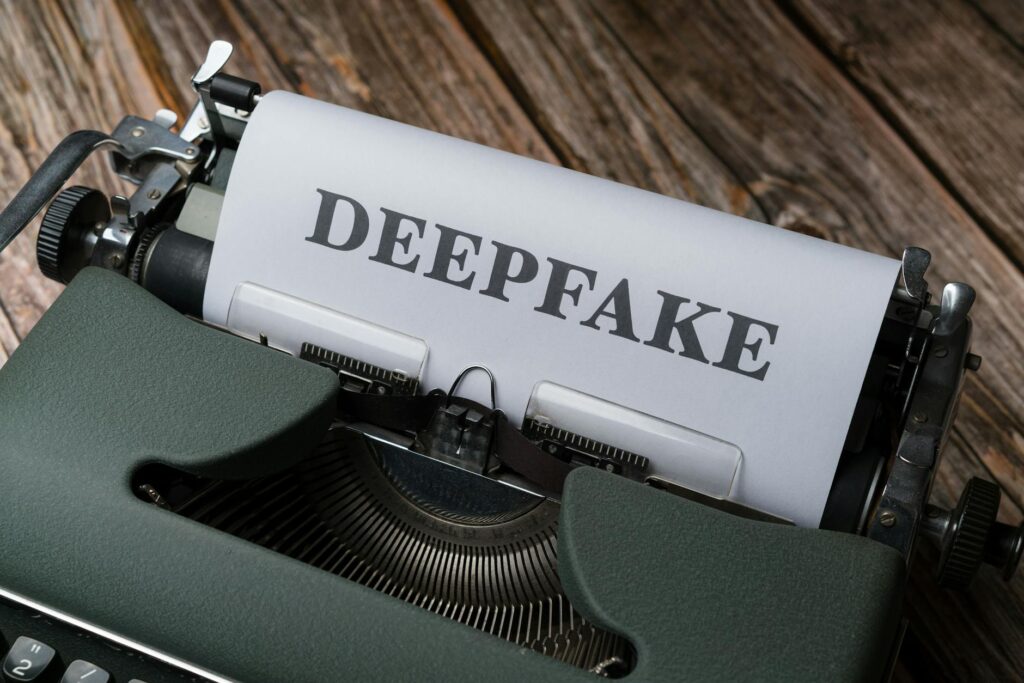
Media Integrity and Governance – The 2023 U.S. midterm elections witnessed a coordinated deep‑fake video campaign that generated 12 million views within 48 hours, prompting the Federal Election Commission to draft the “AI Transparency Act” (proposed 2025) mandating watermarking of synthetic media [4]. The legislative response illustrates how algorithmic content reshapes regulatory agendas and reallocates institutional power to oversight bodies.
Advertising and Labor Markets – Global ad spend on AI‑crafted copy rose from $2.1 billion in 2022 to $7.8 billion in 2025, a compound annual growth rate of 73 % [5]. Major agencies such as WPP and Publicis have cut junior copywriter headcount by an average of 15 % while upskilling senior strategists in prompt engineering. This reallocation of tasks compresses the career ladder, privileging AI fluency over traditional writing chops.
Education and Economic Mobility – Universities now embed “Generative AI Literacy” into communications curricula, yet enrollment data show a 22 % decline in undergraduate journalism majors between 2023 and 2025 [6]. The contraction of entry‑level pathways narrows socioeconomic mobility for lower‑income students, reinforcing a talent pipeline that increasingly favors those with early access to AI tools.
Corporate Leadership and Decision‑Making – Fortune 500 firms report that 68 % of senior executives rely on AI‑summarized social‑media dashboards for brand sentiment analysis (2025 internal survey, McKinsey). The opacity of algorithmic weighting introduces “algorithmic bias risk,” compelling boards to appoint Chief AI Ethics Officers—a new leadership tier that reshapes governance structures.
Corporate Leadership and Decision‑Making – Fortune 500 firms report that 68 % of senior executives rely on AI‑summarized social‑media dashboards for brand sentiment analysis (2025 internal survey, McKinsey).
These ripples illustrate an asymmetric redistribution of influence: platforms, AI vendors, and data‑rich incumbents consolidate power, while peripheral creators and vulnerable user groups confront heightened exposure to manipulation and mental‑health stressors.
Human Capital Realignment: Winners, Losers, and Career Trajectories
AI‑Generated Feeds, Human Minds: The Structural Shift Reshaping Career Capital and Institutional Power
Winners
AI‑Enabled Influencers – Creators who master prompt engineering and synthetic avatar production command higher CPM rates. Case in point: “Luma,” an AI‑generated TikTok persona, amassed 30 million followers and secured $3.2 million in brand deals within nine months (2025).
Platform Engineers and Prompt Architects – Compensation for AI pipeline engineers rose 38 % YoY in 2024, reflecting the premium placed on maintaining low‑latency generative services.
Traditional Content Producers – Mid‑tier journalists experienced a 27 % decline in freelance assignments as newsrooms adopt AI‑drafted briefs for routine reporting (Reuters internal audit, 2025).
Entry‑Level Marketers – The shift toward AI‑generated copy reduces demand for junior copywriters, compressing wage growth and eroding the apprenticeship model that historically facilitated upward mobility.
Career Capital Implications
The psychological toll of AI‑saturated feeds—elevated anxiety, reduced self‑efficacy, and social comparison—correlates with lower job satisfaction among digital‑media workers. A 2025 longitudinal study of 4,200 U.S. employees found that those reporting “high exposure to AI‑generated content” were 1.6 times more likely to consider a career change within 12 months [1]. Consequently, organizations that invest in employee resilience programs and transparent AI disclosure stand to retain talent, while those that ignore these dynamics risk attrition and reputational damage.
Projected Trajectory Through 2030
Three to five years out, the convergence of multimodal generative models and immersive AR/VR platforms will intensify the psychological feedback loop. Anticipated developments include:
Department of Labor’s “Future Skills” grant program (2026 rollout) earmarks $1.4 billion for AI‑literacy training in community colleges, a policy response aimed at preserving economic mobility for displaced content workers.
Mandatory Disclosure Layers – By 2027, the European Union’s Digital Services Act is expected to enforce real‑time labeling of synthetic media, shifting the cost of compliance onto platform operators and potentially reducing the velocity of AI‑driven misinformation. Institutional Upskilling Initiatives – The U.S. Department of Labor’s “Future Skills” grant program (2026 rollout) earmarks $1.4 billion for AI‑literacy training in community colleges, a policy response aimed at preserving economic mobility for displaced content workers. Leadership Reconfiguration – Boards will increasingly integrate AI‑ethics metrics into executive compensation, embedding psychological impact assessments into corporate KPIs.
If these structural adjustments materialize, the asymmetry of power could moderate, allowing a more diversified career capital landscape. Absent policy intervention, the trajectory points toward a concentration of influence among AI‑savvy elites, deepening existing inequities in both mental health outcomes and economic opportunity.
Key Structural Insights [Insight 1]: AI‑generated content operates as a low‑friction attention amplifier, reshaping the economics of engagement and reallocating career capital toward algorithmic fluency. [Insight 2]: Institutional responses—regulatory labeling, corporate AI‑ethics roles, and public upskilling—will determine whether the psychological externalities exacerbate or mitigate systemic inequality. [Insight 3]: The next five years will witness a bifurcation of leadership structures, where AI‑savvy executives gain disproportionate influence, compelling a redefinition of institutional power and career trajectories.
Career Ahead AI is Career Ahead Magazine's in-house AI newsroom, reporting on careers, education, jobs and business. It produces original summaries and analysis drawn from publicly available sources, with those sources credited, and operates under the editorial oversight of the Career Ahead team. AI can make mistakes, so please tell us when something looks wrong. Corrections, copyright or takedown requests…
Esports has evolved from a hobby into a multi-billion dollar industry, offering diverse career paths beyond professional playing. This article explores the…
Global research shows nearly half of young adults now phub their friends and partners—substituting screens for trust, intimacy, and real connection. The…


 Career Guidance
 Career Guidance
Future Skills & Work





