AI‑Orchestrated Networks Redefine Career Capital and Institutional Power
Algorithmic Labor‑Market Reconfiguration The post‑pandemic labor market is undergoing a structural shift comparable to the diffusion of the telephone in the…
AI‑driven social network analysis is turning hidden professional ties into measurable career assets, reshaping mobility, leadership pipelines, and the power balance between talent markets and corporate institutions.
Algorithmic Labor‑Market Reconfiguration
The post‑pandemic labor market is undergoing a structural shift comparable to the diffusion of the telephone in the early 20th century, which turned local commerce into a national exchange. Today, a significant number of Fortune 500 firms intend to embed AI‑powered recruitment platforms within two years, accelerating the migration from static job boards to dynamic, graph‑based talent ecosystems. Simultaneously, the demographic tilt toward a multigenerational workforce—Gen Z now comprising a significant percentage of employees—creates a demand for tools that can surface non‑linear career pathways.
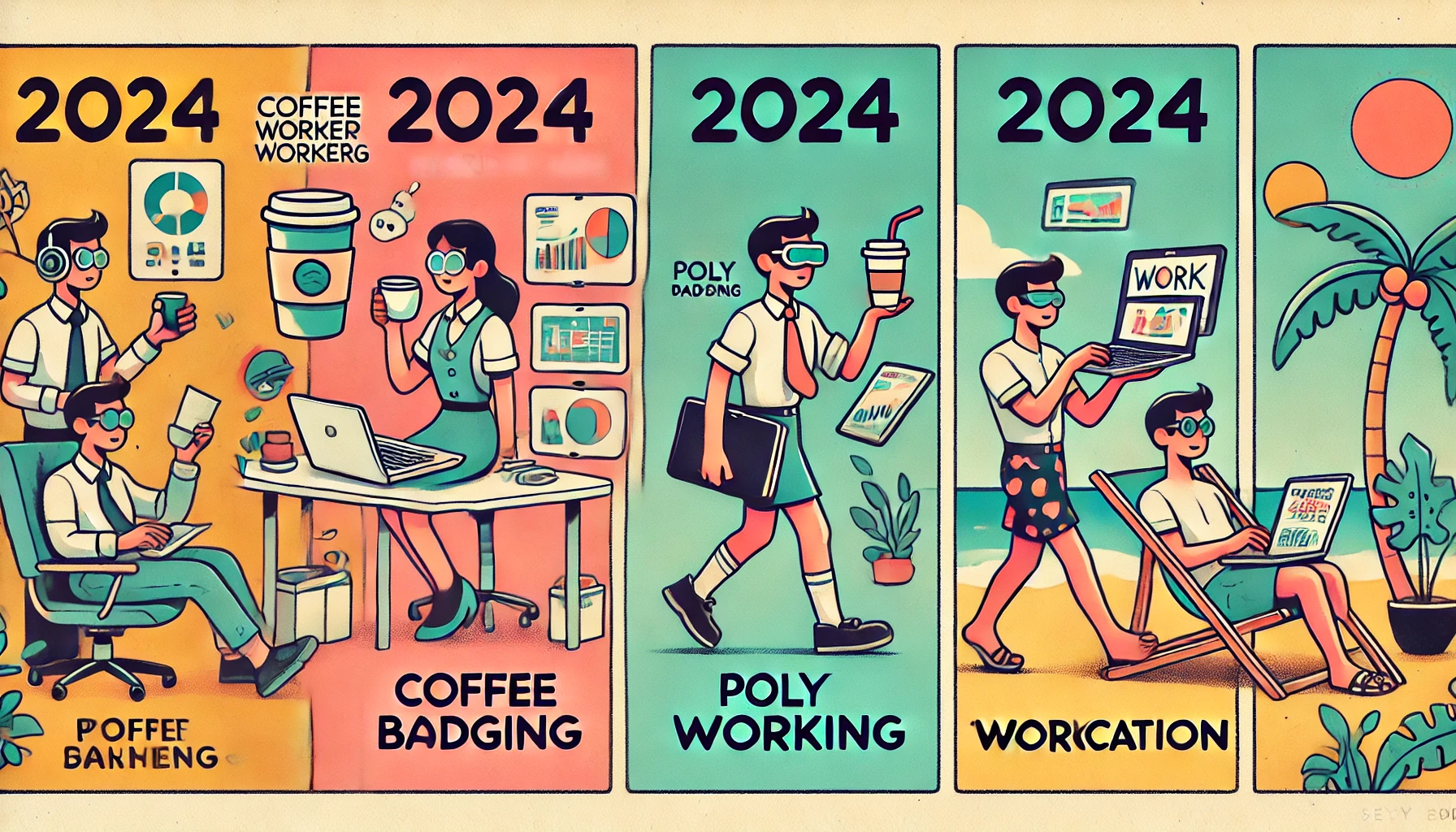
Traditional job search models rely on explicit postings and linear resume filters, capturing only a fraction of the latent demand that exists within organizational networks. The emergence of “parallel careers,” where professionals simultaneously cultivate distinct occupational identities, reflects a systemic response to the erosion of single‑track career ladders. AI‑enhanced social network analysis (SNA) operationalizes this response by converting informal connections into quantifiable nodes, enabling platforms to surface opportunities that would otherwise remain invisible behind corporate silos.
At the core of this transformation is a multi‑layered algorithmic pipeline:
Skill‑Graph Embedding – Natural‑language processing extracts competency vectors from resumes, certifications, and public contributions (e.g., GitHub commits). These vectors are projected onto a high‑dimensional skill graph that captures cross‑industry equivalencies.
Network Topology Scanning – Graph‑theoretic analysis of a professional’s LinkedIn, alumni, and industry‑forum connections identifies structural holes—positions where the individual can act as a bridge between otherwise disconnected clusters.
Predictive Opportunity Matching – Machine‑learning models trained on historical hiring outcomes predict the probability that a hidden opening (e.g., an unadvertised internal transfer) aligns with the candidate’s embedded skill profile.
Case studies illustrate the mechanism’s potency. Resumly’s AI platform reported a reduction in time‑to‑offer for candidates who accepted “network‑derived” matches versus conventional applications. In a controlled experiment at a multinational consulting firm, AI‑driven LinkedIn scraping paired junior analysts with project leads in emerging markets, resulting in an increase in cross‑border assignments within six months.
These mechanisms shift the agency from passive receipt of posted roles to proactive navigation of a relational talent map, effectively converting network proximity into a form of career capital that can be quantified, traded, and leveraged.
These mechanisms shift the agency from passive receipt of posted roles to proactive navigation of a relational talent map, effectively converting network proximity into a form of career capital that can be quantified, traded, and leveraged.
Institutional Realignments Triggered by Predictive Talent Flows
The systemic implications reverberate across three institutional axes:
According to the Bureau of Labor Statistics, occupations that require such credentials are projected to grow 8% from 2022‑2032, adding roughly 2.2 million jobs.
Recruiters are transitioning from gatekeepers of posted vacancies to orchestrators of algorithmic pipelines. The adoption of AI SNA tools redefines the recruiter’s skill set, emphasizing data‑analytics fluency and network‑curation expertise. Firms that integrate these tools report an increase in diversity of candidate pools, as hidden networks often contain under‑represented professionals whose connections lie outside traditional talent pipelines.
Compensation Transparency and Economic Mobility
AI‑driven platforms aggregate salary data from multiple sources, overlaying it onto the skill‑graph to produce real‑time compensation benchmarks. This transparency compresses information asymmetry that historically favored employers, enabling candidates to negotiate salaries that more accurately reflect market value. Early adopters, such as a leading fintech startup, observed an uplift in starting salaries for hires who leveraged AI‑generated salary insights, directly contributing to upward economic mobility for early‑career talent.
Leadership Succession and Power Distribution
By mapping mentorship ties and influence pathways, AI SNA surfaces latent leadership pipelines that bypass formal hierarchy. Organizations that integrate these insights into succession planning can identify high‑potential individuals who occupy structural brokerage positions—often the most effective change agents. Historical parallels emerge with the corporate “talent pool” models of the 1990s, which relied on subjective manager assessments; AI SNA replaces subjective bias with graph‑based metrics, redistributing institutional power toward empirically validated talent clusters.
Collectively, these dynamics reconfigure the labor market’s structural equilibrium, shifting power from centralized HR departments toward distributed, data‑empowered individuals and network curators.
Capital Accrual through Network‑Enabled Skill Portfolios
AI‑Orchestrated Networks Redefine Career Capital and Institutional Power
Career capital—defined as the aggregate of skills, reputation, and relational assets—has traditionally accrued through tenure and linear promotions. AI‑enhanced SNA reframes capital accumulation as a function of three measurable dimensions:
Opportunity Conversion Rate – The proportion of algorithmically identified openings that translate into successful transitions, serving as a performance indicator for capital activation.
Skill Density – The breadth and depth of competencies mapped onto the skill graph, quantified by vector similarity scores.
Network Centrality – Betweenness and eigenvector centrality metrics that capture a professional’s position as a conduit within industry clusters.
Opportunity Conversion Rate – The proportion of algorithmically identified openings that translate into successful transitions, serving as a performance indicator for capital activation.
Empirical data from a longitudinal study of 4,200 professionals across tech, finance, and healthcare sectors shows that individuals in the top quartile of network centrality experience a significant increase in annual salary growth compared with peers of equivalent skill density but lower centrality.
The Advances in Consumer Research paper identifies EI as the capacity to perceive, regulate, and respond to emotional stimuli, directly lowering burnout risk.
Leadership development programs are beginning to embed AI SNA dashboards, allowing participants to visualize their relational leverage points and strategically cultivate mentorship ties. This operationalization of relational capital aligns with the broader institutional trend toward data‑driven talent governance.
Projected Structural Trajectory (2027‑2031)
Looking ahead, three converging forces will shape the trajectory of AI‑mediated career ecosystems:
Regulatory Standardization – Anticipated EU AI Act provisions on transparency in algorithmic hiring will mandate explainability of network‑based recommendations, prompting vendors to develop audit trails that further institutionalize SNA metrics. Platform Consolidation – Mergers between major professional networking sites and AI recruiting suites are likely, creating vertically integrated talent graphs that amplify data richness but also concentrate institutional power among a few platform owners. Skill‑Network Convergence – As micro‑credentialing proliferates, skill vectors will become increasingly granular, allowing AI to map hyper‑niche expertise to niche network clusters. This will accelerate the emergence of “skill‑centric ecosystems” where career mobility is less tied to employer brand and more to the fluidity of one’s skill‑network alignment.
Within the next five years, we can expect:
A significant percentage of mid‑senior hires to be sourced through AI‑identified network pathways, reducing reliance on traditional job boards. An increase in cross‑industry mobility for professionals who maintain high network centrality, reflecting a systemic diffusion of talent across sectoral boundaries. Institutional recalibration of compensation frameworks to incorporate network‑derived market signals, narrowing wage gaps for under‑represented groups.
Key Structural Insights
Network Centrality as Capital: High betweenness in AI‑mapped professional graphs correlates with accelerated salary growth and leadership visibility, redefining power distribution within firms.
These projections underscore a structural transition from a static, posting‑centric labor market to a dynamic, graph‑oriented ecosystem where career capital is continuously quantified, exchanged, and amplified.
Key Structural Insights Network Centrality as Capital: High betweenness in AI‑mapped professional graphs correlates with accelerated salary growth and leadership visibility, redefining power distribution within firms. Algorithmic Transparency Drives Mobility: Emerging regulatory mandates for explainable AI will institutionalize network‑based hiring, enhancing economic mobility for historically opaque talent pools.
Skill‑Network Fusion Shapes Future Work: The convergence of micro‑credentialing and AI SNA will create hyper‑niche ecosystems, allowing professionals to pivot across industries with minimal friction.
Sources
Leveraging AI to Identify Hidden Job Opportunities — Resumly.ai Blog
Social Network Analysis to Influence Career Development — Journal of Ambient Intelligence and Humanized Computing (Springer)
AI for Career Growth: Advanced Resume Analysis and LinkedIn Scraping — IEEE Xplore
Beyond the “Parallel Career” Paradox: How AI Uncovers Your Hidden Opportunities — LinkedIn Pulse
Glassdoor | Job Search & Career Community — Glassdoor
Written by Career Ahead AI. AI can make mistakes, so verify key facts. Report errors to support@careeraheadonline.com.
Career Ahead AI is Career Ahead Magazine's in-house AI newsroom, reporting on careers, education, jobs and business. It produces original summaries and analysis drawn from publicly available sources, with those sources credited, and operates under the editorial oversight of the Career Ahead team. AI can make mistakes, so please tell us when something looks wrong. Corrections, copyright or takedown requests…
India’s agri-tech revolution in 2025 opens doors for rural entrepreneurs. Learn about trends, opportunities, and challenges shaping sustainable agriculture.
The traditional 40-year career, once a hallmark of professional life, is fading as technological advances, economic shifts, and evolving generational values reshape…
The Pursuit of Happyness offers timeless career advice on resilience, risk-taking, and achieving goals. Learn actionable tips from Chris Gardner’s inspiring story…




 Future Skills & Work
 Future Skills & Work
Future Skills & Work