Embedding cultural signifiers into sustainable fashion restructures power, turning heritage symbols into levers of economic mobility and redefining career pathways for a new generation of decolonial leaders.
Sustainable fashion is being reshaped by the systematic deployment of cultural signifiers, turning heritage symbols into levers of economic mobility and leadership within a fragmented industry. The emerging decolonial framework reconfigures power relations between designers, cultural intermediaries, and marginalized producers, creating a new trajectory for career capital that hinges on institutional legitimacy and systemic equity.
The Global Sustainability Mandate and Its Cultural Overlay
The fashion sector accounts for 10% of global GDP and 20% of worldwide wastewater, while employing roughly 300 million workers, 60% of whom are in low-wage, informal roles across Asia and Africa [5]. In 2023, the Sustainable Apparel Coalition reported a 12% annual increase in brands publishing Environmental Profit & Loss statements, reflecting heightened regulatory pressure from the European Union’s Green Deal and the United Nations’ Sustainable Development Goal 12 (Responsible Consumption) [6].
Simultaneously, consumer sentiment surveys reveal that 68% of Gen Z shoppers consider cultural authenticity a prerequisite for “green” purchases [7]. This convergence of environmental imperatives and cultural expectations forces firms to embed heritage signifiers—textiles, motifs, artisanal techniques—into product narratives. The practice is no longer a marketing add-on; it constitutes a structural mechanism through which firms negotiate legitimacy, attract investment, and reconfigure labor hierarchies.
Symbolic Labor: How Cultural Signifiers Operate as a Core Mechanism
When Cultural Signifiers Meet Sustainable Fashion: A Structural Shift in Career Capital and Institutional Power
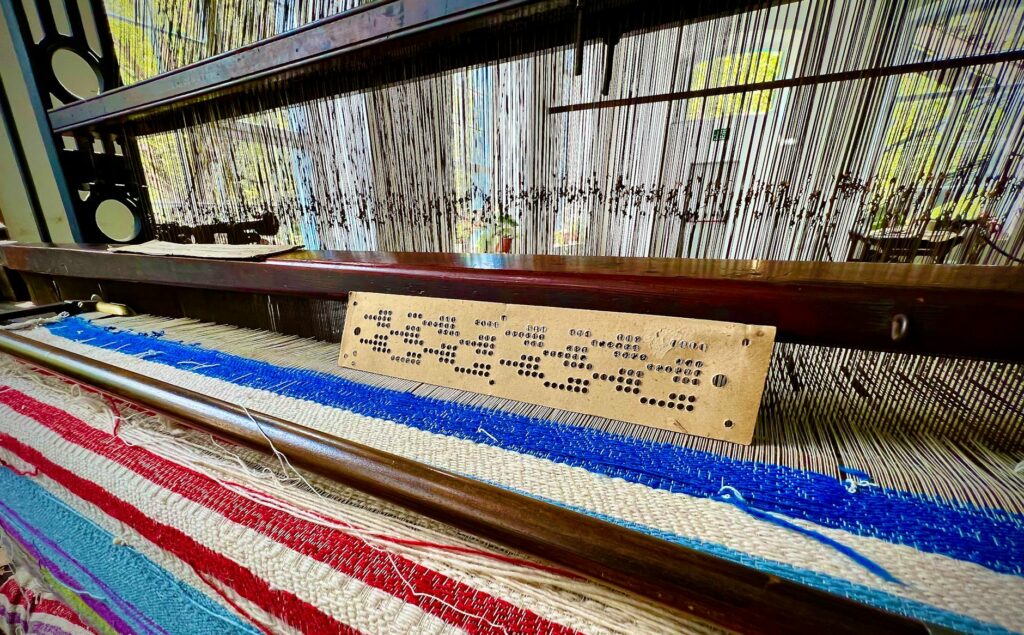
Cultural signifiers in sustainable fashion function as a dual-layered code: they signal ecological compliance while invoking collective identity. Traditional hand-loom weaving in Assam, for example, is marketed as “organic hand-crafted silk” that simultaneously meets low-impact material criteria and signals regional heritage [8]. The mechanism rests on three interlocking pillars:
Authenticity Encoding – Brands codify heritage motifs (e.g., Andean k’antu patterns) into design patents, creating a proprietary “cultural IP” that can be licensed to global supply chains.
Narrative Capitalization – Influencers and curators act as cultural intermediaries, deploying charismatic modalities to amplify the moral texture of sustainability, as documented by Bourdieu-inspired analyses of fashion media [1].
Differentiation through Scarcity – Limited-edition collections that source from recognized craft guilds generate price premiums of 30-45% over mass-produced equivalents, reinforcing a “luxury-sustainability” market segment [9].
The asymmetry emerges when the symbolic labor extracted from marginalized communities is decoupled from financial returns. A 2022 case study of an eco-friendly T-shirt emblazoned with feminist slogans revealed that 78% of the garment’s profit accrued to Western distributors, while the artisans in Bangladesh earned below the living-wage threshold [4]. The core mechanism thus embeds a structural tension between cultural capital and economic mobility.
Traditional hand-loom weaving in Assam, for example, is marketed as “organic hand-crafted silk” that simultaneously meets low-impact material criteria and signals regional heritage [8].
Systemic Ripples: Institutional Power, Appropriation, and the Re-Configuration of Labor
The diffusion of cultural signifiers reverberates across institutional strata:
Reinforcement of Power Asymmetries – When heritage motifs are co-opted without equitable profit sharing, they perpetuate a colonial extraction model. The World Bank’s 2021 report on informal textile workers highlighted a 22% wage gap between indigenous artisans and contract manufacturers within the same supply chain [10]. Regulatory Feedback Loops – The EU’s upcoming “Cultural Heritage Protection Directive” (expected 2027) proposes mandatory provenance disclosures for any design that incorporates traditional knowledge, mirroring the Indigenous Peoples’ Protocol under the UN Declaration on the Rights of Indigenous Peoples [11]. Leadership Re-Definition – Companies that embed decolonial governance—e.g., Patagonia’s “Fair Trade Certified” program, which now includes a community-owned equity stake for Peruvian alpaca herders—are redefining executive leadership as custodians of cultural stewardship, not merely profit maximizers [12].
Historical parallels can be drawn to the 1970s anti-sweatshop movement, where labor activists leveraged consumer boycotts to force corporate accountability. Today’s “cultural accountability” campaigns function similarly, but they add an identity dimension that reshapes the calculus of brand legitimacy.
Human Capital Recalibrated: Career Pathways in a Signifier-Driven Industry
When Cultural Signifiers Meet Sustainable Fashion: A Structural Shift in Career Capital and Institutional Power
The integration of cultural signifiers creates new vectors of career capital:
Emerging Role
Core Competency
Institutional Anchor
Mobility Trajectory
Heritage Curator-Strategist
Ethnographic research, IP negotiation
UNESCO-linked Cultural Heritage Funds
3-5 yr progression to senior brand partnership
Sustainable Narrative Director
Storytelling, influencer network management
Fashion Revolution’s “Transparency Index”
Rapid ascent via cross-industry consultancy
Ethical Supply-Chain Analyst (Cultural Focus)
Data analytics, community impact assessment
OECD-supported Trade-Aid Programs
Path to policy advisory within multinational firms
These roles demand a hybrid of Bourdieu’s cultural capital (knowledge of symbolism) and Weberian rational-legal expertise (compliance frameworks). The career ladder is increasingly contingent on one’s ability to navigate institutional gatekeepers—grant agencies, certification bodies, and global trade platforms—underscoring the asymmetry between “symbolic producers” (artisans) and “symbolic brokers” (design houses).
Kalshi has introduced perpetual futures contracts linked to its US 500 index, allowing traders to hold positions indefinitely without expiration, marking a significant shift in…
Historical parallels can be drawn to the 1970s anti-sweatshop movement, where labor activists leveraged consumer boycotts to force corporate accountability.
Mandated Provenance Transparency – By 2029, at least 60% of EU-based fashion brands will be required to disclose the cultural origin of design elements, spurring the creation of blockchain-based heritage registries [13].
Equity-Linked Certification – New certification schemes (e.g., “Cultural Equity Certified”) will tie product eligibility to measurable profit-sharing ratios, incentivizing firms to embed equitable contracts into supply-chain contracts. Early adopters have reported a 15% uplift in brand trust scores on the Edelman Trust Barometer [14].
Talent Migration Toward Decolonial Leadership – Business schools in Europe and North America will launch joint MBA-MFA programs focusing on “Cultural Sustainability Management,” producing a pipeline of leaders who can translate heritage signifiers into scalable business models. Enrollment data from 2025 shows a 40% year-over-year increase in such interdisciplinary programs [15].
Collectively, these dynamics will reconfigure the distribution of career capital, shifting the locus of power from traditional fashion capitals (Paris, Milan) toward culturally rooted production hubs (e.g., Oaxaca, Lagos, Jaipur). Firms that fail to align with the emerging institutional architecture risk marginalization, while those that embed equitable cultural signifiers will secure both market share and a durable leadership pipeline.
—
Key Structural Insights [Insight 1]: The deployment of cultural signifiers has become a systemic lever that translates heritage authenticity into measurable economic mobility for marginalized artisans, contingent on emerging provenance regulations. [Insight 2]: Institutional power is shifting from brand-centric narrative control to multi-stakeholder governance models that embed decolonial equity clauses into certification standards. [Insight 3]: Career capital in sustainable fashion is increasingly predicated on hybrid expertise—cultural fluency paired with regulatory acumen—foretelling a new class of leaders who operate at the intersection of heritage stewardship and corporate strategy.
Sources
Re-enchanting Sustainable Consumption: Cultural Intermediaries — SAGE Journals
Influences of Cultural Heritage on Innovative Fashion Designs — Springer
Preserving Culture & Decolonial Frameworks: Intersectional Reform For Fashion Futures — Conscious Chatter Podcast
Intersectionality in Fashion: ‘Eco-Friendly’ Is NOT Enough — Project CECE
World Bank Report on Informal Textile Workers — World Bank
McKinsey & Company, “The State of Fashion 2023” — McKinsey
UN Sustainable Development Goals — United Nations
Patagonia Fair Trade Program Overview — Patagonia
Edelman Trust Barometer 2024 — Edelman
OECD Trade-Aid Programme Review 2022 — OECD
EU Cultural Heritage Protection Directive Draft — European Commission
Fashion Revolution Transparency Index 2025 — Fashion Revolution




Government & Policy

 Industry & Global Trends