Electric Vehicle Charging Infrastructure Drives Career Mobility
The analysis argues that algorithmic, equity‑weighted deployment of EV chargers reshapes institutional power, creates asymmetric career pathways, and determines whether the next five years will widen or close mobility gaps.
The asymmetric rollout of electric‑vehicle charging stations is redefining institutional power in transportation, creating systemic career pathways while exposing structural inequities.
The International Energy Agency projects global EV sales to climb from 2 million in 2020 to 14 million by 2035, a trajectory powered by declining battery costs and aggressive climate policies [1]. Simultaneously, the U.S. Department of Transportation estimates that more than 500,000 public chargers will be required by 2030 to sustain this growth, representing a $10 billion capital outlay [3].
Yet a Nature study reveals that low‑income and minority neighborhoods host only 12 % of existing public chargers, a disparity that curtails EV adoption where it could yield the greatest health and economic returns [1]. This inequitable geography signals a structural shift: the emerging charging network is becoming a new vector of economic mobility—or exclusion—depending on how institutional mechanisms allocate capital.
Accelerating EV Adoption: Macro Demand and Policy Landscape
The surge in EV sales reflects a coordinated policy matrix that includes federal tax credits, state zero‑emission vehicle mandates, and municipal parking incentives. The Climate Policy Dashboard documents that 42 U.S. states have enacted EV‑charging targets, collectively aiming for 250,000 public points by 2030 [4].
These incentives are not merely subsidies; they reconfigure fiscal flows toward private‑public partnerships that embed infrastructure development within broader climate strategies. The DOT’s “Climate Strategies that Work” report links the $10 billion deployment cost to a financing model that leverages green bonds, thereby institutionalizing a new class of climate‑linked capital markets [3].
Historical parallels emerge with the New Deal’s Rural Electrification Administration, which similarly used federal credit to catalyze network effects in underserved regions. The contemporary EV rollout mirrors that precedent, but with an added layer of data‑driven site selection that can either reinforce or mitigate past inequities.
Historical parallels emerge with the New Deal’s Rural Electrification Administration, which similarly used federal credit to catalyze network effects in underserved regions.
Algorithmic Allocation of Charging Nodes: GIS, Machine Learning, and Equity Filters
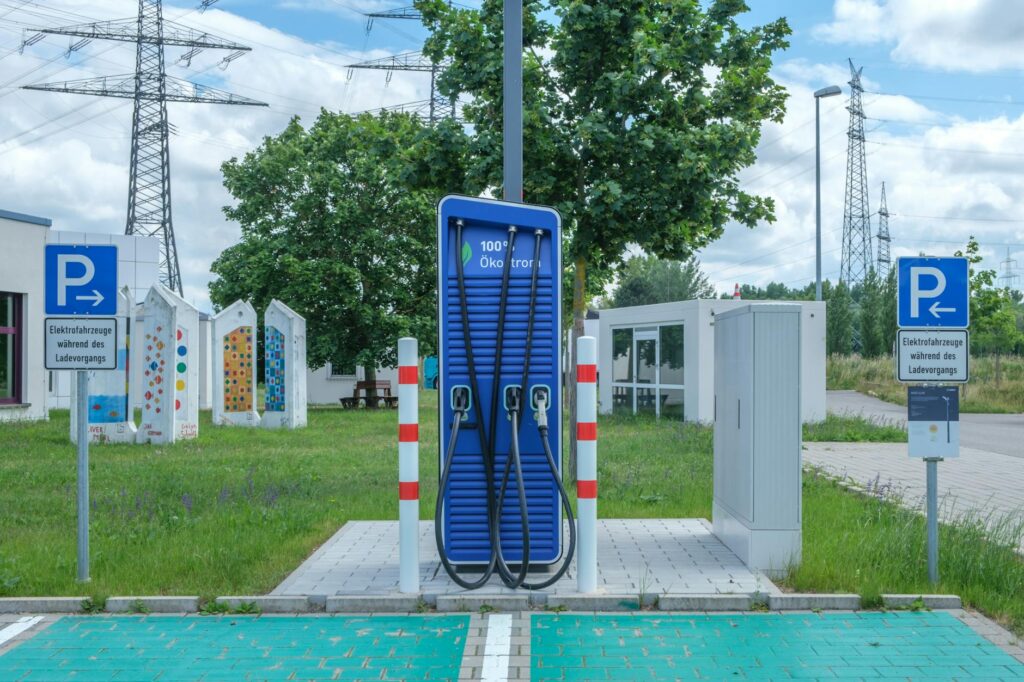
Electric Vehicle Charging Infrastructure Drives Career Mobility Photo: pexels
Spatial planning for chargers now relies on GIS platforms that integrate traffic density, grid capacity, and demographic data. A 2022 study employing machine learning identified “charging deserts” in zip codes where median income falls below $45,000, quantifying a 3‑fold lower charger density compared with affluent areas [2].
Some jurisdictions have begun embedding equity filters into these algorithms. Los Angeles County’s 2023 pilot mandates a minimum 30 % of new charger permits to serve census tracts with an Area Deprivation Index above the 75th percentile, directly tying capital deployment to social need.
The institutional implication is a shift from market‑only optimization to a hybrid governance model where public agencies set algorithmic constraints. This rebalances power, allowing policy to shape the topology of the emerging energy network rather than leaving it to pure profit calculus.
Infrastructure Externalities Across Urban Systems
Beyond emissions reductions, charger placement reshapes urban form. In Detroit, the conversion of vacant lots into community charging hubs has spurred adjacent mixed‑use development, raising property values by an average of 7 % within a 500‑meter radius [2].
Air‑quality models predict that a 20 % increase in charger coverage in low‑income districts could cut local NO₂ concentrations by up to 1.3 µg/m³, delivering measurable health benefits that translate into reduced healthcare expenditures for vulnerable populations [1].
These externalities illustrate a feedback loop: improved air quality enhances labor productivity, which in turn raises regional GDP. The charging infrastructure thus operates as a catalyst for broader socioeconomic uplift, provided its distribution aligns with equity objectives.
Equitable Talent Pipelines in the EV Charging Economy
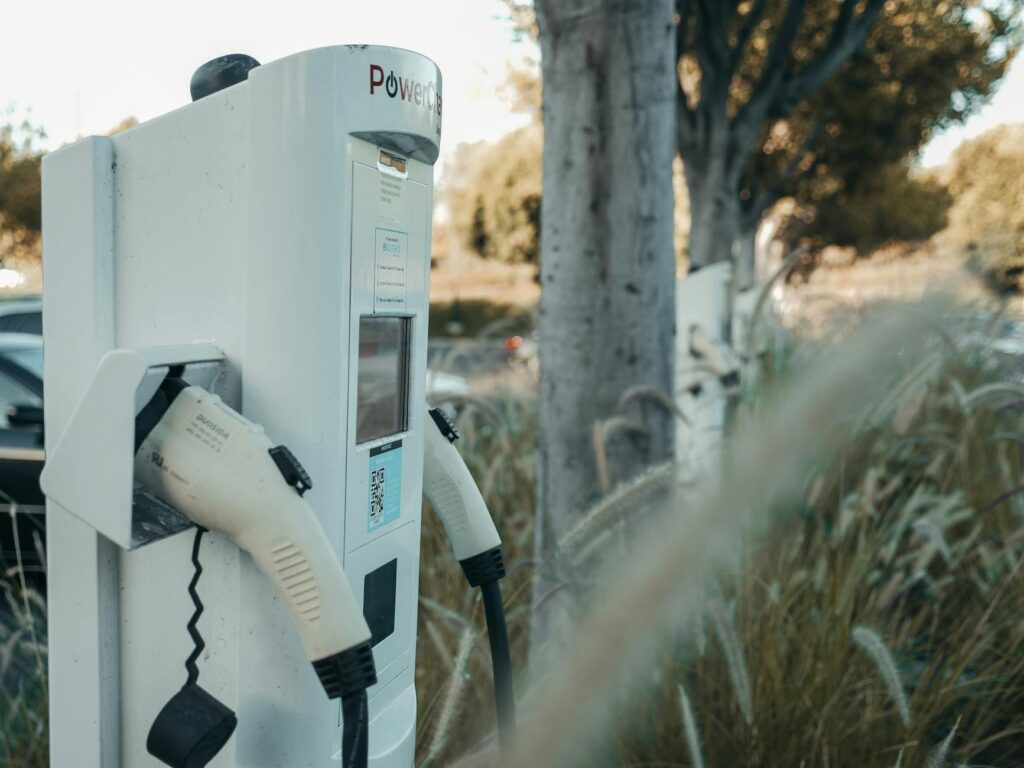
Electric Vehicle Charging Infrastructure Drives Career Mobility Photo: unsplash
The rollout generates demand for electricians, data scientists, and urban planners skilled in high‑voltage systems and spatial analytics. The National Electrical Contractors Association projects 150,000 new jobs in EV charger installation over the next five years, with a 35 % share earmarked for apprenticeships targeting underrepresented groups [3].
Community colleges in California have launched “Clean Mobility” curricula that combine hands‑on charger installation with GIS certification, directly linking institutional education pathways to the emerging labor market.
Community colleges in California have launched “Clean Mobility” curricula that combine hands‑on charger installation with GIS certification, directly linking institutional education pathways to the emerging labor market. Early outcomes show a 22 % higher placement rate for graduates from programs that integrate equity modules.
These career pipelines represent a new form of career capital: technical credentials coupled with policy literacy. Workers who navigate both domains acquire asymmetric bargaining power within the evolving energy ecosystem, reshaping traditional hierarchies of institutional influence.
Projected Infrastructure and Labor Trajectory to 2029
If current policy trajectories hold, the United States will install approximately 120,000 public chargers annually through 2029, achieving the DOT’s 2030 target three years early. However, without mandated equity quotas, model simulations suggest that charger distribution will remain 18 % less dense in the bottom income quintile than in the top quintile [2].
Policy scenarios that enforce a 25 % equity allocation for new permits could compress this gap to under 5 % by 2029, while simultaneously expanding the skilled labor pool by an estimated 45,000 certified technicians in underserved regions. The resulting convergence would likely produce a measurable uptick in EV adoption rates among low‑income households, estimated at a 12 % increase relative to baseline projections [1].
The trajectory underscores a pivotal inflection point: the next half‑decade will determine whether EV charging infrastructure entrenches existing socioeconomic divides or becomes a conduit for systemic mobility and diversified leadership within the clean‑energy sector.
Key Structural Insights
Equity‑Weighted Algorithms: Embedding demographic constraints in GIS‑based site selection rebalances institutional power from pure market forces to policy‑driven outcomes.
Equity‑Weighted Algorithms: Embedding demographic constraints in GIS‑based site selection rebalances institutional power from pure market forces to policy‑driven outcomes.
Career Capital Fusion: The intersection of technical certification and equity‑focused education creates a new class of workers with asymmetric leverage in the energy transition.
Feedback Loop of Health and Productivity: Improved air quality from equitable charger placement yields measurable economic gains, reinforcing the case for socially conscious infrastructure planning.
Sources
A multi‑scale perspective on the accessibility of public electric vehicle charging stations – Nature
Dynamic social disparities in the U.S. electric vehicle charging infrastructure – ScienceDirect
Electric Vehicle Charging Infrastructure – U.S. Department of Transportation
Electric Vehicle (EV) and EV Charging Infrastructure Plans – Climate Policy Dashboard
Written by Career Ahead AI. AI can make mistakes, so verify key facts. Report errors to support@careeraheadonline.com.
Career Ahead AI is Career Ahead Magazine's in-house AI newsroom, reporting on careers, education, jobs and business. It produces original summaries and analysis drawn from publicly available sources, with those sources credited, and operates under the editorial oversight of the Career Ahead team. AI can make mistakes, so please tell us when something looks wrong. Corrections, copyright or takedown requests…
Global research shows nearly half of young adults now phub their friends and partners—substituting screens for trust, intimacy, and real connection. The…
Matcha lattes, smartwatch metrics, and chlorophyll shots are the new badges of ambition for India’s under-35s. But can conspicuous health spending solve…


 Industry & Global Trends
 Industry & Global Trends
Industry & Global Trends