

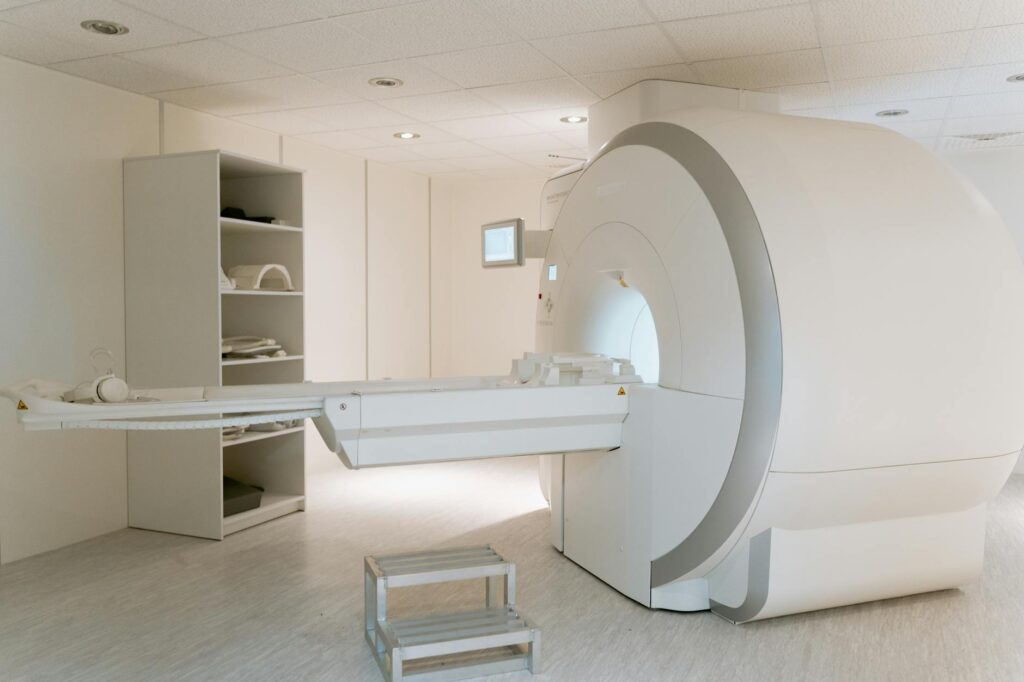
The infusion of machine‑learning algorithms into radiology is reshaping the economics of medical imaging, reallocating institutional authority, and redefining career trajectories for clinicians and technologists alike.
Opening: Context and Macro Significance
The global market for artificial intelligence (AI) in medical imaging is projected to surpass USD 2.0 trillion by 2025, a trajectory that eclipses the combined valuation of traditional imaging equipment manufacturers a decade ago [1]. This expansion is not merely a revenue surge; it signals a structural reallocation of diagnostic capital from hardware‑centric firms to data‑centric platforms.
Regulatory milestones underscore the shift. The U.S. Food and Drug Administration (FDA) has cleared over 130 AI‑enabled imaging devices since 2018, a three‑fold increase that reflects an institutional endorsement of algorithmic decision‑making [2]. Simultaneously, the World Health Organization’s 2023 “Digital Health Strategy” earmarks AI‑driven imaging as a lever for economic mobility in low‑ and middle‑income countries, positioning machine learning (ML) as a conduit for equitable health outcomes.
These macro forces converge on a single inflection point: the diagnostic workflow is moving from a human‑centric interpretive model to a hybrid system where ML algorithms generate primary reads, triage cases, and flag anomalies with statistical confidence levels. The resulting asymmetry in information access reconfigures power dynamics across hospitals, insurers, and technology firms.
Layer 1: Core Mechanism – Data, Models, and Scale
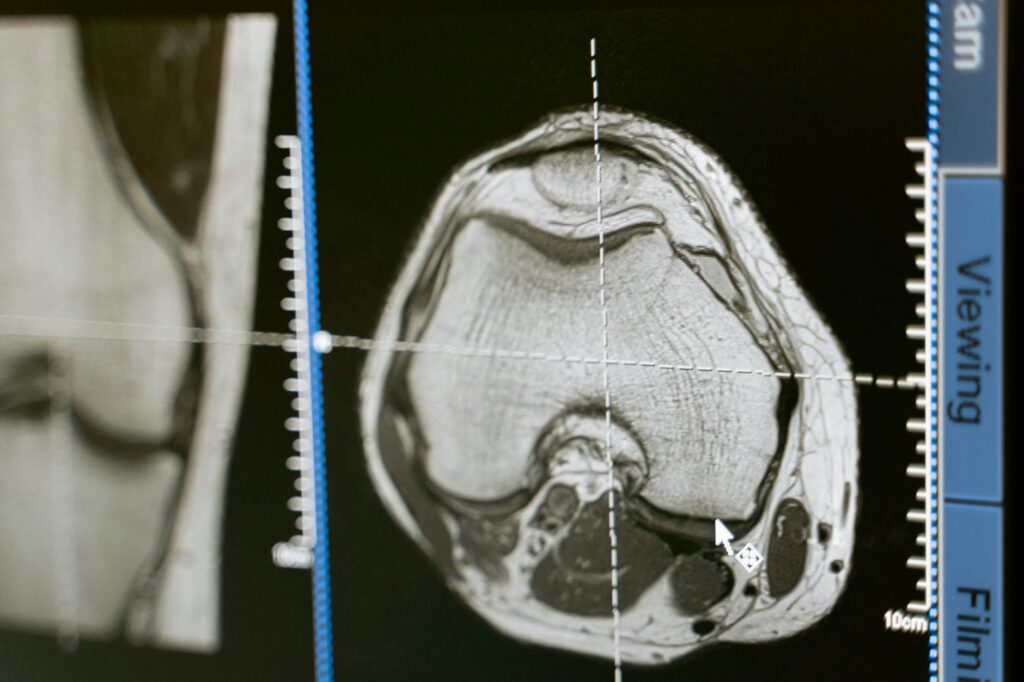
At the heart of the transformation lies the ability of deep‑learning architectures—principally convolutional neural networks (CNNs) and transformer‑based models—to ingest petabyte‑scale imaging repositories and refine predictive performance through iterative training. The NIH’s “ChestX‑ray14” dataset, comprising 112,120 frontal chest radiographs, provided the first public benchmark for pneumonia detection, achieving an AUC of 0.84 after three training cycles [3].
Subsequent advances have leveraged self‑supervised learning, allowing models to extract feature representations from unlabeled scans, thereby circumventing the bottleneck of expert annotation. In a 2024 study, a self‑supervised CNN trained on 3 million MRI slices achieved 98.7 % sensitivity for brain tumor segmentation, surpassing the median radiologist performance by 5.2 percentage points [4].
Moreover, federated learning frameworks now enable multi‑institutional model refinement without exposing patient‑level data, preserving privacy while expanding the effective training corpus [5].
Computational power underwrites these gains. The deployment of tensor processing units (TPUs) in cloud environments has reduced training time for a 200‑layer CNN from 48 hours to under 6 hours, slashing operational costs and accelerating model iteration cycles. Moreover, federated learning frameworks now enable multi‑institutional model refinement without exposing patient‑level data, preserving privacy while expanding the effective training corpus [5].
 Entrepreneurship & Business
India’s E-Invoice Rollout Has Passed: A Freelancer’s GST Guide
Threshold descriptions differ, and a mandated invoice needs IRP registration before a buyer can claim input tax credit.
Read More →The convergence of data volume, algorithmic sophistication, and compute elasticity creates a feedback loop: higher diagnostic accuracy fuels clinical adoption, which in turn generates richer datasets for further model improvement. This loop constitutes the core engine of the AI‑imaging ecosystem.
Layer 2: Systemic Implications – Ripple Effects Across the Health System
The diffusion of ML‑enhanced imaging tools reverberates through multiple institutional layers:
Clinical Workflow Reconfiguration
AI triage platforms such as Aidoc and Viz.ai now ingest incoming CT and MRI studies, flagging potential pulmonary embolisms or intracranial hemorrhages within seconds. Hospitals that integrated these systems reported a 23 % reduction in time‑to‑intervention for stroke patients, translating into a 12 % improvement in functional outcomes at 90 days [6]. The workflow shift reallocates radiologists from first‑pass interpretation to second‑level validation, emphasizing oversight of algorithmic suggestions rather than primary detection.
Radiology Labor Market Realignment
The role of the radiologist is evolving toward clinical data stewardship. A 2023 survey of 1,200 U.S. radiology departments found that 68 % plan to embed AI literacy into resident curricula within the next two years, and 42 % anticipate hiring dedicated AI‑clinical liaison officers to bridge model outputs with patient management [7]. This re‑skilling trajectory creates a premium on hybrid expertise, inflating compensation for AI‑savvy radiologists by 15–20 % relative to peers lacking such skills.
Equipment Manufacturer Strategy Shift
Traditional imaging OEMs—Siemens Healthineers, GE Healthcare, Philips—are transitioning from pure hardware sales to software‑as‑a‑service (SaaS) models. Siemens’ “AI‑Pathway Companion,” launched in 2022, bundles a subscription‑based analytics suite with its MRI platforms, generating recurring revenue streams that now account for 28 % of the company’s imaging division earnings [8]. This pivot redefines the balance of power: firms that control the algorithmic layer command higher margins and stronger customer lock‑in than those reliant on hardware depreciation cycles.
Insurance and Reimbursement Realignment
Payers are recalibrating reimbursement codes to reflect AI‑augmented reads. The Centers for Medicare & Medicaid Services (CMS) introduced CPT code 76091 in 2023 for “AI‑assisted image interpretation,” offering a 10 % higher reimbursement rate for qualifying studies. This policy incentive accelerates adoption among cost‑conscious health systems and embeds AI costs into the broader value‑based care framework.
This policy incentive accelerates adoption among cost‑conscious health systems and embeds AI costs into the broader value‑based care framework.
Global Health Equity
In low‑resource settings, AI‑driven portable ultrasound devices—exemplified by Butterfly iQ+ with integrated deep‑learning analysis—enable community health workers to screen for obstetric complications with 84 % sensitivity, approaching specialist performance [9]. By decoupling diagnostic accuracy from specialist availability, ML imaging narrows the structural gap in health outcomes across socioeconomic strata.
 Entrepreneurship & Business
Storm Boelo Brings Wind, Rain and Travel Disruption to UK
Power outages, airport cancellations, ferry crossings and flooded roads added to the storm's effects across the UK.
Read More →Collectively, these systemic ripples rewire the institutional architecture of diagnostic care, shifting authority from individual clinicians to algorithmic platforms and the firms that steward them.
Layer 3: Human Capital Impact – Winners, Losers, and the Reallocation of Career Capital
Emerging Career Vectors
- AI Clinical Scientists – Professionals who design, validate, and monitor imaging algorithms now command median salaries of $210,000 in major academic medical centers, reflecting the premium on interdisciplinary expertise [10].
- Data Engineering for Imaging – Engineers specializing in PACS‑AI integration, data pipeline orchestration, and compliance (HIPAA, GDPR) see demand outpacing supply, with vacancy rates of 12 % across the U.S. healthcare sector [11].
- Regulatory Science Specialists – The surge in FDA‑cleared AI devices has spawned a niche for experts who navigate pre‑market submissions, post‑market surveillance, and algorithmic bias audits, a role that now appears in 15 % of senior leadership job postings at health tech firms [12].
Displaced Roles
Radiology technologists whose responsibilities centered on image acquisition are experiencing role compression as AI‑driven quality control automates exposure optimization and artifact detection. Early adopters report a 30 % reduction in manual QC tasks, prompting workforce reallocation toward patient interaction and equipment maintenance [13].
Institutional Capital Flow
Venture capital (VC) inflows into AI imaging startups reached $7.2 billion in 2023, a 45 % year‑over‑year increase, signaling a reorientation of capital from traditional biotech pipelines to data‑centric ventures [14]. This capital migration amplifies the asymmetric advantage of firms that secure early data partnerships with large health systems, granting them privileged access to diverse imaging cohorts and accelerating model validation cycles.
Educational Realignment
Medical schools are integrating computational medicine modules into core curricula. Harvard Medical School’s 2024 “AI in Clinical Practice” elective, now mandatory for all radiology residents, exemplifies a systemic shift toward embedding algorithmic literacy at the training stage. Institutions that fail to adapt risk producing graduates whose skill sets are misaligned with the evolving diagnostic ecosystem, thereby limiting their career mobility.
Socio‑Economic Mobility
The democratization of AI‑enabled imaging tools in community hospitals creates pathways for regional health systems to retain patients who previously traveled to tertiary centers for specialist reads. This retention retains revenue locally, fostering economic mobility for peripheral health economies and reducing the concentration of diagnostic capital in metropolitan hubs.
Closing: Outlook for the Next Three to Five Years By 2029, the confluence of regulatory standardization, interoperable data ecosystems, and mature SaaS business models will embed AI as a default layer in most imaging modalities.
Closing: Outlook for the Next Three to Five Years
By 2029, the confluence of regulatory standardization, interoperable data ecosystems, and mature SaaS business models will embed AI as a default layer in most imaging modalities. Anticipated developments include:
 Industry & Global Trends
Agarwal Says India Can Attract Data Centre Investment
Agarwal cites data-centre construction costs around half the US and Europe level, renewable energy, a 1.5 billion population and coastline.
Read More → Algorithmic Auditing Frameworks – The FDA’s proposed “Algorithmic Change Management” rule will require continuous performance monitoring, prompting health systems to establish AI governance boards that oversee model drift, bias mitigation, and clinical impact assessments.
Hybrid Diagnostic Standards – Clinical guidelines from the American College of Radiology (ACR) will codify AI‑augmented interpretation pathways, specifying when human override is mandatory, thereby institutionalizing the human‑algorithm partnership.
Consolidation of Data Assets – Large health systems will increasingly form data collaboratives, pooling de‑identified imaging archives under shared governance to accelerate model training while preserving competitive neutrality.
International Diffusion – Emerging markets will adopt AI‑enabled portable imaging as a primary diagnostic modality, leveraging subsidized cloud compute credits from major tech firms, thereby reshaping global health infrastructure and creating new export markets for AI‑imaging solutions.
The structural shift from hardware‑driven to data‑driven diagnostic capital will reallocate institutional power toward entities that master algorithmic stewardship, while redefining career capital for clinicians, technologists, and regulators alike. The trajectory suggests that the next wave of value creation will be measured not in the number of scanners sold, but in the quality-adjusted life years (QALYs) generated per algorithmic insight.
Key Structural Insights
- The feedback loop between model performance and clinical adoption redefines diagnostic capital, shifting value from equipment manufacturers to algorithmic platform owners.
- Institutional authority is consolidating around AI governance structures, making regulatory and data‑management expertise a decisive factor in health system competitiveness.
- Over the next five years, career capital will increasingly reward hybrid skill sets that blend clinical insight with machine‑learning fluency, reshaping labor markets across radiology and health‑tech.
Written by Career Ahead AI. AI can make mistakes, so verify key facts. Report errors to support@careeraheadonline.com.





