

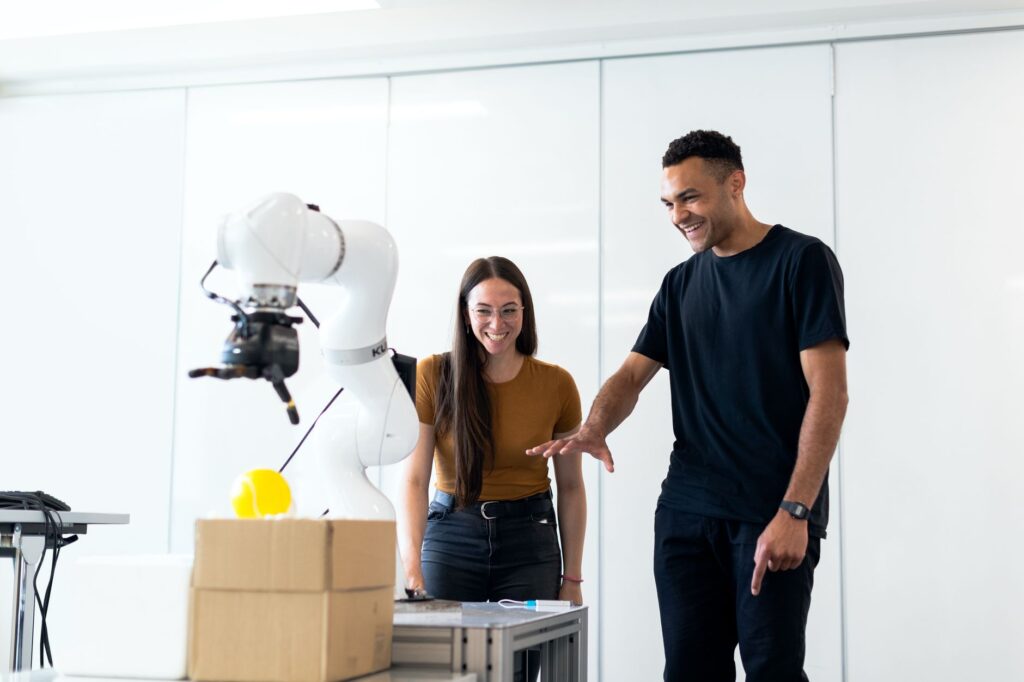
Collaborative AI is reshaping the engineering talent market, turning robot‑human teams into a fast‑track source of career capital.
A senior mechanical engineer at a midsize electronics manufacturer stared at a spreadsheet on a rainy Thursday. The sheet listed three options: keep the legacy assembly line staffed by a crew of ten, outsource the work to a low‑cost offshore vendor, or invest in a fleet of collaborative robots equipped with AI‑driven vision and adaptive control. After weeks of debate, the leadership team voted to pilot the AI‑enhanced cobots on a single product line, promising a boost in throughput and a reduction in defect rates. The engineer was tasked with leading the integration, learning the new software stack, and training the floor staff to work side‑by‑side with the machines.
Two months later, the pilot exceeded expectations. The cobots learned to adjust grip force in real time, and the engineer earned a promotion to “Robotics Integration Lead.” The same decision that reshaped the factory floor also accelerated the engineer’s career trajectory, turning a technology adoption into a personal growth platform.
From a career‑development perspective, this shift creates a new form of capital: the ability to orchestrate human‑robot teams.
The case as a symptom of the Collaborative AI Shift
 AI & Technology
How Harness Engineering is Transforming AI Development
Harness engineering is reshaping AI development by enhancing the reliability and accountability of AI agents. As AI capabilities expand, structured approaches are essential for guiding…
Read More →The decision to embed AI‑powered cobots is not an isolated procurement story; it is a manifestation of a broader transition in which intelligent machines are becoming co‑workers rather than tools. In 2026, a significant majority of employers view AI, machine vision, and collaborative robotics as primary levers for business transformation. This shift reflects a systemic reallocation of capital toward systems that can learn, adapt, and cooperate with humans in real time. The engineering talent pool is being asked to move from static, deterministic programming to dynamic, data‑driven collaboration.
From a career‑development perspective, this shift creates a new form of capital: the ability to orchestrate human‑robot teams. Engineers who master the integration of perception, planning, and safety protocols acquire a credential that is rapidly becoming a market differentiator. The “Collaborative AI Integration Index” (CAII) – a framework that helps quantify this emerging capital – assesses an individual’s proficiency across four dimensions (perception, adaptation, safety, and orchestration). A low CAII score indicates basic robot operation; a high score signals mastery of the full collaboration loop, positioning the professional for senior technical or product leadership roles.
Structural forces driving the career‑capital boom

The rise of collaborative AI is underpinned by three structural forces that make the phenomenon durable and replicable across sectors.
1. Labor market pressure and the skills gap
The global labor market faces a significant shortage of skilled technicians capable of managing advanced automation. Companies are turning to AI‑enhanced cobots not only to boost productivity but also to bridge this shortage. By offloading repetitive tasks to adaptive machines, firms free human talent to focus on higher‑order problem solving, design, and continuous improvement. Engineers who can navigate this transition become the linchpin of a new value chain, turning scarcity into personal leverage.
2. Safety‑first design as a regulatory catalyst
Safety standards for shared workspaces have tightened dramatically since 2024, driven by high‑profile incidents involving poorly integrated robots. Modern collaborative AI systems embed real‑time force sensing, vision‑based obstacle detection, and fail‑safe protocols that allow them to pause or retreat when a human steps too close. Mastery of these safety mechanisms is now a prerequisite for any engineering role that involves cobot deployment. Consequently, the CAII’s safety dimension has become a gatekeeper for career advancement, with certification programs emerging to validate expertise.
3. Business‑model innovation: robot‑as‑a‑service (RaaS)
Beyond the shop floor, the emergence of RaaS models means that engineering talent is no longer confined to a single employer’s ecosystem. Start‑ups and incumbents alike offer subscription‑based access to AI‑driven cobots, requiring engineers to design, configure, and remotely monitor fleets across disparate sites. This shift expands the geography of career opportunities, allowing professionals to build portfolios of multi‑site deployments that translate directly into higher CAII scores and, ultimately, greater bargaining power in the labor market.
 AI & Technology
AI Revolutionizes Portfolio Management Strategies
The significance of this summit comes at a time when AI is reshaping various sectors, particularly finance. Investment professionals are increasingly recognizing the need to…
Read More →Our analysis shows that engineers who proactively engage with these structural forces—by upskilling in perception algorithms, safety certification, and cloud‑based fleet management—experience accelerated promotions and salary growth. The pattern is not anecdotal; it repeats in automotive assembly plants, pharmaceutical packaging lines, and even in logistics hubs where autonomous mobile robots collaborate with human pickers.
Our analysis shows that engineers who proactively engage with these structural forces—by upskilling in perception algorithms, safety certification, and cloud‑based fleet management—experience accelerated promotions and salary growth.
Edge cases: When the promise stalls
Not every deployment of collaborative AI yields career acceleration. In highly regulated sectors such as nuclear energy, the path to certification can span years, delaying the realization of skill‑based capital. Similarly, organizations that treat cobots as “plug‑and‑play” devices without investing in employee training often see the technology become a cost center rather than a growth engine. Engineers in these environments may find their CAII scores plateau, prompting a strategic move to firms with more mature AI integration cultures.
Another nuance involves the “human‑first” versus “robot‑first” design philosophy. Companies that prioritize robot autonomy at the expense of human ergonomics can create friction on the floor, leading to safety incidents and eroding trust. Engineers who champion a balanced approach—where AI augments human decision‑making rather than replaces it—tend to be recognized as leaders of the collaborative culture, further boosting their career capital.
What you should do differently
Identify the dimensions of the Collaborative AI Integration Index that are weakest in your skill set, and pursue targeted training—whether through certification, hands‑on projects, or cross‑functional assignments. By aligning your development plan with the structural forces reshaping the robotics landscape, you turn every cobot rollout into a stepping stone for career advancement.
Key Structural Insights
 AI & Technology
Hyundai Launches Bayon, Targets 250,000 Mid-Size SUV Sales
Hyundai plans seven new nameplates in India by 2030 and intends the Bayon for more than 50 global markets.
Read More →- Collaborative AI is transforming the engineering talent market, turning robot‑human teams into a fast‑track source of career capital.
- A significant majority of employers view AI, machine vision, and collaborative robotics as primary levers for business transformation.
- The engineering talent pool is being asked to move from static, deterministic programming to dynamic, data‑driven collaboration.
- Engineers who master the integration of perception, planning, and safety protocols acquire a credential that is rapidly becoming a market differentiator.
- The rise of collaborative AI is underpinned by three structural forces: labor market pressure, safety‑first design, and business‑model innovation.
- Engineers who proactively engage with these structural forces experience accelerated promotions and salary growth.
Written by Career Ahead AI. AI can make mistakes, so verify key facts. Report errors to support@careeraheadonline.com.





