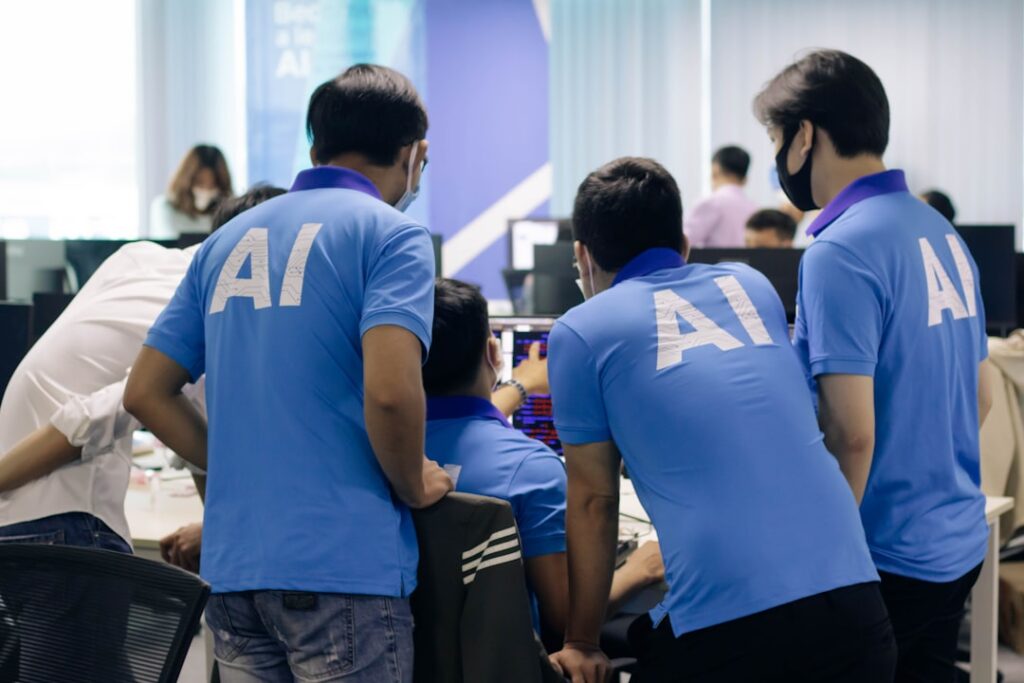
Navigating Change in the Workforce
AI is reshaping the job market in profound ways. As automation and machine learning technologies evolve, workers face both challenges and opportunities. The upcoming livestream event titled “Submit Your Questions: AI Is Changing Your Job—Now What?” aims to address these shifts. This discussion, featuring experts from various fields, will explore how AI impacts employment and what workers can do to adapt.
The significance of this conversation is heightened by the rapid pace of technological advancement. AI is not just a tool for efficiency; it is fundamentally altering the nature of work itself. Many traditional roles are being redefined, while new positions emerge that require different skill sets.
Understanding these changes is crucial for job seekers and employees alike. As AI continues to integrate into various sectors, the need for adaptability becomes paramount. Workers must cultivate skills that complement AI technologies rather than compete with them.
The Big Picture: AI’s Transformative Potential
The integration of AI into the workplace presents a significant shift in how businesses operate. Companies are increasingly relying on AI to enhance productivity and reduce costs. This trend can lead to substantial changes in workforce dynamics, as roles evolve to accommodate new technologies.
For instance, AI can analyze vast amounts of data quickly, enabling companies to make informed decisions. However, this capability also raises concerns about job displacement. Many fear that AI will replace human workers, particularly in roles that involve repetitive tasks. Yet, these fears may overlook the potential for AI to create new job opportunities in emerging fields.
The demand for skilled workers who can manage and collaborate with AI systems is on the rise.
The demand for skilled workers who can manage and collaborate with AI systems is on the rise. This shift underscores the importance of reskilling and upskilling initiatives. Workers must be proactive in seeking training opportunities to remain competitive in the evolving job market.
 Entrepreneurship & Business
Europe Adds to Business Regulatory Burden, Speaker Says
The exchange covered deregulation, CBAM, an India-EU trade agreement and trade figures for India’s ties with the EU and the Netherlands.
Read More →Data-Driven Insights on Employment Trends
Recent studies reveal that AI’s impact on employment is not uniform across all sectors. Industries such as manufacturing and retail are experiencing significant changes due to automation. Jobs that require manual labor are at higher risk of being automated, while roles that involve complex decision-making are less likely to be affected.
Analysts suggest that while some jobs may be displaced by AI, new roles could also emerge, highlighting the dual nature of AI’s impact on employment. While some jobs will vanish, others will require new skills and knowledge, creating opportunities for those willing to adapt.
Moreover, the rise of remote work has been accelerated by AI technologies. Tools that facilitate virtual collaboration and project management are becoming essential. This shift not only changes where people work but also how they work, emphasizing the need for digital literacy and technical skills.

Contradictions and Active Debates
The discussion around AI and employment is rife with contradictions. On one hand, proponents argue that AI will enhance productivity and create new job categories. On the other hand, critics warn of mass unemployment and the widening skills gap. This debate is fueled by differing perspectives on the role of technology in society.
Many workers may struggle to find new roles that match their skill sets, leading to economic displacement.
For instance, some experts believe that AI will lead to a net gain in jobs as new industries emerge. However, others argue that the transition may not be smooth. Many workers may struggle to find new roles that match their skill sets, leading to economic displacement.
 Entrepreneurship & Business
Use a Business Loan to Fix Cash Flow: Five Decisions
Cash flow is the top challenge for half of small firms. Here is how to choose a loan that fits.
Read More →Furthermore, there is a growing concern about the ethical implications of AI in hiring practices. Algorithms can perpetuate biases if not carefully monitored. This raises questions about fairness and equity in the job market, as companies increasingly rely on AI for recruitment and performance evaluations.
Looking Ahead: The Future of Work
As AI continues to evolve, its impact on the job market will likely deepen. The future of work will demand a workforce that is not only tech-savvy but also adaptable. Workers will need to embrace lifelong learning to keep pace with technological advancements.
Organizations must also play a role in this transition. Companies that invest in employee training and development will be better positioned to thrive in an AI-driven landscape. This investment is not just beneficial for employees but also for the overall success of the business.

Moreover, policymakers must address the challenges posed by AI. Creating frameworks that support workers during this transition will be essential. This includes promoting access to education and training programs that equip individuals with the necessary skills for the future job market.
This includes promoting access to education and training programs that equip individuals with the necessary skills for the future job market.
Career Relevance in the Age of AI
For young professionals and job seekers, understanding AI’s impact on their careers is crucial. As the job landscape shifts, individuals must be proactive in developing skills that align with industry demands. Embracing technology and seeking continuous learning opportunities will be key to navigating this evolving environment.
 Entrepreneurship & Business
India’s E-Invoice Rollout Has Passed: A Freelancer’s GST Guide
Threshold descriptions differ, and a mandated invoice needs IRP registration before a buyer can claim input tax credit.
Read More →In conclusion, the discussion surrounding AI and employment is complex and multifaceted. While AI presents challenges, it also offers opportunities for those willing to adapt. Engaging in conversations like the upcoming livestream can provide valuable insights and guidance for navigating these changes.
Written by Career Ahead AI. AI can make mistakes, so verify key facts. Report errors to support@careeraheadonline.com.