No products in the cart.

AI’s Impact on Flexible Workspaces: A New Era
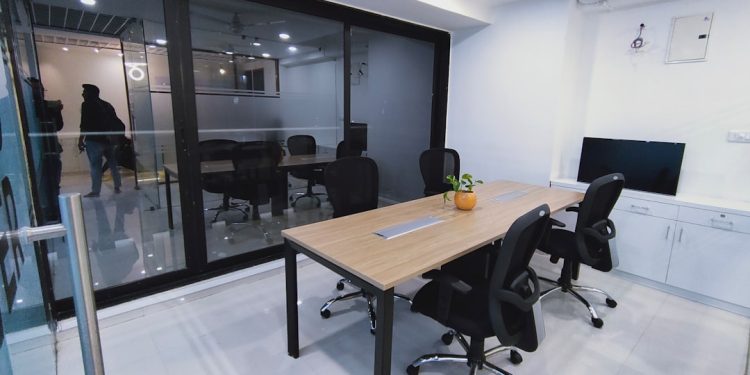
AI technology is reshaping modern workplaces, pushing for more flexible office designs. Explore the implications for businesses and employees.

San Francisco, USA — AI technology is upending traditional workplace structures. As organizations increasingly adopt hybrid work models, the demand for flexible office spaces is surging. In 2023, a survey by JLL found that 72% of companies are prioritizing hybrid work strategies, with 63% planning to reduce their physical office footprints in favor of agile workspaces.
This shift is critical for numerous reasons. First, flexible offices can enhance employee satisfaction and productivity, as they enable workers to choose environments that suit their tasks. Second, businesses can significantly cut real estate costs, allowing for reinvestment in technology and employee development. Lastly, as AI systems become integral to workplace operations, they facilitate seamless transitions between remote and in-office work, optimizing workflow and collaboration.

The concept of flexible office spaces is not new, but its implementation is evolving rapidly. With the advent of AI, companies can now leverage advanced analytics to tailor their workspace designs to the specific needs of their employees. For instance, AI tools can analyze usage patterns, determining which areas of the office are most frequented and which are underutilized. This data-driven approach enables organizations to create environments that foster collaboration while also maintaining areas for focused work.
Companies like WeWork and IWG have been at the forefront of this trend, offering adaptable workspace solutions that cater to various business sizes and needs. According to IWG’s 2023 report, 80% of employees prefer to work in flexible office environments, underscoring the necessity for businesses to adapt.
Companies like WeWork and IWG have been at the forefront of this trend, offering adaptable workspace solutions that cater to various business sizes and needs.
Moreover, AI technologies are not just reshaping physical spaces; they are also enhancing how teams interact. Applications powered by AI, such as Slack and Microsoft Teams, are now equipped with features that facilitate real-time collaboration, making it easier for remote teams to communicate and coordinate. These tools not only streamline workflows but also integrate seamlessly with project management software, creating a cohesive digital ecosystem.
You may also like
 Future Skills & Work
Neurodiversity drives measurable gains in team output
According to Career Ahead's analysis of Deloitte's recent inclusion report, firms that formalize.
Read More →However, the rise of AI and flexible workspaces is not without its challenges. A report from McKinsey highlights that while technology can foster efficiency, it may also lead to feelings of isolation among remote workers. This has prompted organizations to rethink their employee engagement strategies. For instance, companies are investing in virtual team-building activities, ensuring that remote employees feel connected to their peers.
Furthermore, as more organizations implement AI-driven solutions, there is a growing concern regarding data privacy and security. A survey by PwC found that 77% of executives are worried about the potential misuse of AI in the workplace. As businesses navigate these challenges, it is essential to establish clear policies that protect employee data while leveraging AI’s capabilities.
Looking ahead, the integration of AI in flexible office designs will likely become more sophisticated. By 2025, experts predict that AI will play a pivotal role in managing office environments, from automating lighting and temperature controls to optimizing space usage in real time. This future vision aligns with the broader trend of increased personalization in workplace experiences, where employees can customize their work environments to boost comfort and productivity.
Moreover, as the gig economy continues to expand, the demand for flexible office solutions will likely escalate. Freelancers and remote workers are increasingly seeking spaces that accommodate their unique needs. As such, businesses that can provide versatile work environments will have a competitive edge in attracting and retaining talent.
This future vision aligns with the broader trend of increased personalization in workplace experiences, where employees can customize their work environments to boost comfort and productivity.
In conclusion, the intersection of AI technology and flexible office spaces marks a significant evolution in how we perceive work. Companies that embrace these changes stand to benefit from enhanced employee satisfaction, operational efficiency, and cost savings. As we progress into this new era, the focus will not only be on adopting new technologies but also on fostering a workplace culture that values adaptability and collaboration.
You may also like
 AI & Technology
Entrepreneurs Optimize Productivity with Custom AI Solutions
Entrepreneurs who build modular AI productivity loops cut wasted hours and stress, while scaling lean systems to outpace larger competitors.
Read More →