No products in the cart.

AMD Shares Surge 13% on Strong AI Chip Demand
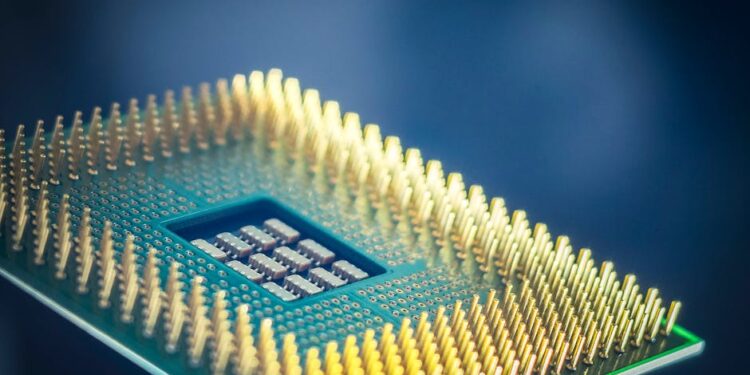
AMD's shares surged nearly 13% following a strong earnings report, driven by robust demand for AI chips. The company is positioning itself as a key player in the AI hardware market, competing fiercely with Nvidia and Intel.

AMD’s Impressive Earnings Report
Shares of Advanced Micro Devices (AMD) surged nearly 13% following the release of its first-quarter earnings report, which exceeded analysts’ expectations. The company reported adjusted earnings of $1.37 per share on revenue of $10.25 billion. This performance marks a significant milestone for AMD, especially as it continues to position itself as a formidable competitor to Nvidia in the rapidly growing AI chip market.
AMD’s revenue forecast for the second quarter stands at $11.2 billion, plus or minus $300 million, well above Wall Street’s estimates of $10.52 billion. This optimistic outlook reflects strong demand for its chips, particularly in the data center segment, which saw a remarkable 57% year-on-year revenue increase. The data center business generated $5.8 billion in revenue, showcasing how cloud computing giants are ramping up their investments in AI infrastructure.
According to AMD’s investor relations, the company’s adjusted gross margins are projected to be around 56%, surpassing analyst expectations of 55.4%. This increase in margins indicates that the company is not only growing in sales but is also improving its pricing power as demand for AI chips remains robust. The strong performance has led investors to view AMD as a credible alternative to Nvidia, especially in the context of rising competition in the semiconductor industry.
AI Chip Demand Fuels Growth
The surge in AMD’s stock price is closely tied to the growing demand for AI chips, which are essential for training and deploying artificial intelligence applications. Companies across various sectors are increasingly investing in AI technologies, driving up the need for powerful GPUs and CPUs. AMD has positioned its products to meet this demand, benefiting from both its graphics processing units (GPUs) and central processing units (CPUs).
Earlier this year, AMD secured a landmark deal worth up to $60 billion to supply AI chips to Meta Platforms over five years. This agreement not only boosts AMD’s revenue potential but also reinforces its status as a key player in the AI hardware market. Furthermore, AMD’s partnership with OpenAI last year further solidifies its commitment to providing cutting-edge technology for AI applications.
The company is leveraging its capabilities to tap into a broader AI hardware opportunity, which is expected to expand as more businesses adopt AI solutions.
You may also like
 AI & Technology
AI Interviewing Transforms Future Hiring Landscape
HackerRank's AI interviewer, Chakra, is transforming recruitment by streamlining the hiring process and emphasizing critical thinking and problem-solving skills in candidates.
Read More →As enterprises transition from experimentation to deployment of AI technologies, AMD’s chips are becoming increasingly critical. The company is leveraging its capabilities to tap into a broader AI hardware opportunity, which is expected to expand as more businesses adopt AI solutions. The demand for AI chips is not just a trend; it is reshaping the technology landscape and positioning AMD for sustained growth.
Market Performance and Competitive Landscape
AMD’s stock has significantly outperformed its main competitor, Nvidia, this year. While AMD shares have risen nearly 60% year-to-date, Nvidia’s stock has only gained about 6%. This disparity highlights the growing investor confidence in AMD’s ability to capture market share in the AI chip sector. The broader Philadelphia Semiconductor Index has also seen a substantial rise of around 48%, indicating a positive trend for semiconductor companies.
However, competition in the AI chip market is intensifying. Intel recently issued a strong revenue forecast as it ramps up in-house manufacturing to meet rising CPU demand. Unlike AMD, which outsources its chip production to Taiwan Semiconductor Manufacturing Company, Intel’s strategy may provide it with more control over production capacity. This difference could impact AMD’s ability to scale quickly in response to the surging demand for advanced chips.
As the industry evolves, AMD must navigate these competitive pressures while continuing to innovate. The company’s ability to maintain its growth trajectory will depend on its strategic partnerships and production capabilities. Investors will be closely watching how AMD responds to the challenges posed by its competitors and whether it can sustain its momentum in the AI chip market.
Broader Implications for the Tech Sector
The strong performance of AMD has broader implications for the technology sector, particularly in the context of AI and cloud computing. As companies increasingly integrate AI into their operations, the demand for sophisticated hardware solutions will continue to rise. This trend is likely to drive further investments in semiconductor companies, creating a ripple effect across the tech industry.
The company’s ability to maintain its growth trajectory will depend on its strategic partnerships and production capabilities.
You may also like
 AI & Technology
Higher education reallocates capital to digital platforms
The analysis that follows dissects the mechanisms, systemic implications, and stakeholder outcomes.
Read More →Moreover, the competition between AMD and Nvidia is expected to spur innovation, leading to advancements in chip technology. As both companies strive to outdo each other, consumers and businesses will benefit from improved products and services. This competitive dynamic could accelerate the adoption of AI technologies across various sectors, enhancing productivity and efficiency.
Additionally, the growing focus on AI chips may influence policy decisions related to technology and trade. Governments may seek to support domestic semiconductor production to reduce reliance on foreign manufacturers. This shift could lead to new regulations and incentives aimed at fostering innovation and competitiveness within the tech industry.

Job Market Evolution and Skills Demand
The rise of AI technology and the subsequent demand for AI chips are reshaping the job market. As companies invest in AI infrastructure, there will be an increased need for skilled professionals in data science, machine learning, and software development. Job seekers looking to enter the tech industry should consider focusing on these areas to enhance their employability.
As companies invest in AI infrastructure, there will be an increased need for skilled professionals in data science, machine learning, and software development.
Furthermore, the growth of AI technologies may lead to the emergence of new roles and industries that did not previously exist. As businesses adopt AI solutions, they will require talent that can bridge the gap between technology and business strategy. This evolution will create opportunities for individuals with diverse skill sets, including those with backgrounds in engineering, data analysis, and business management.

According to Yahoo Finance, the tech sector’s expansion is expected to create millions of jobs over the next few years. As the demand for AI chips continues to rise, companies will need to recruit and retain top talent to maintain their competitive edge. This trend highlights the importance of ongoing education and training to meet the evolving needs of the workforce.
You may also like
 Industry & Global Trends
Mergers Reshape Automation Careers at Schneider Electric
Schneider Electric's aggressive investments in automation are reshaping the industry landscape in Europe. This shift is set to create significant job opportunities for automation engineers…
Read More →