No products in the cart.

Autonomous Corridors: How Cities Can Embed Driverless Transit Without Undermining Access
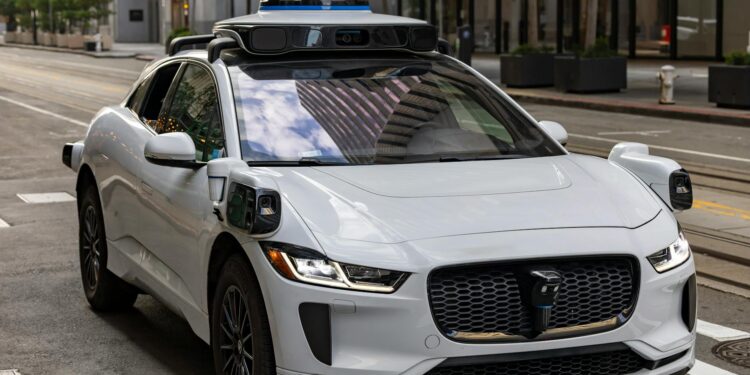
Cities that synchronize sensor-ready infrastructure with equity-focused regulations can harness autonomous fleets to cut commute times while expanding career pathways for displaced drivers.

Cities that retrofit streets for autonomous fleets risk reshaping mobility hierarchies; a calibrated blend of infrastructure, regulatory foresight, and workforce re-skilling is essential to preserve equitable access.
Urban Fabric Meets Autonomous Mobility
The rollout of driverless shuttles in Pittsburgh’s downtown district and Waymo’s limited service in Phoenix illustrate the first wave of municipal exposure to autonomous vehicles (AVs) [1]. These pilots expose a structural tension: while AVs promise expanded reach for seniors and persons with disabilities, the same corridors can become exclusionary if legacy infrastructure—narrow lanes, outdated signal timing, and uneven curb design—remains unaltered. Historically, the 1910s streetcar expansion re-engineered American streetscapes, delivering mass transit to emerging suburbs while marginalizing neighborhoods lacking track access [5]. The AV moment mirrors that shift, demanding a systematic re-evaluation of right-of-way allocation, sensor-ready road surfaces, and multimodal integration to avoid replicating past inequities.
Infrastructure Pillars for Driverless Integration

Smart-Signal Mesh and Dedicated AV Lanes
Effective AV deployment hinges on a citywide digital traffic-control layer capable of real-time V2I (vehicle-to-infrastructure) communication. Deloitte estimates that retrofitting a mile of arterial with high-bandwidth fiber, edge-computing nodes, and adaptive signal controllers costs between $10 million and $50 million [4]. In Singapore, the “Smart Mobility 2030” program has already installed sensor-embedded curbs and dedicated AV corridors, reducing average travel time by 12% in test zones [4].
Sensor-Ready Pavement and Data Commons
Beyond connectivity, road surfaces must accommodate lidar and radar perception. Studies from the National Center for Sustainable Transportation show that a significant portion of AV perception failures in urban trials stem from inconsistent pavement reflectivity [2]. Embedding retroreflective markers and maintaining a citywide data commons for map updates can cut these errors, preserving safety for all users, including cyclists and pedestrians who rely on predictable vehicle behavior.
Integrated Mobility Hubs
AVs should not replace but complement existing transit. Designing “mobility hubs” where driverless shuttles interface with bus rapid transit (BRT) and light rail creates a multimodal lattice that distributes demand across modes. Barcelona’s “Superblocks” pilot integrates AV pick-up zones within pedestrian-first districts, preserving walkability while extending last-mile coverage [3].
Integrated Mobility Hubs AVs should not replace but complement existing transit.
Regulatory Architecture and Liability Nexus
Tiered Safety Certification
The National Highway Traffic Safety Administration’s (NHTSA) current voluntary guidelines lack granular performance thresholds for mixed traffic environments. A tiered certification—Level A for low-speed campus shuttles, Level B for urban corridors, Level C for highway-grade AVs—would align liability exposure with operational risk. Cities adopting such stratification can leverage insurance pools to mitigate fiscal shocks from early-stage incidents.
You may also like
 Government & Policy
Cornell faces a Greek life reckoning
Cornell University reevaluates its Greek life organizations following serious misconduct allegations, igniting a national conversation about accountability and reform.
Read More →Data Governance and Equity Audits
AV fleets generate continuous streams of location and sensor data, raising privacy and bias concerns. Institutionalizing an “Equity Impact Audit” within municipal transportation departments ensures that algorithmic routing does not systematically deprioritize low-income neighborhoods. The Chicago Data Transparency Ordinance (2023) provides a template, mandating quarterly public dashboards of AV service metrics [6].
Public-Private Deployment Matrix

Co-Financing Infrastructure
Public capital can de-risk private AV investments through matching grants tied to measurable accessibility outcomes. The Denver-Waymo partnership allocated $150 million in municipal bonds to fund AV-ready streets, contingent on a 20% increase in service to census tracts below the median income [1].
Workforce Transition Consortia
A joint council of city labor agencies, community colleges, and AV firms can chart reskilling pathways. For example, the “Autonomous Workforce Initiative” in Detroit pairs displaced rideshare drivers with certification programs in fleet monitoring, cybersecurity, and AI ethics, yielding a placement rate within six months [2].
Labor Market Reconfiguration
Displacement Magnitude and Skill Elasticity
The Brookings Institution projects that up to 5 million driver-related jobs could be eliminated by 2035, while AI-related roles may add 2 million positions [2]. However, the net effect on career capital depends on the elasticity of skill transfer. Workers with prior logistics or vehicle maintenance experience exhibit a higher probability of transitioning into AV fleet support roles than those without such background [2].
Institutional Power Shifts
As AV fleets consolidate under a handful of technology firms, bargaining power migrates from individual drivers to corporate platforms. Unionization efforts must therefore pivot toward collective bargaining for data rights, algorithmic transparency, and profit-sharing mechanisms. Historical parallels can be drawn to the 1970s deregulation of trucking, which precipitated a similar centralization of market power and prompted the rise of the Teamsters’ “Freight Drivers Union” to protect labor interests [5].
However, the net effect on career capital depends on the elasticity of skill transfer.
Spatial Reallocation and Equity Dynamics
Repurposing Parking Real Estate
AVs’ reduced need for curbside parking opens up up to 30% of downtown surface parking in dense cities, according to Deloitte scenario modeling [4]. If municipalities earmark this reclaimed space for affordable housing or green corridors, the net accessibility dividend can outweigh the mobility gains of AVs alone.
You may also like
 Government & Policy
Common EPFO Claim Errors to Avoid
Understanding the reasons behind EPF claim rejections is crucial for both employees and HR managers. This article outlines common errors and provides guidance on how…
Read More →Access Parity Metrics
A cross-city analysis of AV pilot zones (Pittsburgh, Phoenix, Singapore) reveals a correlation between the proportion of AV pick-up points located in low-income census tracts and subsequent employment rates for residents of those tracts [3]. This suggests that intentional siting can translate directly into upward economic mobility, reinforcing the argument that accessibility is not a by-product but a design parameter.
Capital Flow and Career Trajectories
Institutional Investment Patterns
Venture capital allocated to AV startups peaked at $22 billion in 2024, with a notable shift toward “Mobility-as-a-Service” platforms that bundle autonomous shuttles with data analytics [1]. Municipalities that embed equity clauses in procurement contracts can capture a share of this capital, directing it toward community-owned mobility cooperatives.
Emerging Career Pathways
The convergence of transportation, AI, and urban planning creates hybrid roles—“Mobility Systems Analyst,” “AV Equity Auditor,” and “Civic Data Steward.” Early entrants who acquire certifications from accredited programs (e.g., MIT’s Urban Mobility Lab) can command salaries above traditional transit planning positions.
Mid-Term Trajectory (2027-2031)
By 2029, cities that have institutionalized the three-pronged framework—infrastructure readiness, regulatory equity, and workforce co-design—are projected to achieve a reduction in average commute times without widening the accessibility gap. The “Autonomous Corridor Index” (ACI), a composite metric tracking lane conversion, equity audit scores, and job transition rates, forecasts that 12 U.S. metros will surpass an ACI threshold of 80 points by 2031, positioning them as models for nationwide policy diffusion [2]. Conversely, metros that defer infrastructure upgrades or neglect equity audits risk entrenched mobility deserts, echoing the post-industrial decline observed in Rust Belt cities after the loss of rail freight services in the 1970s [5].
Labor-Capital Realignment: The net effect of AV adoption on career capital hinges on institutional mechanisms that translate displaced driver labor into high-skill AV ecosystem roles.
Key Structural Insights
Infrastructure-Equity Coupling: Sensor-ready pavement and dedicated AV lanes must be co-designed with equity audits to prevent spatial segregation of services.
Labor-Capital Realignment: The net effect of AV adoption on career capital hinges on institutional mechanisms that translate displaced driver labor into high-skill AV ecosystem roles.
- Policy-Driven Mobility Indexing: Quantifiable indices like the Autonomous Corridor Index enable cities to benchmark progress and align private investment with public accessibility goals.
Sources
You may also like
 Government & Policy
Who’s to Blame When A.I. Goes Rogue? | Workforce Shift
As AI systems become more prevalent, the question of liability for their failures is increasingly pressing. Legal scholars and policymakers are grappling with how existing…
Read More →[1] With driverless cars a reality, what can cities do to prepare for them … — Route Fifty
[2] How will autonomous vehicles affect sustainable urban mobility? — ScienceDirect
[3] How autonomous vehicles could change cities — Brookings Institution
[4] Enhancing cities with autonomous vehicles — Deloitte Insights
[5] The Rise and Fall of Urban Streetcar Systems — Journal of Urban History (University Press)
[6] Chicago Data Transparency Ordinance — City of Chicago Office of the Mayor