

The Rise and Fall of a Craft Beer Icon
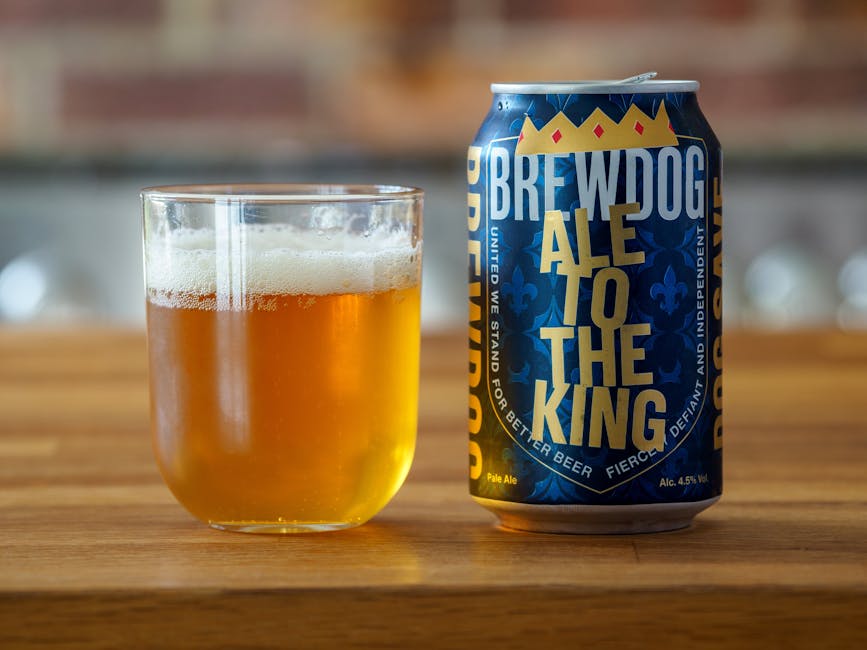
When James Watt and his partner first raised a pint in the basement of a former warehouse on Glasgow’s Clyde Street, the world of beer was still dominated by multinational giants. BrewDog’s rebellious branding—“Punk‑as‑You‑Are”—and its crowdfunded equity model turned the brewery into a cultural phenomenon as quickly as it turned hops into profit. By 2025 the company boasted a valuation north of $1 billion, a footprint that stretched across more than 70 countries, and a roster of flagship bars that resembled boutique nightclubs more than traditional pubs.
That meteoric ascent was powered by a growth playbook that prized speed over prudence. Aggressive acquisitions, a relentless rollout of experimental brews, and a series of high‑profile equity “Equity for Punks” campaigns raised more than $250 million from retail investors who were as enamoured with the brand’s anti‑establishment ethos as they were with the prospect of financial upside. Yet the very mechanisms that fueled the rise also sowed the seeds of vulnerability.
In a candid interview this month, Watt acknowledged “many mistakes” in the way the company was led. He cited over‑leveraged expansion, an opaque governance structure, and a culture that celebrated disruption at the expense of sustainable cash flow. The admission was more than a personal mea culpa; it signalled a fundamental shift in the narrative that had once cast BrewDog as the darling of the craft‑beer renaissance.
Investor Trust: The Crumbling Foundation
For the thousands of small investors who bought into BrewDog’s equity‑for‑punks campaigns, the news hit like a sudden draft on a warm lager. Many of these shareholders are not institutional funds but ordinary savers, retirees, and gig‑economy workers who saw a share in BrewDog as a ticket to both a community and a modest return. Their confidence was anchored in the transparency that the company promised—regular updates, open‑book financials, and a board that, in theory, included shareholder representatives.
Since Watt’s admission, BrewDog’s market perception has eroded. The company’s internal valuation, which had hovered just above the $1 billion mark, slipped noticeably on secondary‑market platforms where shares are traded informally. While exact price movements are difficult to quantify without a listed exchange, anecdotal reports from investor forums indicate a surge in sell‑orders and a palpable sense of urgency to “cash out while you can.”
Beyond the price pressure, the episode has revived longstanding questions about BrewDog’s governance. Critics point to the concentration of voting power among a handful of founders and the limited independence of the board. The “many mistakes” confession has amplified calls for a formal audit, clearer reporting standards, and a restructuring of the shareholder‑engagement model that originally set BrewDog apart.
Since Watt’s admission, BrewDog’s market perception has eroded.
Regulators have taken note, too. The UK Financial Conduct Authority (FCA) has reportedly opened a preliminary review of BrewDog’s equity‑for‑punks campaigns to assess whether disclosures were sufficiently robust. While no enforcement action has been announced, the very fact of an FCA glance adds a layer of uncertainty for investors who had previously relied on the company’s self‑regulatory assurances.
 Career Guidance
Posts Spread After Call to Identify Jane Doe
More than eleven thousand accounts made almost twenty-five thousand posts purporting to name Jane Doe, according to Gudea’s analysis.
Read More →Career Implications for BrewDog Employees and the Industry
The turbulence reverberates far beyond balance sheets. BrewDog employs roughly 2,000 people worldwide, from brewers in the Scottish Highlands to bar managers in Tokyo. For many, the company’s meteoric rise offered a rare career trajectory: a chance to climb quickly in a fast‑moving, globally recognised brand without the bureaucratic inertia of a legacy corporation.
Now, with the leadership crisis unfolding, employees confront a stark new reality. The first wave of concern has come from senior staff tasked with delivering on ambitious production targets that were set under the assumption of ever‑rising cash flow. Production planners are revisiting forecasts, and some have been instructed to pause or scale back new product launches—a move that threatens the very innovation pipeline that defined BrewDog’s market appeal.
At the operational level, uncertainty over job security is palpable. In a recent internal memo, the human‑resources team acknowledged “the need to reassess staffing levels in light of the current financial outlook.” While the memo stopped short of announcing layoffs, it signalled that headcount reductions could be on the horizon, especially in support functions that were expanded during the peak growth years.
The ripple effect extends to the broader craft‑beer ecosystem. BrewDog’s aggressive acquisition strategy had previously set a benchmark for smaller breweries, many of which sought to emulate its rapid‑scale model. With the flagship brand now under a cloud, investors and entrepreneurs are re‑evaluating the viability of high‑leverage expansion in a sector that traditionally prized artisanal authenticity over aggressive scaling.
Universities and vocational schools that had forged pipelines with BrewDog for apprenticeships are now reassessing the attractiveness of placing graduates in a company whose future appears uncertain.
Talent pipelines are also at risk. Universities and vocational schools that had forged pipelines with BrewDog for apprenticeships are now reassessing the attractiveness of placing graduates in a company whose future appears uncertain. Conversely, some competitors are quietly courting BrewDog’s seasoned brewers, offering stability in exchange for the expertise that helped craft iconic beers like Hazy Jane and Punk IPA.
Yet there is a counter‑vibe of resilience. Employee‑led forums have sprouted on internal platforms, with staff proposing a “co‑ownership” model that would grant greater voting rights to non‑executive employees. Such grassroots initiatives suggest that, even as the corporate hierarchy wavers, the cultural DNA of BrewDog—its punk spirit—may yet re‑assert itself from the ground up.
 Entrepreneurship & Business
Qualcomm Plans Global Job Cuts After Annual Reviews
A memo from chief executive Cristiano Amon links the reductions to performance culture and says business priorities and required skills will guide decisions.
Read More →Industry‑wide Reflections
The BrewDog saga serves as a cautionary tale for the craft‑beer sector at large. Analysts note that the industry has been experiencing a consolidation wave, with larger players acquiring niche brands to broaden distribution. BrewDog’s stumble may prompt a recalibration, encouraging a shift toward more measured growth and stronger financial discipline.
Investors, particularly those who entered the market through equity‑for‑punks campaigns, are likely to demand greater transparency from other craft‑beer companies that rely on retail‑investor capital. The expectation is that future fundraising rounds will come with stricter reporting obligations and clearer pathways for shareholder influence.
From a labour perspective, the episode underscores the precariousness of employment in fast‑growing “disruptive” firms. As the gig economy expands, workers are increasingly attracted to companies that promise rapid advancement, but they may also face heightened exposure to strategic missteps. The BrewDog experience may accelerate discussions around employee equity, profit‑sharing, and the role of collective bargaining in start‑up‑style enterprises.
Beyond the Crisis: A Blueprint for Resilience
What lies ahead for BrewDog, its investors, and its workforce hinges on how the company chooses to navigate the current storm. Restoring trust will require more than a public apology; it will demand concrete structural reforms. A plausible roadmap includes:
What the Future Holds for the Craft‑Beer Frontier In the end, BrewDog’s leadership crisis is less a singular failure than a symptom of a broader tension between rapid disruption and sustainable stewardship.
- Governance Overhaul: Introducing independent directors with experience in corporate finance and risk management, and establishing a clear separation between founder influence and day‑to‑day operational control.
- Financial Transparency: Publishing audited quarterly reports, detailing cash‑flow positions, and outlining a realistic roadmap for profitability rather than growth at any cost.
- Employee Engagement: Formalising mechanisms for staff input on strategic decisions, possibly through a workers’ council that can influence board deliberations.
- Investor Relations Revamp: Creating a dedicated liaison team to keep retail investors informed, addressing the information asymmetry that has long plagued the equity‑for‑punks model.
Implementing such measures could transform BrewDog from a cautionary footnote into a case study of how a disruptive brand can mature without shedding its core identity. The challenge will be to preserve the rebellious spirit that attracted its community while embedding the discipline required for long‑term sustainability.
What the Future Holds for the Craft‑Beer Frontier
In the end, BrewDog’s leadership crisis is less a singular failure than a symptom of a broader tension between rapid disruption and sustainable stewardship. For small investors, the episode is a stark reminder that charismatic branding does not substitute for rigorous due diligence. For employees, it highlights the importance of aligning personal career aspirations with the fiscal health of the organisations they help build.

 Entrepreneurship & Business
Trent surges 13% to 2-year high after strong Q2 update
Trent's impressive growth reflects broader trends in consumer spending and retail expansion in India, marking a significant milestone for the company.
Read More →The craft‑beer industry stands at a crossroads. The next wave of innovation will likely be tempered by a newfound appreciation for governance, risk management, and the human capital that fuels creativity. As the market recalibrates, the companies that survive—and thrive—will be those that can marry the punk ethos with a disciplined, transparent approach to growth.
Written by Career Ahead AI. AI can make mistakes, so verify key facts. Report errors to support@careeraheadonline.com.





