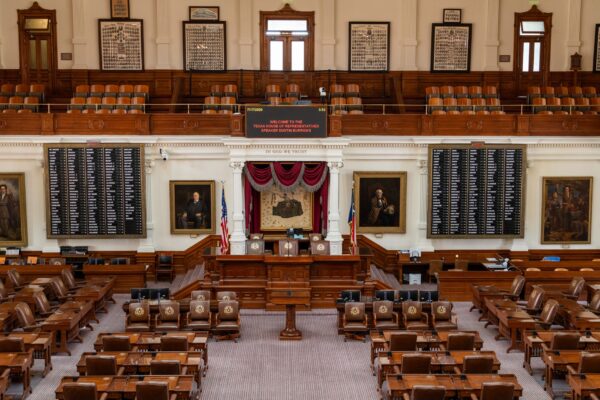
Canada announced on November 5 that it would keep its annual international student arrivals target in place through 2029.
The annual student target now runs through 2029
The Canadian government set the annual target at one hundred and fifty thousand new international student arrivals for 2027, 2028 and 2029. The extension adds another year to the period covered by the target, which was already in place for the first two years. The figure refers to new arrivals each year. It gives the government’s student-arrival objective a three-year horizon, rather than changing the annual target for the years already covered.¹²
The student target sits within Immigration, Refugees and Citizenship Canada’s wider plan for three hundred and seventy thousand new temporary resident arrivals to Canada in each of the next three years. That total includes up to the annual student allowance and two hundred and twenty thousand workers each year. The student and worker figures describe separate parts of the wider arrivals target, placing the international education plan alongside the government’s worker-arrival objective.¹²
The extension leaves the targets in last year’s Immigration Levels Plan unchanged. That plan had already set the student-arrival target for 2027 and 2028; the new announcement carries the same approach through the following year. The government has therefore maintained the existing targets rather than revising the figures already set out for those earlier years.¹²
That plan had already set the student-arrival target for 2027 and 2028; the new announcement carries the same approach through the following year.
Education groups say stable targets support planning
The Canadian Bureau for International Education welcomed the plan, saying it provides the “stability and predictability” its member institutions have long advocated after years of upheaval and rapid changes to Canada’s immigration policies. The bureau’s response focuses on the practical value of keeping targets steady: institutions can plan against a stated government objective instead of having to respond to another rapid policy shift.¹²
 Featured
Colorado Sued, Blocked, and Rewrote Its AI Law: The Hiring Rulebook Keeps Moving
In April 2026, xAI sued Colorado to stop the first comprehensive US AI law from taking effect. A federal court blocked it, and the legislature…
Read More →Larissa Bezo, the bureau’s president and CEO, said stable targets would help institutions plan for the future. She said colleges and universities could use them to guide recruitment strategies and program offerings. In practice, those are two areas institutions can align with the government’s stated arrival objective: who they seek to recruit and which programs they offer. Bezo described the targets as a basis for that planning.¹
Bezo also said the plan gives institutions longer-term certainty to work with government, industry and local communities on approaches to meet the student-arrival goal. She cautioned that the latest data available in 2026 showed Canada far from meeting its current targets. She said collaboration across sectors was key to achieving the goals in this year’s levels plan, linking the value of stable targets to work among institutions and their partners.¹²
Universities welcome predictable immigration policy
Universities Canada also welcomed the decision to maintain the target through 2029. The organisation said predictable immigration policies were essential to rebuilding confidence in Canada’s international education system and attracting global talent. Its response makes the policy environment part of the recruitment issue: universities need a predictable framework to rebuild confidence in the system and draw international talent.¹²
Gabriel Miller, president and CEO of Universities Canada, said Canada had set ambitious goals for its economic future. He said universities contribute through the talent they develop, the research they advance and the partnerships they build with businesses and communities. Miller’s comments connect universities’ roles in training, research and collaboration with the government’s economic goals, while the organisation’s welcome for the target extension centres on policy predictability.¹²
The announcement follows restrictions on international education, including study-permit caps and tighter eligibility requirements for post-graduation work permits, as the government seeks to reduce temporary immigration.
The announcement follows restrictions on international education, including study-permit caps and tighter eligibility requirements for post-graduation work permits, as the government seeks to reduce temporary immigration. Canada introduced study-permit caps in 2024 and cut further in 2025 and 2026 to ease pressure on housing, infrastructure and services. The arrival target is being maintained within a policy period that has also included limits on permits and work-permit eligibility.¹²
Recent arrivals remain below earlier levels
 Government & Policy
UK Weighs £450m a Year for EU Student Fee Deal
The proposed fee deal is tied to British access to the EU industrial programme, with negotiators preparing for a Brussels summit on 20 November.
Read More →Combined new student and worker arrivals during the first eight months of 2026 were sixty-three per cent lower than in the same period in 2024, a reduction of three hundred and twenty-six thousand nine hundred arrivals. Student arrivals alone between January and August were down seventy-one per cent compared with that period in 2024. The figures show the gap in arrivals across both groups, as well as the sharper fall recorded for new students.¹²
New student arrivals reached thirty-seven thousand and ninety in August, compared with five thousand eight hundred in July and two thousand and seventy in March. The August total was still fifty-three per cent below August 2024 and seventeen per cent below August 2025. It accounted for more than half of the sixty-five thousand two hundred and forty new students recorded in the first eight months of the year, after monthly arrivals from January through July ranged from two thousand and seventy to six thousand nine hundred and thirty.¹²
On August 31, 2026, Canada had six hundred and two thousand one hundred and fifteen study-permit holders, compared with seven hundred and ninety-nine thousand six hundred and sixty-five on the same date a year earlier. For 2026, the government’s target was one hundred and fifty-five thousand new international student arrivals. The permit-holder figures count people holding permits on a particular date, while the annual target concerns new arrivals during the year.¹²
Stable target, shrinking pipeline
This extension gives you a fixed number to plan against: 150,000 new international student arrivals each year through 2029. If you work in admissions, recruitment, or student services at a Canadian institution, you can now build your program capacity and marketing budget around that figure. But the ledger shows the reality is far below it: new student arrivals between January and August 2026 were down 71 per cent from 2024, and August 2026 arrivals were still 53 per cent below August 2024. Do not assume the target equals demand; plan for continued low intake and focus on retaining current permit holders, who numbered 602,115 in August 2026, down from 799,665 a year earlier.¹²
If you work in admissions, recruitment, or student services at a Canadian institution, you can now build your program capacity and marketing budget around that figure.
For prospective students, the policy stability does not reverse the earlier restrictions on study permits and post-graduation work permits. The cap cuts in 2024, 2025, and 2026 remain in place, so your eligibility depends on those tighter rules, not just the arrival target. For employers hiring international graduates, the combined student and worker arrivals fell 63 per cent in the first eight months of 2026 versus 2024, a reduction of 326,900 people. That means a smaller pool of new talent entering the labour market. Factor this into your hiring timelines and consider sponsoring current permit holders already in Canada rather than waiting for new arrivals.¹²
Sources
Written by Career Ahead AI. AI can make mistakes, so verify key facts. Report errors to support@careeraheadonline.com
 Government & Policy
UK International Students Expected to Generate £40.4 Billion
The cohort’s economic activity also supports about two hundred eighty-seven thousand three hundred full-time equivalent jobs across the UK.
Read More →