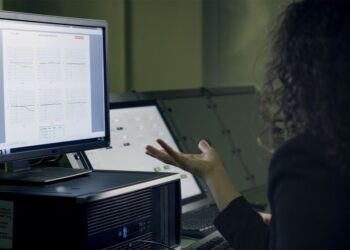
CareerNest unveiled India’s first career guidance model integrating neuroscience and fingerprint science, offering a personalized, human-centred approach to education and job planning.
New Delhi, India — CareerNest, a Hyderabad-based career guidance startup, has launched India’s first human-centred career model that uniquely combines neuroscience with fingerprint science to tailor career advice. Announced in November 2025, this novel approach aims to move beyond traditional career counselling by leveraging biometric and brain science insights to map individual potential and aptitudes more precisely. The model integrates fingerprint analysis, a biometric tool used to identify unique dermatoglyphic patterns, with neuroscience-based assessments of cognitive functions and personality traits. CareerNest claims this fusion enables a data-driven, personalized framework to guide students and professionals toward optimal career paths, including international education and job markets. This innovation arrives at a critical juncture where Indian youth face unprecedented pressure navigating complex global career landscapes. With international education demand rising—India sent over 1.5 million students abroad in 2024, per UNESCO statistics—the need for precision in career planning has never been greater. CareerNest’s model promises to provide nuanced insights that could enhance employability and global mobility, addressing a persistent gap in conventional career counselling.
Science Meets Career Guidance in a New Indian Model
CareerNest’s approach is grounded in recent advances in neuroscience that explore how brain functions correlate with decision-making, learning styles, and stress responses. By assessing neural markers alongside fingerprint patterns, the platform claims to unlock latent strengths and cognitive biases that influence career fit. Fingerprint science, while historically associated with forensic identification, has seen growing application in psychometric and aptitude testing. Dermatoglyphic research links certain fingerprint patterns to genetic predispositions affecting memory, problem-solving skills, and personality dimensions. CareerNest’s model taps into this to add a biometric layer of personalization. Founder and CEO Dr. Aparna Rao, a neuroscientist with over a decade of experience in cognitive research, explains that this dual analysis allows for a holistic profile. “Traditional career counselling relies heavily on self-reporting and standardized tests, which often miss unconscious cognitive patterns. Our model bridges that gap by incorporating objective biometric data,” Dr. Rao noted in a recent interview with ANI News.
Global education consultancy ICEF reported a 12% increase in Indian students seeking STEM and business programs overseas in 2025, underscoring the urgency for targeted guidance.
New York City's school system remains one of the most segregated in the U.S. City leaders are now pushing for integration, but advocates emphasize the…
The Growing Demand for Personalized Career Solutions in India
India’s youth demographic is among the largest globally, with over 600 million under 25 years old. This generation faces a rapidly evolving job market shaped by automation, AI, and globalization. According to the National Skill Development Corporation (NSDC), nearly 70% of Indian youth are unaware of their true aptitudes, leading to high dropout rates and job mismatches. CareerNest’s model addresses these systemic challenges by offering individualized recommendations that align with real-world market demands. Its algorithms incorporate data on emerging sectors, skill shortages, and international education trends, enabling users to explore viable pathways abroad or in India’s expanding tech and service industries. Global education consultancy ICEF reported a 12% increase in Indian students seeking STEM and business programs overseas in 2025, underscoring the urgency for targeted guidance. CareerNest’s human-centred model could help students avoid costly trial-and-error approaches and enhance their chances of success in competitive global environments.
Integrating Neuroscience and Biometrics: Opportunities and Challenges
While neuroscience and biometric data promise greater precision in career advice, experts caution about ethical and scientific considerations. Dr. Kiran Desai, a cognitive psychologist at the Indian Institute of Technology Delhi, emphasizes rigorous validation. “Combining fingerprint science with neuroscience is innovative but requires extensive empirical testing to ensure reliability and avoid overgeneralization,” she said. Privacy concerns also arise when collecting biometric data. CareerNest states it adheres to India’s Personal Data Protection Bill guidelines, guaranteeing user consent and secure data handling. However, broader adoption depends on public trust and regulatory clarity, especially as biometric data usage in education remains relatively nascent. Despite these challenges, CareerNest has partnered with several Indian universities and international education consultants to pilot the model. Early feedback from over 3,000 students indicates improved clarity in career decision-making and higher engagement with personalized learning modules.
Global Implications for workforce development and Education
CareerNest’s model reflects a global trend toward integrating science and technology in career development. Countries like Singapore and South Korea have invested heavily in neuroscience-based education tools, while biometric assessments are gaining traction in personalized learning across Europe and North America. For India, this approach could enhance the country’s competitiveness by aligning workforce skills with global standards and emerging market needs. It also dovetails with government initiatives like Skill India and the National Education Policy 2020, which emphasize personalized, competency-based education and career readiness. International education experts note that such models can facilitate smoother transitions for Indian students abroad by matching their innate strengths with program requirements, reducing attrition and enhancing outcomes. This could also influence employer recruitment strategies by providing deeper insights into candidate potential beyond resumes and interviews.
Looking Ahead: The Future of Career Guidance in India and Beyond
CareerNest’s neuroscience and fingerprint-based career model signals a shift toward more scientific, personalized career planning in India. As the model matures, it could redefine how students and professionals chart their paths in increasingly complex global labor markets. For educators and policymakers, the challenge will be integrating such tools into existing systems while safeguarding ethical standards and inclusivity. Career guidance that leverages biometric and cognitive data must remain accessible to diverse populations to avoid exacerbating inequalities. Professionals and career seekers should watch how this model evolves, particularly its effectiveness in improving international education placements and job market adaptability. The fusion of neuroscience and biometrics offers a promising route to demystify career choices, but its true impact will hinge on transparent validation and widespread adoption.





Education & University Insights

 Education & University Insights