No products in the cart.

Building Climate Resilience in Summer Camps
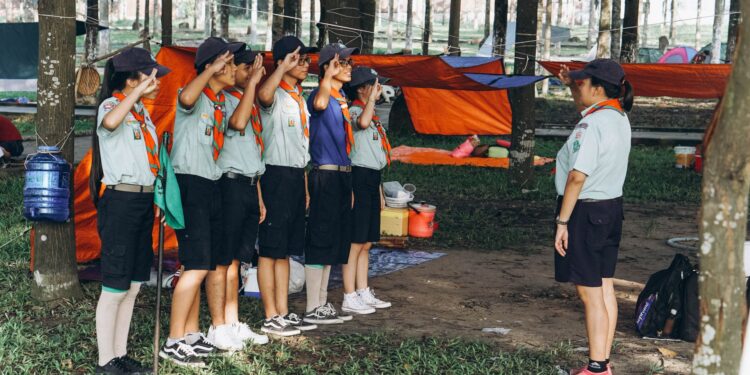
Summer camps translate climate threats into rapid, low-cost adaptations that can be modeled by any location-dependent organization seeking resilience.

Summer camps’ grassroots adaptations reveal scalable patterns that can accelerate climate resilience across vulnerable communities.
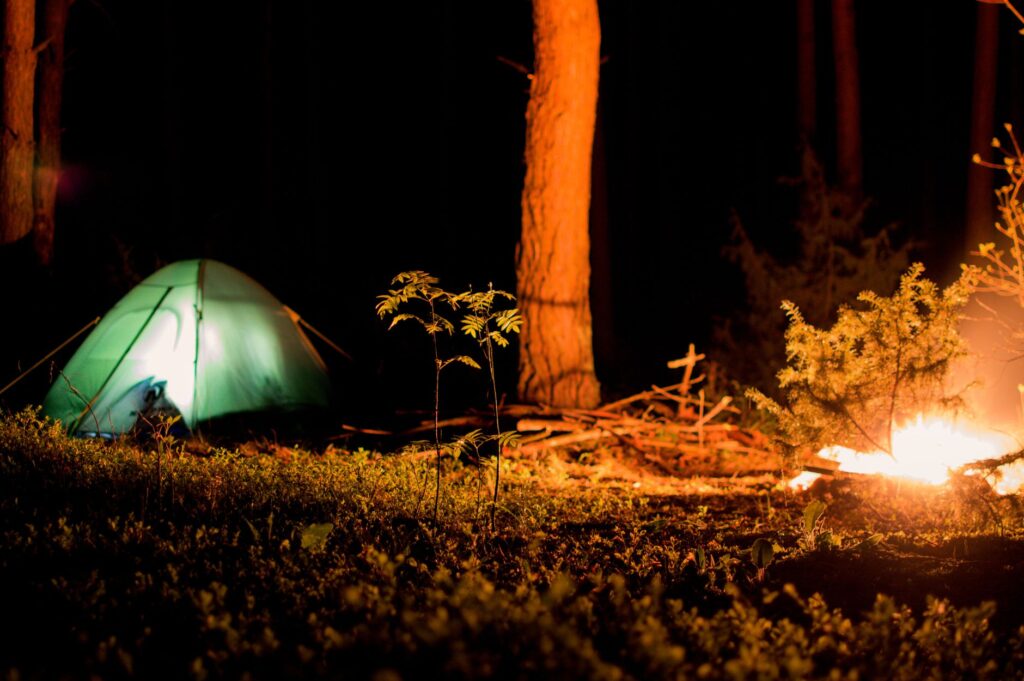
The summer of 2024 marked a turning point for Mountain Meadow Ranch, a family-run camp nestled in the Sierra Nevada for 70 years. After a record-breaking heat wave—one of the 11 warmest years on record—the camp’s director faced a stark choice: cancel the evening campfire tradition or redesign the experience for a hotter climate. The solution arrived in a single afternoon meeting. Staff installed shade sails over the fire circle, introduced misting stations, and rewrote the campfire curriculum to emphasize “cool-down” activities such as night-time storytelling under LED lanterns. Within weeks, campers swapped sweaters for tank tops at the fire, and the camp’s enrollment rose by 12 percent as parents praised the proactive safety measures.
A similar pivot unfolded at a Mid-Atlantic youth retreat that historically relied on river-side activities. When the river’s flow fell to half its historic volume, the program leaders partnered with local water-conservation NGOs to retrofit low-impact irrigation systems and introduced “rain-catcher” workshops for campers. The initiative not only preserved the camp’s signature water games but also generated a modest revenue stream from selling surplus rain-water to nearby farms.
These anecdotes illustrate a recurring phenomenon: niche communities, when confronted with climate stressors that threaten their core mission, generate pragmatic, locally-crafted solutions that can be abstracted and applied elsewhere.
From campfires to climate playbooks: the broader class of locally-led adaptation
Summer camps belong to a larger class of “niche communities” that operate at the intersection of recreation, education, and place-based stewardship. Their primary assets—land, seasonal occupancy, and a captive audience of children and families—create a heightened sensitivity to environmental shifts. When climate signals intensify, the cost of inaction is immediate: safety liabilities, reputational damage, and financial loss.
From campfires to climate playbooks: the broader class of locally-led adaptation Summer camps belong to a larger class of “niche communities” that operate at the intersection of recreation, education, and place-based stewardship.
You may also like
 Industry & Global Trends
July Job Losses Highlight Economic Instability in the US
The US economy unexpectedly lost 23,000 jobs in July 2026, marking a significant downturn in the labor market, particularly affecting manufacturing and retail sectors amid…
Read More →The response pattern mirrors what scholars term locally-led adaptation (LLA): communities leverage intimate knowledge of micro-climates, cultural practices, and operational constraints to devise solutions that larger institutions often overlook. In the case of Mountain Meadow Ranch, the shift from heavy outerwear to breathable fabrics at campfires was not merely a fashion update; it reflected a data-driven assessment of temperature trends and a rapid prototyping cycle that could be completed within a single season.
Such agility contrasts sharply with the bureaucratic timelines of municipal climate plans, which can span years and require multi-agency coordination. The camp’s internal decision-making hierarchy—director, senior staff, and a small advisory board—allows for a “single-loop” feedback mechanism: observe, adjust, implement, and evaluate in real time. This structural asymmetry—short decision horizons paired with high stakeholder immediacy—creates fertile ground for innovation.
Why the pattern repeats: structural asymmetries and the innovation edge of niche communities
The recurrence of these adaptive experiments across disparate camps signals a structural driver rather than isolated ingenuity. Three interlocking asymmetries explain the phenomenon.
- Resource-mission coupling – Camps’ financial viability is tightly bound to the quality of the on-site experience. A compromised fire ceremony or water activity directly erodes enrollment, creating a built-in incentive to protect the environment that sustains the program.
- Embedded knowledge networks – Staff often include former campers, local landowners, and regional environmental volunteers. This mosaic of expertise generates a “knowledge commons” that can be mobilized without external contracting. For example, Graham Wright and his colleagues have documented how community-driven risk assessments accelerate the adoption of climate-smart practices in similarly tight-knit settings.
“When communities own both the problem and the solution, the adaptation cycle shortens dramatically,” — Graham Wright, Author.
- Iterative learning loops – Seasonal operations impose a natural cadence of evaluation. Each summer provides a discrete data set—temperature logs, water usage, participant feedback—that can be analyzed and fed into the next iteration. This mirrors the “rapid prototyping” model common in tech startups, yet it is grounded in ecological realities.
The convergence of these asymmetries produces what we term the Camp-Scale Adaptation Loop: a repeatable process of threat identification, low-cost intervention, immediate feedback, and scaling. The loop’s simplicity enables replication beyond camps. Urban planners can adopt the same loop for neighborhood green-space redesign, while rural cooperatives can emulate the water-catcher workshops for irrigation resilience.
Embedded knowledge networks – Staff often include former campers, local landowners, and regional environmental volunteers.
Our view is that the Camp-Scale Adaptation Loop offers a pragmatic template for any organization whose core service is location-dependent and climate-sensitive. By abstracting the loop’s components—risk horizon, stakeholder nexus, and seasonal feedback—leaders can embed resilience without waiting for top-down policy mandates.
You may also like
 Industry & Global Trends
Lufthansa confirms €3 bn upgrade to India
The upgrade includes new-generation seating and cabin technology, which Lufthansa sees as essential to meet the rising demand from Indian travelers.
Read More →Edge cases: when niche resilience faces limits
Not all niche communities possess the same adaptive bandwidth. Camps situated in arid regions, for instance, confront water scarcity that cannot be mitigated solely through misting stations or rain-catchers. In such contexts, the adaptation loop may stall at the “intervention” stage due to resource constraints.
Similarly, camps that rely heavily on external funding—such as those operated by nonprofit trusts—may encounter financial asymmetries that inhibit rapid prototyping. Here, partnerships with municipal water districts or grant-making bodies become essential to unlock the loop.
These edge cases underscore the importance of aligning the Camp-Scale Adaptation Loop with broader resource ecosystems. When internal capacity is limited, the loop can be extended to include external allies, effectively transforming a “single-loop” process into a “double-loop” system that leverages public-private collaboration.
Here, partnerships with municipal water districts or grant-making bodies become essential to unlock the loop.
—
Community leaders who oversee climate-vulnerable operations should map their own decision cycles onto the Camp-Scale Adaptation Loop, identify where knowledge networks exist, and prioritize low-cost, high-visibility interventions that can be tested within a single operational season. By doing so, they convert the immediacy of climate risk into a catalyst for sustainable innovation.
You may also like
 Industry & Global Trends
AI Hiring Hits 83,100 Amid 31,921 Layoffs in India
The duality of hiring and layoffs reflects a broader trend in the Indian job market, particularly in the tech sector, where AI is reshaping roles…
Read More →