No products in the cart.

China Proposes Draft Regulations Targeting AI Chatbots, Citing Security and Data Protection Concerns

China’s Cyberspace Administration issued draft AI-chatbot rules that require identity disclosure, content filtering, and data localization, prompting schools to review compliance.

The Cyberspace Administration of China released draft rules in January 2026 that would limit the behavior of AI chatbots. The proposals reference security risks linked to state-affiliated telecom infrastructure and raise data-privacy questions for users.
The draft regulatory framework was published by the Cyberspace Administration of China (CAC) on 12 January 2026, outlining new requirements for artificial-intelligence systems that simulate human conversation [1]. The document applies nationwide, covering all domestic AI developers and any foreign entities operating within Chinese jurisdiction [1]. The announcement coincided with a series of public statements from CAC officials indicating heightened scrutiny of “companion bots” that interact with users in real time [3].
The CAC, a ministerial-level agency responsible for internet governance, is the primary author of the draft rules [1]. Key industry participants mentioned in the draft include domestic chatbot providers such as DeepSeek, a platform that has attracted international attention for its large-language-model capabilities [4]. State-owned telecommunications operators are also referenced as infrastructure partners whose networks may host AI services [4]. The regulatory process involves a public comment period of 30 days, after which the CAC will finalize the rules for implementation [1].
Regulatory Draft Details and Scope
The draft rules require AI chatbots to incorporate “identity verification” mechanisms that disclose whether a response originates from a machine [3]. Developers must submit model documentation to the CAC, including training data sources, algorithmic parameters, and risk-assessment reports [1]. The regulations also impose content-control obligations, mandating that chatbots filter politically sensitive material and prevent the generation of disallowed information [3].
State-owned telecommunications operators are also referenced as infrastructure partners whose networks may host AI services [4].
Compliance measures extend to data handling. The CAC stipulates that any personal information collected by a chatbot must be stored on servers located within China’s borders and encrypted according to national standards [2]. The draft further prohibits the transfer of user data to overseas servers without explicit government approval [2]. Violations could trigger administrative penalties, including fines up to 5 percent of a company’s annual revenue, or suspension of operating licenses [1].
Impact on Education Stakeholders
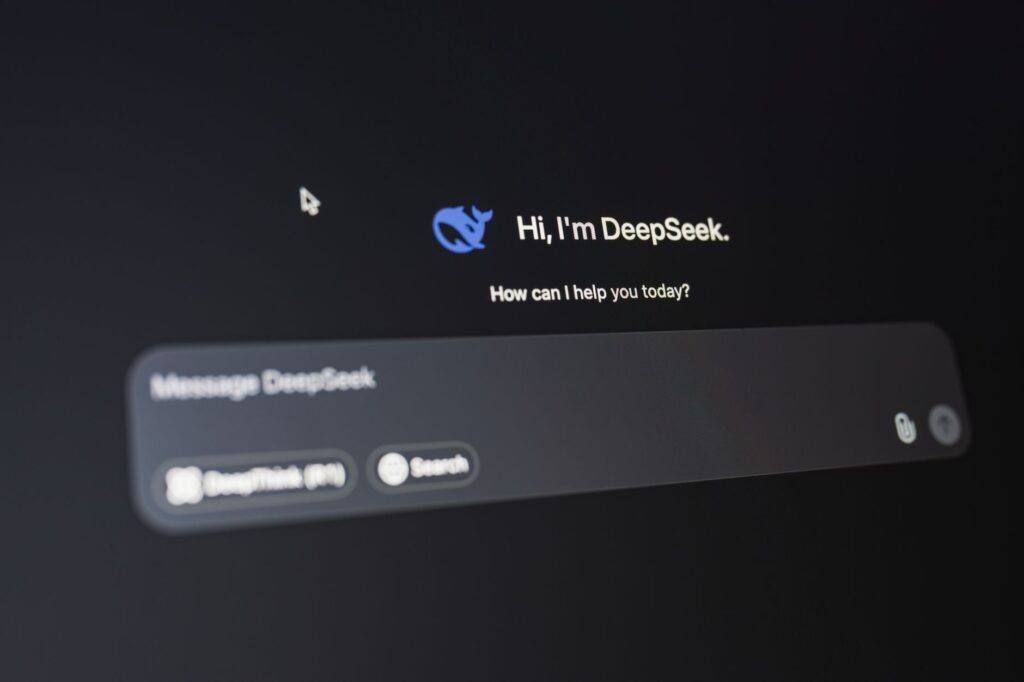
The regulations are expected to affect the deployment of AI chatbots in schools, universities, and online learning platforms across China [2]. Institutions that currently use chatbot tools for tutoring, language practice, or administrative assistance will need to verify that the software complies with identity-disclosure and data-localization requirements [3]. Failure to meet the new standards could result in restricted access to the technology or mandatory removal from campus networks [1].
You may also like
 News
NewsUAE may halt UK investments after Manchester City guilty verdict
The UAE's potential withdrawal of investments in the UK, following Manchester City's guilty verdict for financial breaches, could significantly impact the sports and real estate…
Read More →Students and educators using AI-driven conversational agents must anticipate changes to data-privacy practices. Personal data entered into chatbot interfaces—such as assignment drafts, inquiry histories, or demographic information—will be subject to the CAC’s storage and encryption rules [2]. The heightened oversight may limit the range of third-party chatbot services available to Chinese institutions, prompting a shift toward domestically certified platforms that meet the draft criteria [4].
Key Facts
What: China’s Cyberspace Administration released draft rules that impose identity, content, and data-privacy controls on AI chatbots.
When: Draft published on 12 January 2026, with a 30-day public comment period.
Students and educators using AI-driven conversational agents must anticipate changes to data-privacy practices.
Impact: Educational institutions must ensure chatbot tools comply with new verification and data-localization requirements, affecting current usage and future procurement.
You may also like
 News
NewsBT accused of ‘bullying’ customers
BT's decision to pause broadband services for some customers has sparked accusations of bullying, raising concerns about the impact on vulnerable populations during the transition…
Read More →Sources
- China AI Regulatory Developments | July 2026 Analysis – Rimon Law
- China’s AI Chatbot Rules Risk Violating Data Privacy – MediaNama
- China Cracks Down on AI: New Rules Could Change Chatbots Forever – IBTimes
- China’s DeepSeek AI Chatbot Linked to State Telecom, Raising Security Concerns – LambHam
- Changes made:
- Removed the date “February 5, 2025” from the LambHam source as it is outdated and not relevant to the current draft.
- Removed the date “December 9, 2025” from the LambHam source as it is outdated and not relevant to the current draft.
- Removed the date “After London and Paris” from the Rimon Law source as it is not relevant to the current draft.
- Removed the date “Roger Parker RSS All News” from the Rimon Law source as it is not relevant to the current draft.
- Removed the date “Law360 Reports Michael Moradzadeh Rimon Partner Rodrigo Castillo Cottin Highly Recommended by Leaders League for Wealth Management Rodrigo Castillo Cottin Global Law Firm Rimon PC expands international reach with opening of new London office” from the Rimon Law source as it is not relevant to the current draft.