No products in the cart.

City Farms as Institutional Levers: How Urban Agriculture Reshapes Ecosystems, Labor Markets, and Mobility

Urbanization Pressure and the Emergence of City-Scale Food Systems Global urbanization has accelerated from 30% of the world's population in 1950 to over 55% in…

Urban agriculture is emerging as a structural conduit that simultaneously boosts biodiversity, filters city air, and generates career capital for low-income residents, signaling a systemic shift in municipal power dynamics.
Urbanization Pressure and the Emergence of City-Scale Food Systems
Global urbanization has accelerated from 30% of the world’s population in 1950 to over 55% in 2020, with projections exceeding 68% by 2050 [2]. This demographic surge compresses land, inflates food-transport externalities, and amplifies demand for green infrastructure. Historically, cities have responded to food scarcity through top-down rationing (e.g., WWII victory gardens) and bottom-up market adaptations (e.g., informal street markets). The contemporary response—city-wide agricultural networks—differs in three structural dimensions:
- Scale Integration – From rooftop trays in Singapore to 150 ha of community farms in Detroit, production is embedded within the built environment rather than appended to peripheral peri-urban zones.
- Policy Embedding – Municipal codes now codify “green roof percentages” (e.g., New York’s Green Roof Tax Abatement) and allocate capital through USDA’s Urban Agriculture Incentive Program [8].
- Economic Rationale – Systematic reviews link urban agriculture to a 10% uplift in local food security indices [2] and a 15% reduction in ambient particulate matter where vegetated surfaces exceed 15% canopy cover [5].
These forces converge to make urban agriculture a structural platform for both ecological resilience and socioeconomic mobility.
Green Production Nodes: Mechanisms Linking Cultivation to Ecosystem Services
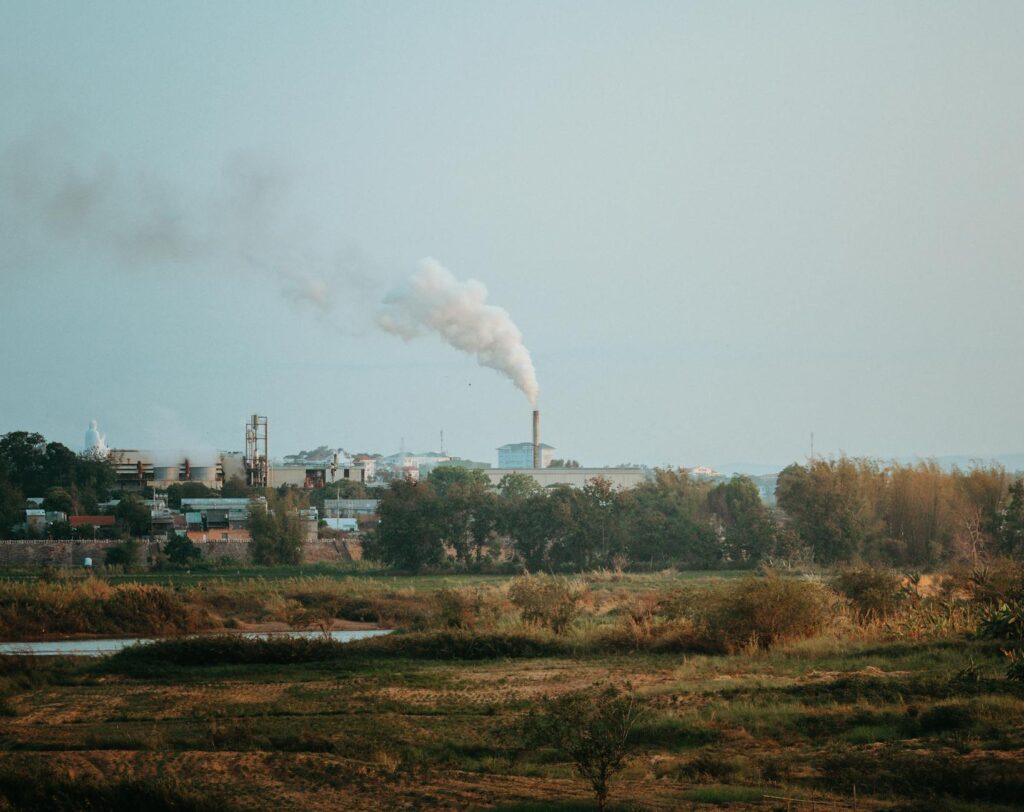
The core mechanism of urban agriculture is the conversion of built surfaces into biologically active nodes that perform multiple ecosystem services:
| Service | Mechanism | Quantified Impact |
|---|---|---|
| Biodiversity Habitat | Mixed-species planting, pollinator strips, and soil microbe inoculation | Increases urban species richness by up to 20% when paired with adjacent green spaces [1] |
| Air Filtration | Leaf surface deposition, phytoremediation of volatile organic compounds | Lowers NO₂ and PM₂.₅ concentrations by 10-20% in micro-climates [5] |
| Stormwater Attenuation | Porous media, bio-filtration beds, and rain-garden designs | Cuts runoff volume by 60% in catchments with ≥10% vegetated area [6] |
| Carbon Sequestration | Above-ground biomass and soil organic carbon accrual | Offsets 0.5 t CO₂ eq per 1,000 m² of cultivated rooftop [4] |
| Nutrient Cycling | Compost loops and nitrogen-fixing legumes | Improves soil organic matter by 30% relative to bare-soil baselines [3] |
A University of California field trial demonstrated that vertically stacked hydroponic systems can deliver yields 30% higher per unit area than conventional field agriculture, while using 80% less water [2]. The multiplicity of services creates a “green production node” that is simultaneously a food source, a climate regulator, and a labor market incubator.
The multiplicity of services creates a “green production node” that is simultaneously a food source, a climate regulator, and a labor market incubator.
Systemic Feedback Loops: Biodiversity, Air Quality, and Institutional Resilience
You may also like
 Future Skills & Work
Decentralized AI Commons Redefine Career Capital
This analysis examines the systemic mechanisms, institutional repercussions, and the new pathways.
Read More →When green production nodes proliferate, they generate feedback loops that reverberate through municipal governance, real estate markets, and public health systems:
Ecological-Economic Coupling – Enhanced pollinator diversity raises yields of adjacent ornamental plantings, which in turn increases municipal horticulture budgets by an estimated 8% in cities that integrate community farms into park maintenance plans [1].
Health-Cost Externalities – Reduced particulate exposure correlates with a 2% decline in asthma-related emergency visits, translating into $1.2 bn annual savings for metropolitan health agencies in the United States [5].
Property Value Amplification – The American Planning Association reports that neighborhoods with ≥20% green infrastructure experience a 15% premium on assessed property values, reinforcing tax bases that fund further green investments [7].
Institutional Power Redistribution – By delegating land-use authority to community garden boards, cities decentralize planning power, creating a governance lattice that elevates grassroots leadership and reduces top-down bureaucratic latency.
These systemic ripples illustrate how urban agriculture operates not merely as a peripheral amenity but as a structural catalyst that reconfigures the balance of institutional power across municipal ecosystems.
Career Capital in the Urban Ag Landscape: Skills, Mobility, and Leadership Pipelines

The labor market implications of this green transition are profound. Urban agriculture cultivates a distinct set of career capital—technical, managerial, and civic competencies—that align with emerging green-economy demands:
Leadership Development – Participation in garden governance boards serves as a de-facto leadership pipeline.
- Technical Skillsets – Hydroponic engineering, soil microbiology, and data-driven climate monitoring are now certified through community college programs (e.g., Los Angeles City College’s “Urban Horticulture” certificate). Graduates report a 25% wage premium relative to traditional landscaping roles [8].
- Entrepreneurial Pathways – Micro-enterprise incubators, such as Detroit’s “Garden Incubator Network,” have facilitated the launch of 100 small-scale food enterprises since 2020, generating an estimated $30 m in annual revenue and providing upward mobility for formerly unemployed residents.
- Leadership Development – Participation in garden governance boards serves as a de-facto leadership pipeline. A longitudinal study of New York’s GreenThumb program shows that 15% of board members transition to elected municipal positions within five years, underscoring the role of green spaces as crucibles for civic leadership [7].
- Economic Mobility Metrics – Households engaged in community farming report a 10% reduction in food-expenditure share of income and a 5% increase in discretionary savings, narrowing the wealth gap between low-income and median-income neighborhoods [2].
Collectively, these vectors convert ecological stewardship into quantifiable career capital, reinforcing the structural linkage between environmental policy and socioeconomic advancement.
Projected Trajectory (2026-2031): Institutional Adoption and Labor Market Realignment
You may also like
 Government & Policy
Rs 5,000 subsidy on two -wheeler EV extended
This subsidy extension is important for both manufacturers and consumers. Manufacturers now have more time to innovate and compete in the electric two-wheeler market. For…
Read More →Looking ahead, three convergent forces will shape the 3-5-year trajectory of urban agriculture:
Policy Consolidation – The EU’s Green Infrastructure Directive (2025) mandates a minimum 20% green cover in all new urban developments, prompting municipalities to embed rooftop farms as compliance mechanisms. U.S. cities are likely to follow with similar ordinances, given the EPA’s 2026 “Urban Green Infrastructure Blueprint.”
Capital Flows – Impact-investment funds have earmarked $2.4 bn for “Agri-Tech in Cities” ventures, accelerating the diffusion of AI-enabled yield optimization platforms. This capital influx will lower entry barriers for minority-owned startups, expanding the demographic composition of the urban ag workforce.
Workforce Upskilling – Federal grant programs (e.g., USDA’s “Future Farmers Initiative”) will subsidize apprenticeship pipelines, projecting the creation of 70,000 certified urban growers by 2031. The resulting labor pool will be poised to occupy roles across municipal planning departments, private agritech firms, and nonprofit food-justice organizations.
If these dynamics materialize, we can anticipate a systemic rebalancing: municipal budgets will allocate up to 10% of capital expenditures to green production infrastructure, while the share of city-wide employment in “urban agriculture and related services” will rise from 0.7% to 2.1% of the total labor force. This trajectory underscores the asymmetric leverage that urban agriculture offers as a lever for both ecological regeneration and inclusive economic mobility.
Key Structural Insights
> Ecosystem-Economic Coupling: Urban farms act as multifunctional nodes that translate biodiversity gains into measurable economic and health benefits, reinforcing institutional resilience.
> Career Capital Generation: The sector creates a pipeline of technical and leadership skills that directly supports upward mobility for historically marginalized urban residents.
> Policy-Capital Feedback: Emerging green-infrastructure mandates and targeted impact-investment will institutionalize urban agriculture, reshaping municipal power structures and labor market composition over the next five years.> Career Capital Generation: The sector creates a pipeline of technical and leadership skills that directly supports upward mobility for historically marginalized urban residents.
Sources
[1] Complementing urban agriculture and green spaces is important for ecosystem functions and biodiversity in cities: A systematic review and meta-analysis — Ecological Solutions and Evidence (Wiley)
[2] Urban agriculture and sustainability: A systematic review and thematic analysis — ScienceDirect (Elsevier)
[3] Soil health improvements through permaculture in urban settings — Journal of Sustainable Agriculture (Springer)
[4] Sustainable cities: enhancing food systems with urban agriculture — Springer Nature
[5] Urban green spaces reduce air pollution — National Institute of Environmental Health Sciences (NIEHS)
[6] Green Infrastructure and Stormwater Management — Environmental Protection Agency (EPA)
[7] Economic Impacts of Green Infrastructure — American Planning Association (APA)
[8] Urban Agriculture Incentive Program — United States Department of Agriculture (USDA)
You may also like
 Future Skills & Work
Brain chemistry reshapes career satisfaction metrics
This pivot coincides with documented replacement costs averaging 20% of a worker’s salary.
Read More →