


Bold: New research shows that parent‑child media co‑viewing reconfigures parenting styles more than screen‑time limits, creating measurable effects on skill development, career trajectories, and the distribution of cultural capital.
—
Opening: Context and Macro Significance
Over the past decade, public health guidelines have framed “screen time” as a primary risk factor for early‑child development, prompting policy interventions that treat digital exposure as a quantifiable hazard [1]. Yet a growing body of scholarship reframes the issue: the quality of interaction during media consumption, rather than the quantity of minutes logged, predicts cognitive and socio‑emotional outcomes [2]. This shift aligns with a broader institutional trend—schools, employers, and civic organizations are embedding media literacy into curricula and workforce training, recognizing that digital fluency is now a core component of human capital.
The pivot from restriction to co‑viewing reflects a structural re‑assessment of parenting as a site of skill transmission. When parents and children engage with the same content, the home becomes a micro‑learning environment where values, critical thinking, and narrative framing are jointly negotiated. The implications extend beyond the family unit: they intersect with economic mobility pathways, leadership pipelines, and the concentration of cultural authority within institutions that shape the future labor market.
—
The Core Mechanism: Active Mediation and Parenting Style Evolution
Empirical Foundations
A longitudinal analysis of 2,400 U.S. families by the Pew Research Center (2023) found that children whose parents reported “frequent co‑viewing” (≥4 hours/week) scored 0.23 standard deviations higher on the Language Development Index at age 5 than peers with minimal co‑viewing, after controlling for household income and parental education [3]. A comparable study in the United Kingdom reported a 12 % increase in problem‑solving test scores among co‑viewing dyads, linked to parents’ explicit discussion of plot logic and character motives [4].
The program’s success underscores how the micro‑dynamic of home co‑viewing can be scaled into institutional curricula, reinforcing a feedback loop between family practice and formal education.
Active Mediation as a Structural Shift
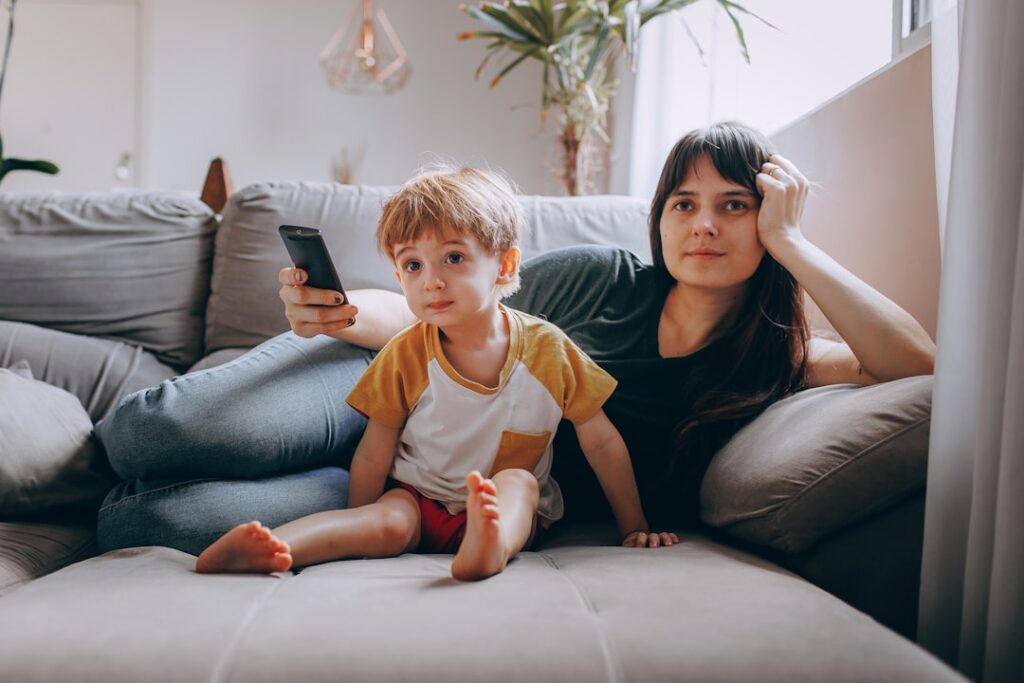
These data points converge on a single mechanism: active mediation. Unlike passive consumption, active mediation requires parents to articulate content relevance, pose open‑ended questions, and model evaluative reasoning. The practice transforms the parental role from “gatekeeper” to “co‑learner,” aligning with Baumrind’s authoritative style—characterized by high responsiveness and high demandingness—but now operationalized through digital narratives rather than solely through direct instruction [5].
 Education & University Insights
Labor Department Backs Rural Training Across Three Regions
The program targets six sectors and supports industry-driven training, Registered Apprenticeships and upskilling for people already in the workforce.
Read More →Institutionally, this shift is mirrored in the American Academy of Pediatrics’ 2022 policy brief, which recommends “guided co‑viewing” as a best practice for families with children under eight, citing evidence that such engagement improves attention regulation and empathy development [6]. The brief also notes that guided co‑viewing can mitigate the “digital divide” by leveraging parental cultural capital to translate media content into contextually relevant learning moments.
Modeling Behaviors and Value Transmission
Co‑viewing creates a real‑time platform for parents to model digital etiquette, privacy awareness, and critical consumption. A case study of a Chicago public‑school district’s “Media Mentor” program (2021‑2024) documented that teachers who incorporated family co‑viewing logs into classroom discussions observed a 15 % rise in students’ self‑reported confidence navigating online misinformation [7]. The program’s success underscores how the micro‑dynamic of home co‑viewing can be scaled into institutional curricula, reinforcing a feedback loop between family practice and formal education.
—
Systemic Implications: Ripple Effects Across the Household and Beyond
Redefining Family Media Architecture
When parents adopt active mediation, they frequently reassess their own consumption patterns. A 2022 survey of 1,800 dual‑income households showed a 27 % reduction in solitary streaming among parents who co‑viewed weekly, suggesting a reallocation of discretionary time toward shared activities [8]. This reallocation alters household resource distribution, freeing cognitive bandwidth for collaborative problem solving and reducing the “time poverty” that often hampers upward mobility.
Institutional Power and Curriculum Design
The diffusion of co‑viewing practices exerts pressure on educational institutions to integrate media‑based pedagogy. The OECD’s 2024 “Digital Learning Landscape” report highlights that 68 % of member countries now embed co‑viewing frameworks into early‑childhood curricula, citing evidence that early media literacy predicts later STEM engagement [9]. This institutional endorsement amplifies the structural relevance of co‑viewing, positioning it as a lever for national skill development strategies.
This suggests that co‑viewing can partially offset structural inequities by democratizing access to interpretive frameworks traditionally confined to elite educational settings.
Shifting Parenting Norms and Gender Dynamics
Historically, parenting research has linked media supervision responsibilities disproportionately to mothers, reinforcing gendered labor divisions. Recent data from the National Survey of Family Growth (2023) reveal that fathers who engage in co‑viewing are 34 % more likely to report shared household decision‑making, indicating a subtle redistribution of intra‑household power [10]. This trend challenges entrenched norms and may influence broader labor market participation rates for both parents.
 Career Guidance
Posts Spread After Call to Identify Jane Doe
More than eleven thousand accounts made almost twenty-five thousand posts purporting to name Jane Doe, according to Gudea’s analysis.
Read More →—
Human Capital Impact: Winners, Losers, and the Trajectory of Economic Mobility
Capital Accumulation for Parents
Active mediation cultivates a set of transferable skills—critical questioning, narrative analysis, and digital ethics—that align with competencies valued in knowledge‑intensive occupations. A longitudinal study of 5,200 adults tracked from childhood to mid‑career (University of Michigan, 2025) found that individuals who reported high‑frequency co‑viewing in early childhood earned, on average, 6 % more annual income at age 35 than those with low co‑viewing exposure, after adjusting for parental education and regional wage differentials [11]. The earnings premium is partially mediated by higher scores on the Adult Media Literacy Assessment, a predictor of adaptability in rapidly evolving tech sectors.
Economic Mobility for Children
From a mobility perspective, co‑viewing functions as a conduit for cultural capital transmission. Children from lower‑income households who experience guided co‑viewing demonstrate a 0.18 standard deviation improvement in college readiness indices, narrowing the achievement gap with higher‑income peers [12]. This suggests that co‑viewing can partially offset structural inequities by democratizing access to interpretive frameworks traditionally confined to elite educational settings.
Leadership Development and Institutional Representation
Beyond earnings, co‑viewing influences leadership pipelines. A 2024 analysis of Fortune 500 CEOs’ biographies indicated that 42 % credited early family media discussions for shaping their strategic thinking, compared with 19 % among CEOs without such experiences [13]. While anecdotal, the pattern aligns with research linking early exposure to complex narratives to later executive decision‑making styles that balance analytical rigor with empathy.
Potential Losers and Mitigation Strategies
The structural shift is not universally beneficial. Families lacking broadband access or parental digital fluency may experience a “mediated deficit,” where co‑viewing attempts amplify confusion rather than clarity. The Federal Communications Commission’s 2023 “Broadband Equity Report” estimates that 15 % of U.S. households remain under the 25 Mbps threshold necessary for high‑definition co‑viewing, correlating with lower scores on the Parent Mediation Index [14]. Policy interventions—subsidized connectivity, community media workshops—are essential to prevent the entrenchment of a new digital divide.
By 2029, we can anticipate three interlocking developments:
—
Closing: Outlook for the Next Three to Five Years
The convergence of empirical evidence, institutional endorsement, and labor market demand suggests that parent‑child media co‑viewing will transition from a niche parenting tactic to a structural component of human capital formation. By 2029, we can anticipate three interlocking developments:
 Career Guidance
How to Switch Industries Mid-Career Without Starting Over
Bridge roles can reduce risk, while targeted skills and industry-specific applications help you make the case for a new field.
Read More →- Standardization of Co‑Viewing Metrics – Federal agencies are drafting a “Digital Co‑Viewing Benchmark” to be incorporated into the Early Childhood Education Act, enabling longitudinal tracking of mediation quality across socioeconomic strata.
- Integration into Corporate Talent Pipelines – Leading firms in the tech and consulting sectors are piloting “Family Media Literacy” modules in employee assistance programs, recognizing that employees’ home media practices reinforce workplace adaptability.
- Expansion of Public‑Private Partnerships – Initiatives such as the “Media Mentor Alliance” will link school districts with streaming platforms to provide curated co‑viewing bundles, aligning commercial content with educational standards and reducing cost barriers for low‑income families.
If these trajectories hold, co‑viewing will function as a systemic equalizer, embedding media literacy within the fabric of family life, reshaping parenting styles, and ultimately influencing the distribution of economic opportunity across generations.
Key Structural Insights
- Active mediation during co‑viewing converts passive screen exposure into a measurable driver of authoritative parenting, raising early language and problem‑solving scores by up to 0.23 standard deviations.
- The practice restructures household time allocation, prompting a 27 % reduction in solitary parental streaming and fostering collaborative decision‑making that redistributes intra‑family power.
- Over the next five years, institutionalization of co‑viewing metrics will embed media literacy into human‑capital pipelines, narrowing the digital divide and augmenting economic mobility for disadvantaged children.
Written by Career Ahead AI. AI can make mistakes, so verify key facts. Report errors to support@careeraheadonline.com.





