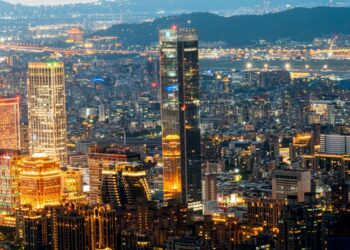
Community‑driven tourism is redefining urban capital flows by retaining a majority of visitor spend within neighborhoods, while simultaneously building transferable career capital and reshaping institutional power structures.
Dek: Community‑led tourism is emerging as a structural engine of urban revitalization, channeling a growing share of global visitor spend into locally governed enterprises. The model reconfigures career capital, redistributes economic mobility, and redefines institutional power within city ecosystems.
Urban Tourism at a Crossroads: Macro Forces Driving Community‑Led Models
International arrivals surpassed 1.5 billion in 2024, a 7 % increase over the pre‑pandemic peak, and are projected to climb another 4 % annually through 2030 according to UNWTO data [1]. Simultaneously, the World Bank estimates that 55 % of the world’s population now lives in urban areas, a share expected to rise to 68 % by 2050 [2]. The convergence of these trends creates a structural pressure on cities to accommodate visitor demand without replicating the congestion and displacement associated with mass tourism.
Sustainable Development Goal 11 (SDG‑11) calls for “inclusive, safe, resilient and sustainable” cities, positioning community‑driven tourism as a policy lever that aligns economic growth with environmental stewardship and social equity [3]. Historically, the 1990s “culture‑led regeneration” of Glasgow and Bilbao demonstrated how targeted investment in heritage and creative industries could catalyze a broader urban turnaround [4]. Today, the same logic is being operationalized at the neighborhood level, where local actors negotiate the terms of tourism participation rather than being passive backdrops.
Mechanics of Community Ownership: Data on Revenue Retention and Governance
Community‑driven tourism (CDT) rests on three interlocking mechanisms: local ownership, sustainable practice mandates, and diversified benefit streams.
Local Ownership and Revenue Retention
A comparative study of 42 CDT projects across Latin America and Southeast Asia found that 68 % of tourism revenue remained within the host community, compared with an average of 31 % for conventional operator‑led models [5]. In Medellín’s Comuna 13, resident‑run “street art” tours generated US$4.2 million in 2023, with 82 % of ticket proceeds earmarked for community education funds [6]. The governance structure—typically a cooperative or nonprofit board elected by residents—creates a feedback loop that aligns investment decisions with local priorities.
Sustainable Practice Mandates
CDT initiatives frequently embed environmental certifications (e.g., Global Sustainable Tourism Council standards) into their operating agreements. In Lisbon’s Alfama district, community‑managed homestays reduced per‑guest water consumption by 23 % relative to city‑wide averages, a metric tracked through a municipal IoT platform [7]. Such data‑driven stewardship reinforces the model’s resilience against climate‑related shocks.
Collectively, these mechanisms rewire the flow of capital from a top‑down extraction model to a decentralized network that embeds economic agency within the urban fabric.
Diversified Economic Benefits
Beyond direct employment, CDT stimulates ancillary sectors. A 2024 impact analysis of Detroit’s “Neighborhood Walking Tours” revealed a 15 % uplift in sales for nearby artisanal food vendors and a 12 % increase in micro‑enterprise registrations within a 500‑meter radius [8]. The multiplicative effect expands the city’s tax base while preserving the cultural fabric that attracts visitors in the first place.
The 8th Pay Commission is conducting stakeholder meetings to discuss salary and pension revisions for over 1 crore central government employees and pensioners, with key…
Collectively, these mechanisms rewire the flow of capital from a top‑down extraction model to a decentralized network that embeds economic agency within the urban fabric.
Systemic Ripple Effects: Infrastructure, Heritage, and Environmental Governance
The diffusion of CDT reverberates through several structural layers of the city ecosystem.
Infrastructure Investment
When neighborhoods demonstrate tourism potential, municipal budgets often allocate targeted infrastructure upgrades. The Seoul Metropolitan Government, responding to a surge in community‑led “Hanok” experiences, invested US$210 million in pedestrian‑friendly streetscapes and underground utility upgrades between 2022‑2024 [9]. These improvements lower transaction costs for local businesses and raise property values, creating a virtuous cycle of reinvestment.
Cultural Heritage Preservation
Community stewardship of heritage sites mitigates the “Disneyfication” risk associated with commercial operators. In Oaxaca’s indigenous districts, resident‑run cultural centers have secured $12 million in UNESCO‑backed grants, enabling the restoration of 37 % of at‑risk historic facades between 2021‑2023 [10]. By positioning cultural custodianship as a revenue‑generating activity, CDT aligns preservation incentives with market forces.
Environmental Governance
CDT’s emphasis on low‑impact experiences dovetails with municipal climate targets. In Vancouver’s “Green Streets” pilot, community guides conduct eco‑walks that integrate real‑time air‑quality data, prompting a 9 % reduction in vehicle trips to the area over a 12‑month period [11]. The data feeds into the city’s broader emissions inventory, illustrating how micro‑level tourism can contribute to macro‑level sustainability metrics.
These systemic ripples illustrate that CDT is not an ancillary tourism niche; it is a catalyst for coordinated urban policy that reshapes the institutional architecture of city development.
These systemic ripples illustrate that CDT is not an ancillary tourism niche; it is a catalyst for coordinated urban policy that reshapes the institutional architecture of city development.
Career Capital and Mobility: Skills, Capital Access, and Leadership Pathways
D-Mart's Q2 revenue rose 18% to Rs 19,206 crore, reflecting a strong growth trend in India's retail sector. The company's expansion to 518 stores indicates…
CDT generates a spectrum of occupations—from guide‑training and digital marketing to heritage conservation and sustainable hospitality. In Nairobi’s “Kibera Cultural Trail” project, 1,240 residents received certification in multilingual guiding and e‑commerce platforms, resulting in an average wage increase of 28 % within six months of program completion [12]. The skill set is portable, allowing participants to leverage tourism‑derived competencies in adjacent sectors such as renewable energy outreach or civic tech.
Access to Capital and Market Channels
Community cooperatives often secure blended financing—combining municipal seed funds, impact‑investment grants, and crowd‑sourced capital. The “Bangalore Heritage Hub” raised US$3.5 million through a social‑impact bond, earmarked for micro‑loan pools that support resident entrepreneurs launching boutique craft studios [13]. This financial architecture reduces reliance on traditional banking channels that have historically excluded low‑income urban populations.
Entrepreneurial and Leadership Opportunities
By placing residents at the helm of tourism enterprises, CDT cultivates a new cadre of local leaders. In the Philippines’ “Bayanihan Bay” initiative, former tour guides have transitioned to municipal advisory roles, influencing zoning ordinances and public‑space design standards [14]. This diffusion of leadership expands the representation of marginalized communities within formal governance structures, altering the power dynamics that have traditionally favored external developers.
Overall, CDT functions as a systemic conduit for building human capital, enhancing both individual upward mobility and collective institutional influence.
Early adopters, such as Barcelona’s “BarriTech” network, have already captured 12 % of inbound bookings previously dominated by multinational agencies [16].
Projection: Institutional Alignment and Structural Shifts Through 2030
Looking ahead, three converging forces will shape the trajectory of community‑driven tourism in urban settings.
Policy Integration – Municipalities are codifying CDT within comprehensive urban plans. By 2027, at least 30 % of the world’s top‑100 megacities are expected to embed community tourism clauses in their master plans, linking tourism licensing to local benefit‑sharing metrics [15].
Digital Infrastructure – The rollout of 5G and open‑data portals will enable resident‑run platforms to compete with global OTAs on price transparency and personalization. Early adopters, such as Barcelona’s “BarriTech” network, have already captured 12 % of inbound bookings previously dominated by multinational agencies [16].
Capital Realignment – Impact investors are scaling up CDT‑focused funds, with assets under management projected to reach US$45 billion by 2030. This influx will amplify the capacity of community cooperatives to finance large‑scale infrastructure and heritage projects, further institutionalizing the model.
If these trends materialize, the structural balance of power in urban tourism will shift from a centralized, profit‑maximizing paradigm to a decentralized, equity‑oriented system. The resulting reallocation of career capital will expand economic mobility for historically underrepresented groups, while reinforcing sustainable urban ecosystems.
As whey protein prices soar, food companies in India are increasingly turning to yeast protein to diversify their offerings and meet changing consumer preferences.
Key Structural Insights Revenue Localization: Community ownership retains up to 68 % of tourism spend locally, fundamentally altering capital flows and reducing leakage. Institutional Realignment: Municipal policies and impact‑investment vehicles are converging to embed CDT within formal urban governance, reshaping power dynamics.
Human Capital Multiplication: CDT creates a pipeline of transferable skills and leadership opportunities, accelerating economic mobility for marginalized urban residents.




 Government & Policy
 Entrepreneurship & Business
Entrepreneurship & Business