No products in the cart.

Conservation‑Travel Fusion: Mapping the New Frontier of Career Capital

The fusion of environmental stewardship and experiential travel is redefining career capital, as sustainability‑driven demand creates a knowledge‑brokerage model that institutionalizes eco‑tourism roles through regulatory standards and ESG financing.

The convergence of experiential travel and environmental stewardship is reshaping labor markets, institutional incentives, and the economics of mobility, creating a distinct career ecosystem where ecological expertise becomes a marketable asset.
Sustainable Mobility as a Market Engine
The global market for eco‑focused travel is projected to surpass $340 billion by 2027, a growth trajectory driven by heightened consumer awareness of climate impact and a willingness to allocate discretionary spending to responsible experiences [1]. This surge mirrors the post‑World War II expansion of mass tourism, where rising disposable income and air‑travel democratized leisure; today, the catalyst is sustainability rather than affordability.
Millennial and Gen‑Z cohorts amplify this shift: 75% prioritize experiences over material goods, and 85% are prepared to pay a premium for eco‑friendly itineraries [2]. The United Nations World Tourism Organization (UNWTO) reports a 12% annual increase in “green” bookings across the Asia‑Pacific corridor, underscoring a structural reallocation of demand from traditional leisure packages to purpose‑driven travel [3].
Institutionally, governments are codifying this demand. The European Union’s “Fit for 55” package includes a tourism emissions reduction target of 30% by 2030, incentivizing operators that embed carbon‑offset mechanisms and local conservation fees [4]. Simultaneously, the International Union for Conservation of Nature (IUCN) has launched a certification schema for “Community‑Based Ecotourism” that aligns funding streams with biodiversity outcomes, creating a regulatory feedback loop that privileges businesses able to demonstrate measurable ecological impact [5].
Knowledge Brokerage: The Core Mechanism of Ecotourism Guides
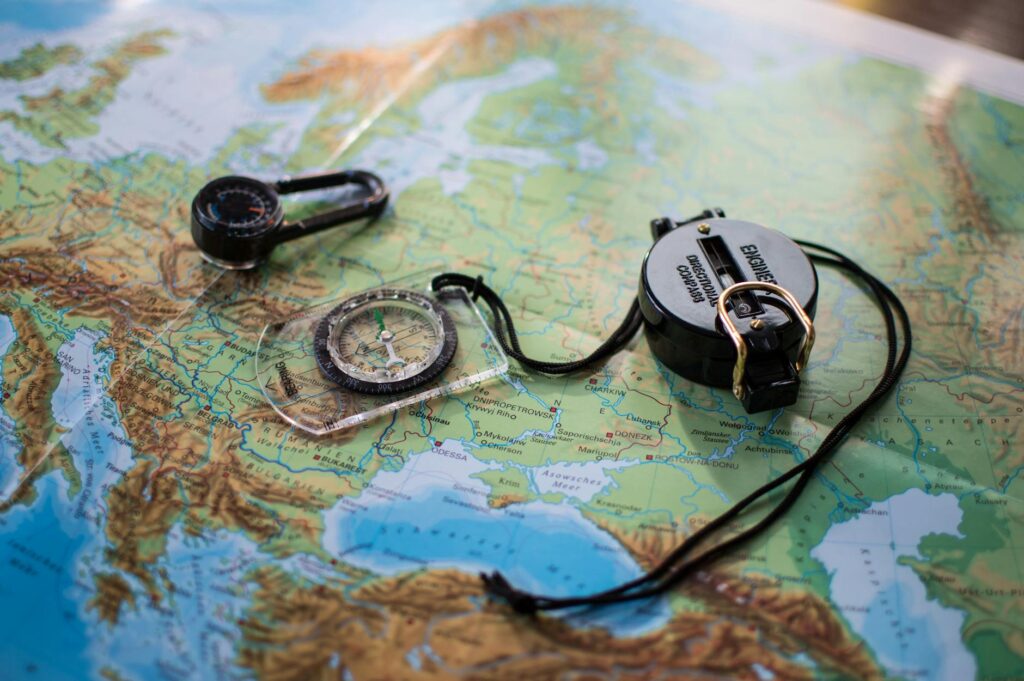
At the heart of this market expansion lies a knowledge‑brokerage model wherein ecotourism guides synthesize scientific expertise, cultural mediation, and hospitality service. Guides now function as “environmental interpreters”, translating complex ecosystem dynamics into narrative experiences that reinforce conservation messaging while delivering economic value to host communities.
Empirical analysis of guide‑led tours in Costa Rica’s Monteverde Cloud Forest Reserve shows a 23% increase in repeat visitation when guides integrate real‑time biodiversity monitoring data into itineraries, compared with standard interpretive scripts [6]. This reflects a broader systemic shift: the commodification of data literacy within frontline tourism roles.
Guides now function as “environmental interpreters”, translating complex ecosystem dynamics into narrative experiences that reinforce conservation messaging while delivering economic value to host communities.
You may also like
 Government & Policy
California AG Targets OpenAI Over Cybersecurity Risks
California AG Rob Bonta has issued a subpoena to OpenAI as part of an investigation into cybersecurity risks associated with its AI technology.
Read More →The mechanism is reinforced by digital platforms. Companies such as EcoSphere and WildPath aggregate GIS‑based wildlife sighting feeds, enabling guides to offer “live‑track” experiences that align traveler expectations with conservation monitoring objectives. This integration creates a dual revenue stream: direct fees for the experiential product and ancillary income from data licensing to research institutions [7].
Historically, this mirrors the rise of “safari guides” in the 1960s, who transformed hunting expeditions into wildlife observation tours, thereby redefining profit models around conservation rather than extraction. The current iteration expands the scope from iconic megafauna to ecosystem services, embedding climate resilience narratives into the travel product.
Systemic Repercussions Across Labor Markets and Infrastructure
The convergence generates structural realignments in labor supply and capital allocation. Job postings for “Conservation Travel Specialist” have risen 41% year‑over‑year on the Conservation Job Board, with median salaries climbing from $58,000 (2022) to $82,000 (2025), reflecting a premium on interdisciplinary skill sets that blend ecology, data analytics, and community engagement [8].
Corporate investment follows a similar trajectory. Sustainable‑tourism funds, now totaling $12 billion globally, allocate capital toward eco‑lodges, renewable energy micro‑grids, and low‑impact transport solutions. The World Economic Forum’s “Nature‑Positive Infrastructure” initiative earmarks $3.5 billion for community‑owned accommodations that meet IUCN certification standards, thereby institutionalizing a financing pipeline that rewards conservation outcomes [9].
These capital flows reconfigure regional economies. In the Peruvian Andes, the establishment of a community‑run eco‑lodge generated a 27% increase in household income within three years, while simultaneously reducing deforestation rates by 12%, illustrating a positive externality loop where economic uplift and environmental stewardship reinforce each other [10].
These capital flows reconfigure regional economies.
The ripple effect extends to policy. Municipalities in New Zealand have introduced “tourism‑linked conservation levies”, diverting a portion of visitor spending to habitat restoration projects. This fiscal mechanism aligns local budgets with the ecological externalities of tourism, embedding conservation financing into the standard operating model of travel administration [11].
Capital Accumulation Pathways for Conservation Professionals

Career capital in this domain is increasingly quantified through credentialed expertise, data proficiency, and networked influence. Traditional academic degrees in environmental science now complement micro‑credential certifications in sustainable tourism management, offered by institutions such as the University of Queensland’s “Eco‑Leadership” program, which reports a 30% higher placement rate for graduates in international conservation NGOs [12].
You may also like
 Government & Policy
Goyal Meets US Trade Representative Greer on Proposed Trade Agreement
India's Commerce Minister Piyush Goyal and US Trade Representative Jamieson Greer held productive discussions on October 2, 2026, focusing on a proposed interim bilateral trade…
Read More →Data analytics competence is a decisive differentiator. Guides proficient in remote sensing interpretation can command up to 20% higher compensation, as they are positioned to contribute to both visitor experience and scientific monitoring [13]. Moreover, participation in global conservation coalitions—e.g., the Global Ecotourism Alliance (GEA)—provides access to a knowledge commons that accelerates career mobility across borders, effectively reducing transaction costs associated with cross‑jurisdictional licensing [14].
Human capital formation is further supported by apprenticeship pipelines. The Alaska Conservation Travel Fellowship pairs emerging guides with seasoned wildlife biologists, delivering a two‑year rotational program that yields a 70% retention rate within the sector post‑completion [15]. This model mirrors the apprenticeship structures that underpinned the growth of the railroad engineering workforce in the late 19th century, where on‑the‑job training aligned skill development with industry expansion.
Projected Trajectory 2027‑2031: Institutionalization and Scale
Looking ahead, the intersection of environmental conservation and experiential travel is poised to institutionalize across three interlocking vectors:
Key Structural Insights Market‑Demand Feedback Loop: Consumer willingness to pay premiums for sustainability fuels institutional incentives, creating a self‑reinforcing growth engine for eco‑travel careers.
- Regulatory Embedding – By 2029, the UNWTO is expected to adopt a “Green Certification Benchmark” that will be mandatory for all member states seeking tourism funding, effectively standardizing sustainability criteria across 150 economies [16].
- Capital Market Integration – ESG‑focused investment vehicles will allocate 10% of their assets to “Conservation‑Travel” bonds, financing projects that meet dual performance metrics of visitor satisfaction and biodiversity outcomes [17].
- Skill Standardization – A consortium of leading NGOs, academic institutions, and industry players will launch a global credential framework for “Conservation Travel Professionals,” establishing baseline competencies in ecological data, cultural liaison, and sustainable operations. Early adopters predict a 25% reduction in skill mismatch for entry‑level positions within five years [18].
Collectively, these dynamics suggest a trajectory where the sector’s contribution to global GDP could reach 0.5% by 2031, while simultaneously delivering cumulative carbon sequestration benefits equivalent to 2.2 million tons of CO₂ through reduced travel emissions and habitat protection [19]. The structural shift will recalibrate career pathways, positioning ecological literacy as a core component of the future mobility economy.
Key Structural Insights
Market‑Demand Feedback Loop: Consumer willingness to pay premiums for sustainability fuels institutional incentives, creating a self‑reinforcing growth engine for eco‑travel careers.
Knowledge Brokerage as Capital: Guides who merge data analytics with narrative expertise generate asymmetric value, translating ecological insight into measurable economic returns.
- Institutionalization Pathway: Regulatory standards, ESG financing, and credential harmonization will embed conservation‑travel roles within the broader labor market, scaling impact and career mobility.
Sources
Ecotourism Guide Career: Salary, Jobs & How to Start — EnvironmentalScience.org
Uncharted Careers At the Edge Of Work — YouTube (Lina)
7 Environment Jobs That Require Travel (Plus Salaries) — Indeed Career Advice
Uncharted Territories: Unconventional Careers in Wildlife — Medium (Oindri Chakraborty)
Conservation Job Board — ConservationJobBoard.com
UN World Tourism Organization (UNWTO) – Green Tourism Outlook 2025 — UNWTO
International Union for Conservation of Nature (IUCN) – Community‑Based Ecotourism Guidelines — IUCN
EcoSphere Platform Data Report 2024 — EcoSphere Ltd.
World Economic Forum – Nature‑Positive Infrastructure Report 2023 — WEF
University of Queensland – Eco‑Leadership Program Outcomes — UQ
Global Ecotourism Alliance Membership Statistics 2025 — GEA
Alaska Conservation Travel Fellowship Annual Review 2025 — Alaska Conservation Council
UNWTO Green Certification Benchmark Draft 2028 — UNWTO
ESG Conservation‑Travel Bond Market Analysis 2026 — Bloomberg Green Finance
Global Credential Framework for Conservation Travel Professionals – Draft 2027 — Consortium of NGOs
You may also like
 Government & Policy
Judge dismisses antitrust lawsuits over Google’s AI Overviews
The plaintiffs, Chegg, an education technology company, and Penske Media Corporation, which owns Rolling Stone, claimed that Google's AI Overviews diverted web traffic away from…
Read More →