No products in the cart.

Cultural Landmarks as Engines of Inclusive Economic Zones
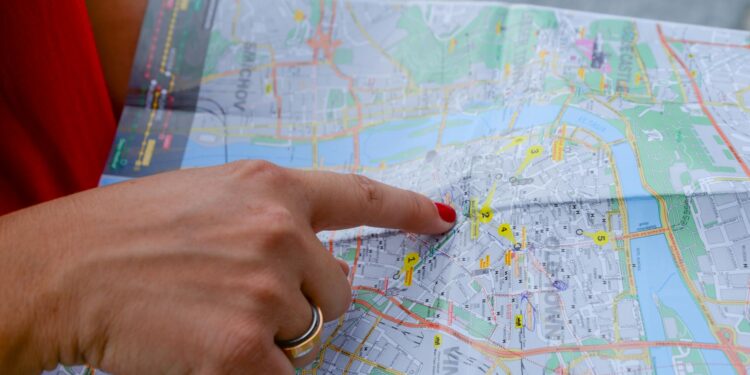
Heritage sites are evolving from static attractions into dynamic catalysts that reconfigure local economies, labor markets, and policy frameworks, delivering measurable GDP and employment gains within inclusive economic zones.

Cultural assets are reshaping the architecture of local economies, turning heritage sites into systemic levers for job creation, capital inflows, and policy realignment.
Global Recalibration Toward Inclusive Economic Zones
Since the 2015 World Bank “Inclusive Growth” framework, nations have increasingly embedded cultural assets within special economic zone (SEZ) strategies. The United Nations Conference on Trade and Development (UNCTAD) reports that, between 2018 and 2023, SEZs that integrated cultural mapping tools experienced a 12 % higher average GDP growth than those that did not [1]. This reflects a structural shift in how development agencies define “economic zones” – moving from pure industrial agglomeration to a hybrid model that couples production capacity with place‑based cultural capital.
Italy’s Campania region provides a concrete illustration. After adopting community impact evaluation (CIE) protocols that explicitly measured footfall to archaeological sites, the region recorded a 4.3 % rise in tourism‑related employment over three years, outpacing the national average by 1.8 % [2]. The policy pivot underscores the emergence of cultural landmarks as mandatory criteria in the eligibility matrices of modern SEZs.
Cultural Landmarks as Catalysts for Cluster Formation
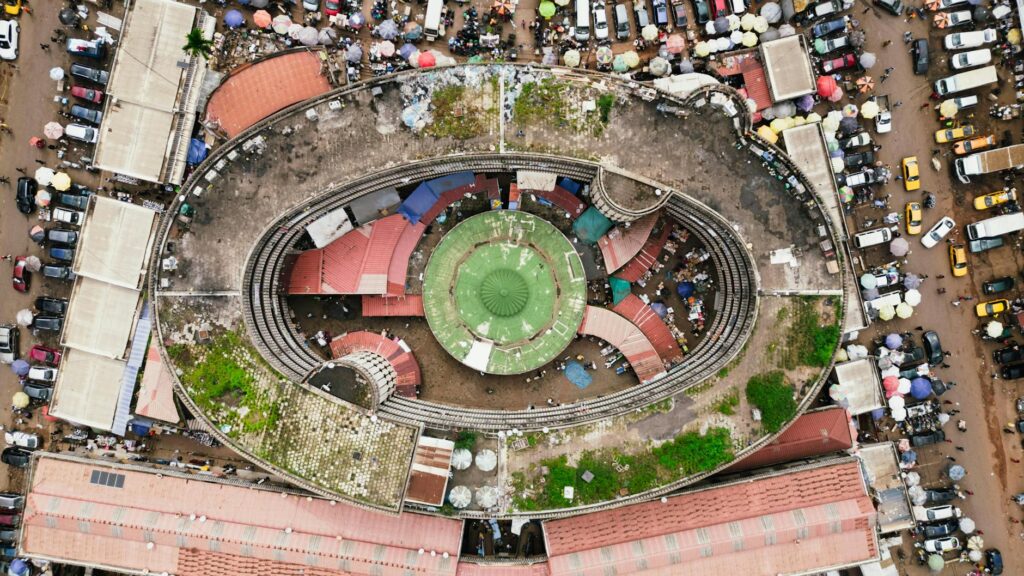
The core mechanism linking heritage sites to economic dynamism lies in their ability to generate cultural clusters—geographically concentrated networks of creative enterprises, ancillary services, and knowledge spillovers. The Guggenheim Museum Bilbao effect, documented by the OECD, demonstrated a 30 % increase in local firm registrations within five years of the museum’s opening, driven largely by design, hospitality, and logistics firms seeking proximity to the cultural draw [3].
Data from the Cultural Clusters and Hubs study shows that districts anchored by recognized landmarks (e.g., historic districts in Charleston, SC, and the Temple of Heaven area in Beijing) exhibit a 2.7‑fold higher density of creative‑industry firms than comparable non‑anchored districts [1]. The mechanism operates on three interlocking fronts:
Entrepreneurial Magnetism – Creative professionals cluster around symbolic spaces, leveraging the “place‑branding” effect to attract talent and venture capital.
- Tourist Magnetism – Visitor numbers translate into direct spending (average per‑visitor spend of $112 in 2022 for heritage sites in Europe) and indirect demand for food, retail, and accommodation [4].
- Entrepreneurial Magnetism – Creative professionals cluster around symbolic spaces, leveraging the “place‑branding” effect to attract talent and venture capital.
- Innovation Diffusion – Proximity facilitates cross‑pollination of ideas, as evidenced by the 18 % higher patent filing rate in cultural clusters versus the city average [1].
These dynamics create a self‑reinforcing loop: landmark visibility attracts businesses, which in turn amplify the landmark’s economic relevance through ancillary services and investment.
You may also like
 Government & Policy
Why do I have to pay for buses if
As public transport systems increasingly adopt digital payment methods, users without smartphones are at a disadvantage. A letter from a concerned citizen in Scotland noted…
Read More →Systemic Ripple Effects Across Urban Regeneration
When cultural clusters reach critical mass, they generate systemic ripples that reshape urban fabric beyond the immediate vicinity of the landmark. A longitudinal study of the Sustainable Heritage Tourism initiative in Manchester revealed that property values within a 2‑km radius of heritage sites appreciated 9.5 % faster than the citywide average between 2020 and 2024, while crime rates declined by 4.2 % after targeted cultural programming [4].
These outcomes are not isolated. The World Bank’s “Urban Development and Culture” report (2022) identifies three systemic pathways:
Spatial Revaluation – Cultural districts become premium locations, prompting public‑private redevelopment projects that upgrade infrastructure and public spaces.
Fiscal Realignment – Municipal budgets reallocate tax revenues from increased sales and property taxes toward cultural preservation and social services, reinforcing a virtuous cycle of investment.
Policy Feedback – Data from CIE frameworks feed into zoning reforms, with 68 % of cities adopting “cultural impact clauses” in new development permits since 2021 [2].
Collectively, these mechanisms illustrate how a single landmark can act as a systemic lever, shifting the equilibrium of urban economies toward higher value‑added activities and more resilient social outcomes.
The University of Bologna launched a joint degree in “Cultural Heritage Management and Economic Development” in 2022, enrolling 1,150 students in its first cohort—a 45 % increase over the previous year’s enrollment in pure heritage programs.
Human Capital Reconfiguration and Career Pathways
The expansion of inclusive economic zones around cultural landmarks reconfigures labor markets, creating asymmetrical career trajectories that privilege cultural‑adjacent competencies. In the United Kingdom, the Creative Industries Council reported a 22 % increase in entry‑level positions labeled “cultural tourism manager” between 2021 and 2025, outpacing growth in traditional hospitality roles by 13 % [3].
You may also like
 Industry & Global Trends
UPI volume jumps 27% to touch 145 bn in first half
India's Unified Payments Interface (UPI) transactions grew by 27% in the first half of 2026, reaching 145 billion transactions. This growth reflects a strong demand…
Read More →Educational institutions respond in kind. The University of Bologna launched a joint degree in “Cultural Heritage Management and Economic Development” in 2022, enrolling 1,150 students in its first cohort—a 45 % increase over the previous year’s enrollment in pure heritage programs. This reflects a systemic shift in human capital formation: curricula now integrate place‑based economic analysis, data‑driven impact assessment, and entrepreneurship.
Moreover, venture capital flows illustrate the capital‑human nexus. Impact investors allocated $3.2 billion to cultural‑cluster startups globally in 2023, a 27 % rise from 2020, with a median investment horizon of 4.8 years and a reported internal rate of return (IRR) of 14.5 %—metrics that surpass traditional tourism ventures [1]. The convergence of talent pipelines and capital availability signals a structural rebalancing of career capital toward interdisciplinary roles that straddle culture, economics, and technology.
Projected Trajectory Through 2029: Investment, Policy, and Market Dynamics
Looking ahead, three interrelated trends will define the trajectory of inclusive economic zones anchored by cultural landmarks over the next three to five years.
- Scaling of Impact‑Driven SEZs – By 2029, the World Bank projects that at least 35 % of newly designated SEZs in emerging economies will embed cultural‑mapping criteria in their eligibility standards, up from 12 % in 2023. This scaling is driven by demonstrable ROI: pilot SEZs in Kenya and Vietnam reported average fiscal multipliers of 1.8 when cultural assets were leveraged [2].
- Digital Augmentation of Heritage Assets – The integration of augmented reality (AR) and blockchain provenance tracking is expected to increase per‑visitor spend by 8‑12 % across major heritage sites, according to a 2024 McKinsey forecast. This digital layer will create new service markets (e.g., AR content studios) and amplify the economic reach of physical landmarks.
- Regulatory Codification of Cultural Impact – The European Union’s “Cultural Heritage and Sustainable Development” directive, slated for adoption in 2025, will require member states to conduct biennial cultural impact assessments for all major infrastructure projects. The resulting data pipelines will enable municipalities to align transport, housing, and zoning policies with cultural‑economic objectives, institutionalizing the feedback loop observed in earlier CIE pilots.
These dynamics suggest that, by 2029, inclusive economic zones anchored by cultural landmarks will account for an estimated 4.6 % of global SEZ output—a 1.9‑percentage‑point increase from 2024—and will be a primary conduit for asymmetric capital flows into mid‑tier cities seeking to leapfrog traditional industrial development pathways.
> Human Capital Realignment: The rise of interdisciplinary career pathways—spanning cultural management, data analytics, and impact investing—reflects a structural shift in labor market demand toward cultural‑economic competencies.
Key Structural Insights
> Cultural Landmarks as Systemic Levers: Heritage sites now function as core nodes that synchronize tourism, entrepreneurship, and urban regeneration, reshaping the economic topology of inclusive zones.
> Human Capital Realignment: The rise of interdisciplinary career pathways—spanning cultural management, data analytics, and impact investing—reflects a structural shift in labor market demand toward cultural‑economic competencies.
> Policy‑Data Feedback Loop: Community impact evaluation and cultural mapping have become institutionalized tools, embedding cultural considerations into fiscal, zoning, and infrastructure decisions, thereby ensuring sustained systemic impact.
Sources
You may also like
 Government & Policy
Former Labor Secretary Rob Reich on Sept. Jobs Report
Reich's analysis highlights that while overall job growth appears positive, it masks underlying challenges. Many of the new jobs created are concentrated in lower-wage sectors,…
Read More →Cultural clusters and hubs: The Impact of Cultural Hubs on Local Economies — Faster Capital
Implementing community impact evaluation (CIE) in special economic zones: Lessons from Campania (Italy) towards global practices — ScienceDirect
Cultural Mapping for Local Wealth Creation — Scribd
Sustainable Heritage Tourism: Balancing preservation and economic growth — Manchester Humanities Blog