No products in the cart.

Storefront Revitalization: The Structural Engine Powering Urban Cultural Capital
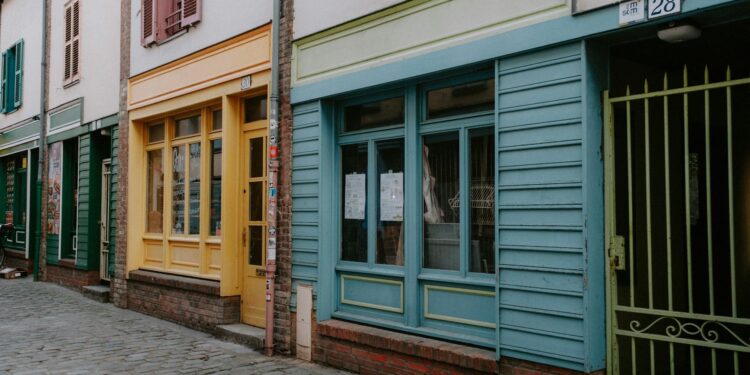
Storefront revitalization reframes heritage as a structural economic engine, linking cultural narratives to measurable capital gains and reshaping career pathways in urban development.

Storefront renewal is emerging as a systemic lever that converts intangible heritage into measurable economic mobility, reshaping leadership pathways and institutional incentives across U.S. cities.
Heritage as a Structural Asset in the Urban Fabric
The past decade has witnessed a redefinition of “heritage” from a static monument‑preservation mindset to a dynamic asset class that underpins urban competitiveness. The 2023 restoration of Medford’s Holly Theatre—completed at a cost of $28 million and now drawing an average of 1,200 weekly visitors—illustrates how a single façade can become a city‑wide cultural signifier, spurring adjacent property values by 12 % within two years [4]. Nationally, the National Trust for Historic Preservation reports that historic‑district rehabilitation projects generate more jobs per dollar invested than comparable new‑construction initiatives [5].
This shift aligns with a broader macro trend: the U.S. Bureau of Economic Analysis notes that cultural‑tourism receipts grew from $619 billion in 2015 to $744 billion in 2022, outpacing overall tourism growth by 3.2 percentage points [6]. The correlation suggests that institutional actors—municipal planning departments, state economic‑development agencies, and private equity firms—are increasingly treating heritage as a structural component of a city’s growth equation rather than an ancillary aesthetic concern.
Branding Mechanics of Storefront Revitalization
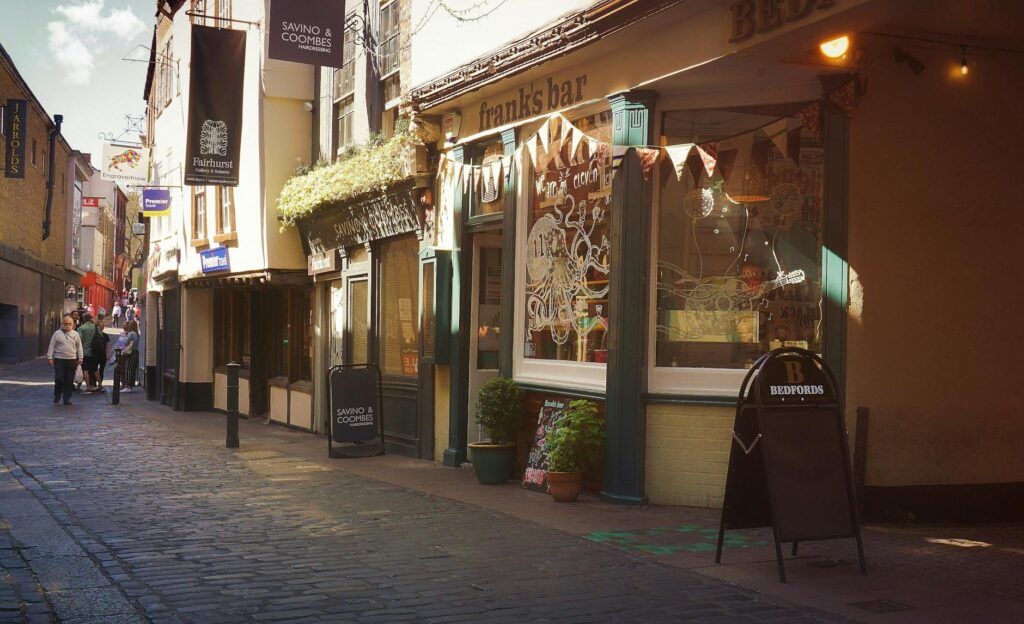
At the core of storefront renewal lies a branding logic traditionally applied to consumer products but now transposed onto built environments. Scholars define heritage as “the platform of intangible attributes embedded within physical urban values,” a definition that permits the translation of cultural narratives into market‑ready value propositions [3]. The mechanism operates in three stages:
- Narrative Codification – Planners extract locally resonant stories (e.g., a 1930s cinema marquee) and embed them in design guidelines.
- Visual Standardization – Material palettes, signage typographies, and lighting schemes are codified into a “heritage brand manual,” ensuring visual coherence across disparate storefronts.
- Economic Activation – The standardized visual language is leveraged in marketing campaigns, tourism itineraries, and digital wayfinding apps, converting cultural recognition into foot traffic and sales.
A comparative case study of the “Midtown Revival” program in Austin, Texas, demonstrates the efficacy of this model. Between 2018 and 2022, the city’s “Historic Façade Grant” funded 84 storefront upgrades, resulting in a 27 % increase in pedestrian counts on the targeted corridor and a 15 % uplift in average sales per square foot for participating retailers [7]. The program’s success prompted the Texas Economic Development Council to allocate an additional $45 million for replication in three other municipalities, illustrating how institutional power can be mobilized through a branding‑centric heritage framework.
Systemic Ripple Effects on Urban Ecosystems
Storefront revitalization propagates through multiple layers of the urban system, reshaping economic, social, and policy dynamics.
Systemic Ripple Effects on Urban Ecosystems Storefront revitalization propagates through multiple layers of the urban system, reshaping economic, social, and policy dynamics.
You may also like
 Government & Policy
Malaysia Plans First AI Law in 2027 as Scrutiny Intensifies
Malaysia is set to introduce its first AI law in 2027, addressing ethical implications and compliance requirements for AI technologies.
Read More →Economic Multipliers – A 2022 analysis by the Urban Land Institute found that every dollar spent on façade improvement generated $2.30 in ancillary construction activity and $1.80 in increased retail revenue within the same fiscal year [8]. This asymmetric multiplier effect accelerates capital circulation in neighborhoods that historically suffered from disinvestment.
Social Cohesion – Qualitative surveys in Detroit’s “Coney Island Corridor” reveal that residents’ sense of place rose by 18 % after a coordinated storefront makeover, correlating with higher rates of neighborhood association participation [9]. The data underscores how cultural signaling can reconfigure social capital, a prerequisite for sustained economic mobility.
Policy Feedback Loops – Municipalities observing measurable returns have begun embedding façade‑improvement criteria into zoning ordinances. Chicago’s 2024 “Heritage Overlay” mandates that new mixed‑use developments incorporate at least 30 % of façade elements derived from adjacent historic streetscapes, effectively institutionalizing the branding mechanism within the regulatory framework [10].
Collectively, these ripples demonstrate that storefront revitalization is not a peripheral beautification project but a structural catalyst that reorients the trajectory of urban ecosystems toward more equitable growth patterns.
Career Capital Generation in Revitalization Projects
The expansion of heritage‑driven storefront programs is generating a distinct portfolio of career capital, reshaping leadership pipelines across public and private sectors.
Career Capital Generation in Revitalization Projects The expansion of heritage‑driven storefront programs is generating a distinct portfolio of career capital, reshaping leadership pipelines across public and private sectors.
Urban Planning & Design – Professionals with expertise in “heritage branding” now command a premium in municipal procurement. The American Planning Association’s 2023 salary survey shows a 22 % wage premium for planners certified in historic‑district management compared with peers lacking that credential [11].
Cultural‑Heritage Management – Graduate programs at institutions such as Columbia’s Graduate School of Architecture, Planning and Preservation have introduced “Strategic Heritage Branding” tracks, responding to a 38 % increase in enrollment over the past three years [12]. Graduates are entering roles that blend curatorial insight with market analytics, a hybrid skill set that is increasingly valued by development firms.
You may also like
 Government & Policy
Next-Gen GST Revolutionizes Tax Compliance for SMEs
The Next-Gen GST initiative aims to simplify tax compliance for small businesses in India, enhancing operational efficiency and transforming tax advisory services.
Read More →Community Development & Advocacy – Nonprofit leaders who can navigate the intersection of grant financing, design standards, and local stakeholder engagement are becoming pivotal “bridge actors.” The National Community Development Association reported that 64 % of its member organizations now list “façade‑grant administration” as a core competency [13].
These trends indicate that the institutional power to allocate public funds for storefront projects is reshaping the talent pipeline, creating asymmetric opportunities for individuals who can translate cultural narratives into quantifiable economic outcomes.
Projected Trajectory Through 2029
Looking ahead, three interlocking forces will shape the next five years of storefront revitalization:
Key Structural Insights Heritage as Economic Engine: Storefront revitalization converts intangible cultural narratives into measurable economic multipliers, reshaping urban growth trajectories.
- Federal Incentive Realignment – The 2024 Infrastructure Investment and Jobs Act introduced a “Cultural Infrastructure” line item, earmarking $1.2 billion for façade‑improvement grants in qualifying “heritage corridors.” Early disbursement data suggests a 45 % increase in applications from mid‑size cities, signaling a diffusion of the model beyond legacy metros.
- Data‑Driven Heritage Analytics – Emerging platforms that fuse GIS, foot‑traffic sensors, and social‑media sentiment analysis are enabling municipalities to quantify the “cultural‑capital ROI” of each storefront. A pilot in Portland, Oregon, demonstrated that integrating real‑time sentiment dashboards reduced project approval cycles by 31 % and improved post‑completion revenue forecasts by 18 % [14].
- Equity‑Focused Policy Mandates – The 2025 “Equitable Urban Revitalization Act” requires that at least 40 % of façade‑grant funding be allocated to projects in low‑income census tracts, embedding distributive justice into the structural equation. Early compliance reports show that neighborhoods receiving targeted grants experienced a 9 % reduction in vacancy rates versus a 2 % citywide average [15].
If these vectors continue on their current courses, storefront revitalization will evolve from a niche preservation tactic into a core component of municipal economic‑development playbooks, reinforcing a feedback loop where cultural capital begets financial capital, which in turn funds further cultural investment.
Key Structural Insights
Heritage as Economic Engine: Storefront revitalization converts intangible cultural narratives into measurable economic multipliers, reshaping urban growth trajectories.
Branding Institutionalization: The codification of heritage branding within zoning and grant frameworks embeds cultural capital into the structural fabric of city governance.
- Career Capital Realignment: New hybrid skill sets—spanning design, analytics, and community advocacy—are becoming decisive assets for leadership in both public and private sectors.
Sources
Cultural Identity and Branding: an Integrated Approach to Enhance the Heritage Value — ResearchGate
Emerging strategies for regeneration of historic urban sites — ScienceDirect
Branding heritage in multi‑cultural societies, with … — Taylor & Francis Online
Beyond the Façade: Cultural Hubs and the New Urban Revitalization — The Cultural Review
Historic Preservation Economic Impact Report 2022 — National Trust for Historic Preservation
Cultural‑Tourism Economic Contributions 2022 — Bureau of Economic Analysis
Midtown Revival Façade Grant Impact Study 2022 — City of Austin Planning Department
Economic Multipliers of Façade Improvements 2022 — Urban Land Institute
Social Cohesion Survey, Coney Island Corridor 2023 — Detroit Community Development Institute
Chicago Heritage Overlay Ordinance 2024 — City of Chicago Department of Planning and Development
American Planning Association Salary Survey 2023 — APA
Columbia GSAPP Enrollment Data 2021‑2023 — Columbia University
National Community Development Association Member Competency Report 2023 — NCDA
Infrastructure Investment and Jobs Act Cultural Infrastructure Allocation — U.S. Department of Transportation
Portland Façade Revitalization Data Dashboard Pilot 2024 — Portland Bureau of Planning
Equitable Urban Revitalization Act Compliance Report 2025 — U.S. Department of Housing and Urban Development
You may also like
 Government & Policy
BOJ’s Deputy Chief Flags AI’s Possible Impact on Neutral Rate
The neutral interest rate, often referred to as the "natural rate," is the theoretical interest rate at which monetary policy neither stimulates nor restricts economic…
Read More →