No products in the cart.

Deutsche Bank Cuts Gold Forecasts by 22% Amid US Policy Concerns
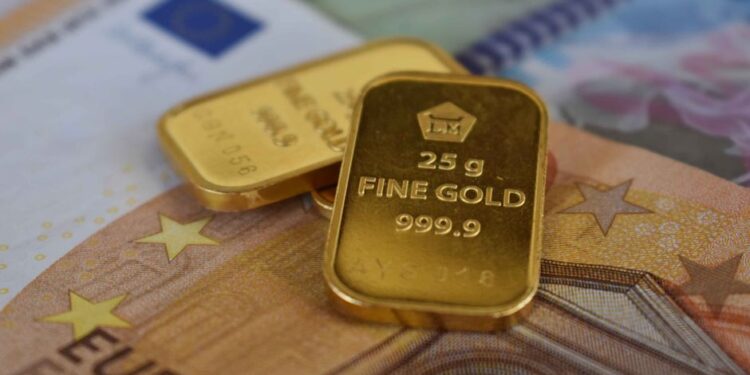
Deutsche Bank's significant reduction of its gold price forecasts by up to 22% raises concerns about investment demand and US monetary policy. This shift will affect trading strategies for commodity traders and financial analysts closely monitoring the gold market.

Deutsche Bank has cut its gold price forecasts by up to 22%. They cite concerns about US monetary policy and falling investment demand. The bank now expects gold prices to hit $4,300 an ounce in the third quarter and $4,800 in the fourth quarter. These figures are much lower than earlier estimates. This change shows a cautious outlook as investors rethink their strategies due to shifting economic conditions.
This adjustment is important for commodity traders and financial analysts who watch the gold market closely. The lower price expectations suggest a shift in trading strategies as the market adapts. These changes signal a broader trend in how gold is viewed amid changing economic indicators.
Impact of Revised Forecasts on Investment Demand
Deutsche Bank’s analysis shows a decline in gold’s attractiveness as an investment. The lowered price expectations may reduce bullish sentiment among investors, leading to less demand for gold. According to Career Ahead’s review, this shift could significantly lower trading volumes as investors look for alternative assets that offer better returns.
Historically, investment demand for gold has depended on factors like inflation rates, currency strength, and geopolitical stability. With the US Federal Reserve taking a more hawkish stance on interest rates, as noted by sources like cryptobriefing.com, investors may turn to assets that perform better with rising rates. This could further lower gold demand, as higher rates usually make non-yielding assets like gold less appealing.
Recent trends in gold exchange-traded funds (ETFs) are also telling. Deutsche Bank points out that outflows from gold ETFs indicate investor sentiment. A continued drop in ETF holdings could show a broader withdrawal from gold investments, significantly affecting prices and trading strategies.
As financial analysts adjust their models to reflect these new forecasts, they must consider how reduced demand will affect price volatility. Career Ahead’s analysis finds that gold prices may become more volatile as traders react to changing expectations, creating opportunities for speculative trading.
The relationship between interest rates and gold prices will be key in shaping future trading strategies.
Given these dynamics, commodity traders should closely watch the evolving investment demand landscape. The relationship between interest rates and gold prices will be key in shaping future trading strategies.
You may also like
 Industry & Global Trends
Mergers Reshape Automation Careers at Schneider Electric
Schneider Electric's aggressive investments in automation are reshaping the industry landscape in Europe. This shift is set to create significant job opportunities for automation engineers…
Read More →Shifts in US Monetary Policy Affecting Commodities
Recent changes in US monetary policy are crucial for the outlook on commodities, especially gold. Deutsche Bank’s forecast cuts come as the Federal Reserve signals a potential tightening of monetary policy. This shift may have significant effects on commodity traders and financial analysts who use gold as a hedge against inflation and economic uncertainty.
As noted by finblage.com, the Fed’s approach to interest rates will heavily influence gold prices in the coming months. If the Fed continues to raise rates, holding gold will become more expensive. This makes gold less attractive compared to interest-bearing assets. Such a scenario could lead to further drops in gold prices as traders reassess their positions.
Additionally, the strength of the US economy, as shown by recent data, may also affect gold’s path. Strong economic performance usually leads to higher interest rates, which could further lower gold prices. Career Ahead’s analysis suggests that traders should brace for increased volatility and uncertainty as these economic indicators develop.

Geopolitical factors also play a role. As tensions rise in various regions, gold often acts as a safe haven. However, if the US economy stays strong, the demand for gold as a hedge may decrease. This creates a complex situation for traders who must navigate both domestic and international factors impacting gold prices.
In this context, financial analysts should update their forecasting models to reflect the relationship between US monetary policy and global economic conditions. Being able to anticipate these shifts will be vital for making informed trading decisions in an uncertain market.
The shift in sentiment suggests that bullish strategies may no longer work, prompting a reevaluation of risk management practices.
Strategic Adjustments for Commodity Traders
The significant cut in gold price forecasts requires strategic changes for commodity traders. As the market reacts to Deutsche Bank’s new projections, traders must rethink their gold trading strategies. The shift in sentiment suggests that bullish strategies may no longer work, prompting a reevaluation of risk management practices.
You may also like
 Industry & Global Trends
Sensex Surges 473 Points as Softer US Jobs Data Boosts Indian Market
The Indian stock market experienced a notable boost as the Sensex surged by 473 points and the Nifty gained 134 points, driven by softer-than-expected US…
Read More →Traders should develop a deeper understanding of market dynamics. Career Ahead’s research shows that those who adapt quickly to changes will have an advantage. This includes monitoring economic indicators, interest rate changes, and geopolitical events that may affect gold prices.
Moreover, diversification strategies may become more important. As gold’s appeal fades, traders might look into other commodities or asset classes that fit better with current economic conditions. This could mean reallocating resources to sectors that benefit from rising interest rates or inflation.

Additionally, traders should use technology and data analytics to improve their decision-making. By using advanced tools, traders can gain insights into market trends and investor behavior, leading to better trading strategies.
As the gold market changes, staying ahead will be crucial for commodity traders. The ability to anticipate demand shifts and adapt strategies will determine success in this volatile environment.
Looking ahead, the question remains: how will future developments in US monetary policy and global economic conditions affect gold trading?
Looking ahead, the question remains: how will future developments in US monetary policy and global economic conditions affect gold trading? Traders must stay alert as these factors evolve, ready to adjust their strategies in a changing landscape.
Frequently Asked Questions
What are the implications of Deutsche Bank’s gold forecast for commodity traders?
Deutsche Bank’s revised gold forecast suggests a possible decline in investment demand, which may lower trading volumes. Commodity traders need to adjust their strategies to navigate this changing landscape.
How should financial analysts adjust their models based on revised gold price forecasts?
You may also like
 Industry & Global Trends
Etched fields funding offers at $40B+ valuation, sources say
Etched Fields is in talks for funding offers valuing the company at over $40 billion, reflecting a significant shift in the funding landscape for AI…
Read More →Financial analysts should include the new price expectations and consider the impact of US monetary policy on gold prices. This may involve adjusting risk assessments and exploring alternative investment strategies.

What strategies should commodity traders adopt in response to changing gold price expectations?
Commodity traders should focus on diversification and use data analytics to improve decision-making. Adapting to market dynamics and monitoring economic indicators will be key for success in the evolving gold market.