


Dek: The convergence of AI, IoT, and immersive interfaces is turning digital twins into the backbone of the metaverse. For virtual‑reality developers and designers, the emerging ecosystem redefines skill hierarchies, redistributes institutional power, and reshapes pathways to economic mobility.
Macro Context: Scale, Trajectory, and Institutional Stakes
The metaverse is no longer a speculative concept; industry forecasts peg its addressable market at $1.5 trillion by 2030, a compound annual growth rate (CAGR) of roughly 38 % since 2022 [1]. That valuation rests on three interlocking pillars: virtual‑reality (VR) hardware penetration, augmented‑reality (AR) content pipelines, and digital‑twin infrastructure that supplies the data‑rich scaffolding for persistent, interactive worlds [2].
From an institutional perspective, the metaverse is being codified by a coalition of technology giants (Meta, Microsoft, Nvidia), standards bodies (ISO/IEC JTC 1/SC 42), and sector‑specific regulators (the European Union’s Digital Services Act). Their coordinated investments signal a structural reallocation of capital from legacy physical‑product cycles to continuous‑simulation ecosystems. The magnitude of this shift matters for career trajectories because it redefines where “value creation” is measured—not in bill of materials, but in real‑time data fidelity and immersive experience design.
Core Mechanism: Digital Twins as Real‑Time Virtual Replicas
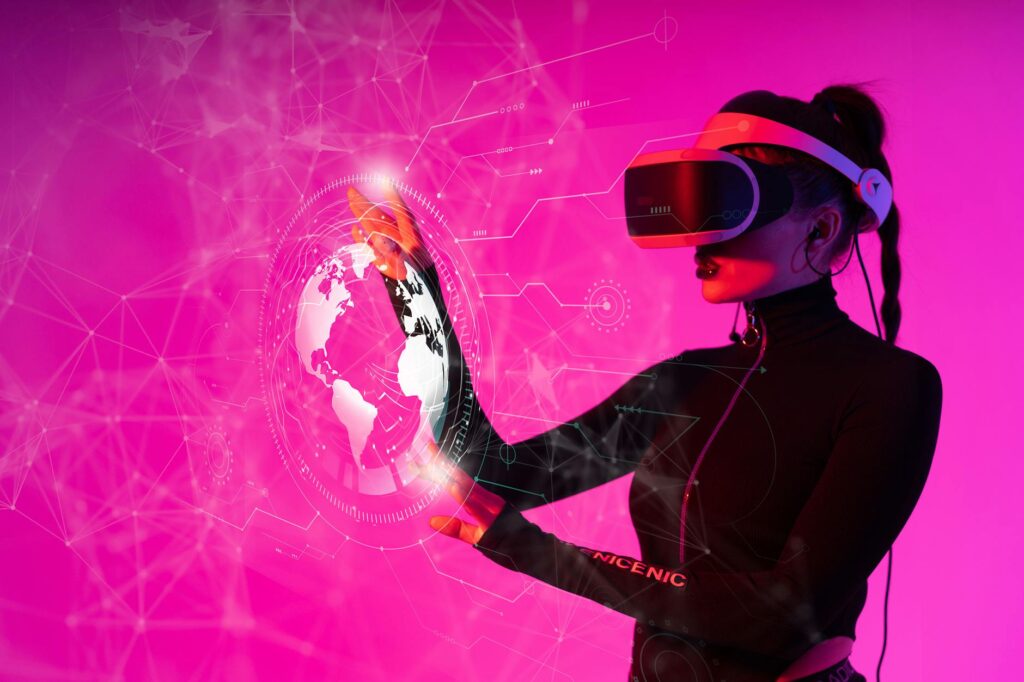
At its essence, a digital twin in the metaverse is a bidirectional, sensor‑fed replica of a physical object, system, or environment that exists as a persistent asset within a spatial computing layer. The mechanism hinges on three technical strata:
- Data Ingestion Layer – High‑frequency streams from IoT sensors, edge‑computed analytics, and 5G/6G connectivity feed positional, thermal, and usage metrics into a unified schema [4]. Siemens reports that its Mindsphere platform now processes over 12 billion sensor events per day, delivering sub‑second latency for twin updates in manufacturing plants.
- Simulation & Rendering Engine – AI‑augmented physics engines (e.g., Nvidia’s Omniverse) translate raw data into deterministic models that can be rendered in real time for VR headsets. A benchmark from the University of Southern California shows that Omniverse reduces latency from 150 ms to 30 ms when synchronizing a twin of a complex HVAC system across 500 concurrent users [3].
- Interaction & Governance Layer – Smart contracts and decentralized identity protocols manage access rights, provenance, and monetization of twin assets. In the construction sector, Autodesk’s Construction Cloud has piloted a blockchain‑backed twin for a $2 billion infrastructure project, enabling stakeholders to execute design changes with immutable audit trails [2].
Together, these layers convert a static 3D model into a living, mutable environment that can be interrogated, altered, and monetized within the metaverse. For VR developers, the implication is a migration from “asset creation” to “system orchestration”—a skill set that blends software engineering, data science, and user‑experience design.
Systemic Ripples: Institutional Reconfiguration and Market Dynamics
The embedding of digital twins into the metaverse triggers asymmetric ripple effects across corporate structures, regulatory frameworks, and labor markets.
Systemic Ripples: Institutional Reconfiguration and Market Dynamics The embedding of digital twins into the metaverse triggers asymmetric ripple effects across corporate structures, regulatory frameworks, and labor markets.
Product Development Paradigm Shift – Traditional linear design‑to‑manufacture pipelines are being supplanted by continuous‑simulation loops. Companies such as Ford have reported a 22 % reduction in prototype costs after integrating twin‑enabled VR testing for vehicle interiors, accelerating time‑to‑market and compressing capital cycles [1]. This compresses the “gate” function of engineering review boards, redistributing decision authority toward cross‑functional VR teams that can prototype in situ.
Standardization and Interoperability Pressures – The proliferation of twin data formats (USD, glTF, IFC) has spurred the formation of the Open Metaverse Interoperability Group (OMIG), a consortium backed by the World Economic Forum. OMIG’s draft specifications aim to enforce semantic consistency across twin assets, a move that will privilege firms capable of contributing to open‑source toolchains.
Regulatory Realignment – Data‑privacy statutes (e.g., GDPR, California Consumer Privacy Act) are being extended to cover virtual‑environment telemetry. The EU’s forthcoming Digital Twin Directive mandates that twin operators implement “privacy‑by‑design” controls, effectively raising compliance costs for firms lacking in‑house legal‑tech capacity.
Labor Market Polarization – The Bureau of Labor Statistics projects a 12 % growth in “virtual reality developers” occupations through 2029, outpacing the overall tech employment growth of 8 % [2]. However, the same data reveals a skill‑gap premium: entry‑level VR positions command salaries 15 % above the median for software engineers, while senior “digital‑twin architects” earn up to $250 k annually, reflecting the scarcity of interdisciplinary expertise.
Capital Allocation Reorientation – Venture capital flows into twin‑enabled platforms have risen from $1.2 bn in 2021 to $4.8 bn in 2024, a four‑fold increase that signals a structural reallocation of speculative capital toward firms that can monetize twin data streams through subscription models or tokenized assets [3].
Collectively, these dynamics illustrate how digital twins are reconfiguring institutional power: firms that master the twin stack gain leverage over supply chains, regulators, and talent pipelines, while legacy manufacturers risk marginalization if they cannot translate physical assets into persistent virtual counterparts.
Human Capital Impact: Winners, Losers, and the Recalibration of Career Capital

The systemic shifts outlined above translate into concrete career outcomes for VR developers and designers.
Winners
| Segment | Capital Accumulation | Mobility Pathway |
|———|———————-|——————|
| Digital‑Twin Architects (senior engineers who design end‑to‑end twin ecosystems) | High equity stakes in platform startups; premium consulting fees | Rapid ascent to C‑suite roles (Chief Metaverse Officer) within 5–7 years |
| XR Interaction Designers (focus on haptic feedback, spatial UI) | Ownership of proprietary interaction patents; cross‑industry demand (healthcare, automotive) | Lateral moves into product leadership, enabling asymmetric salary growth |
| Data‑Ops Engineers for Twins (pipeline integration, real‑time analytics) | Access to high‑frequency data streams; opportunities for data‑monetization ventures | Transition into AI‑driven simulation leadership, widening economic mobility |
These groups benefit from career capital that is both skill‑specific (e.g., Unity/Unreal, ROS, edge AI) and network‑specific (access to standards bodies, venture ecosystems). The twin ecosystem’s emphasis on interoperability and open standards further amplifies the value of collaborative credentials (e.g., contributions to OMIG specifications).
For VR professionals, the structural implication is clear: career capital will be measured by the ability to integrate data, design immersive experiences, and navigate emerging governance regimes.
Losers
| Segment | Structural Risk | Mitigation |
|———|—————-|————|
| Traditional 3D Modelers (focus on static asset pipelines) | Obsolescence as static assets become peripheral to dynamic twins | Upskilling into real‑time data integration, pursuing certifications in twin platforms |
| Legacy Manufacturing Engineers (limited exposure to immersive tooling) | Displacement by firms that outsource simulation to twin‑enabled VR studios | Institutional retraining programs funded by industry consortia (e.g., Manufacturing Extension Partnership) |
| Mid‑level VR Developers (generic Unity/Unreal skillsets) | Salary compression as demand concentrates on interdisciplinary expertise | Pursue cross‑functional projects that combine UI/UX, AI, and data security |
The economic mobility implications are stark: those who acquire systemic fluency—the ability to navigate data pipelines, regulatory landscapes, and open‑source governance—accumulate asymmetric career capital that translates into higher earnings, equity stakes, and leadership opportunities. Conversely, professionals anchored in siloed skill sets face a structural bottleneck that limits upward mobility.
Institutional Power Realignment
Corporations that embed twin capabilities into their core strategy are reconfiguring internal hierarchies. For example, Boeing’s “Digital Twin Center of Excellence” now reports directly to the Chief Technology Officer, bypassing traditional engineering divisions. This reallocation of reporting lines elevates VR‑centric roles to strategic decision‑making positions, reinforcing a feedback loop where talent acquisition, product roadmap, and capital budgeting become mutually reinforcing.
Outlook: Structural Trajectory to 2030
Looking ahead, three convergent trends will define the next five years of the twin‑metaverse nexus:
- Standard‑Driven Scaling – By 2028, OMIG’s interoperability framework is expected to be adopted by at least 70 % of Fortune 500 manufacturers, creating a network effect that lowers entry barriers for VR studios and amplifies demand for cross‑compatible twin assets.
- Tokenized Twin Economies – Early pilots of non‑fungible twin tokens (NFTTs) in real‑estate and automotive sectors suggest a nascent market for fractional ownership of virtual replicas. If regulatory clarity materializes, tokenization could unlock $200 bn in secondary market liquidity by 2030, generating new revenue streams for developers who embed smart‑contract logic into twin designs.
- AI‑Enhanced Autonomy – Advances in generative AI will enable twins to self‑optimize based on usage patterns, reducing the need for manual tuning. This will shift developer focus from low‑level simulation to meta‑orchestration, a role that blends strategic planning with algorithmic governance.
For VR professionals, the structural implication is clear: career capital will be measured by the ability to integrate data, design immersive experiences, and navigate emerging governance regimes. Institutions that invest in comprehensive upskilling pathways—partnering with universities, certification bodies, and industry consortia—will capture the talent premium, while those that cling to legacy pipelines risk a systemic erosion of relevance.
Key Structural Insights
> [Insight 1]: Digital twins convert static 3D assets into data‑rich, continuously simulated entities, redefining the core technical competency for VR professionals.
> [Insight 2]: Institutional power is shifting toward organizations and individuals who can orchestrate cross‑domain standards, AI, and tokenized economies within the metaverse.
> [Insight 3]: Economic mobility in the VR labor market now hinges on acquiring interdisciplinary “systemic fluency,” with asymmetric rewards for those who bridge design, data, and governance.
Written by Career Ahead AI. AI can make mistakes, so verify key facts. Report errors to support@careeraheadonline.com.





