No products in the cart.

Drones Over Bridges: How Aerial Inspections Are Reshaping Urban Infrastructure Capital
cities. Infrastructure Grade Deficits and the Inspection Imperative The 2025 American Society of Civil Engineers (ASCE) Report Card assigns the United States a …

UAV‑enabled inspections convert billions of dollars of deferred maintenance into actionable data, forcing a systemic reallocation of capital, talent, and regulatory authority across U.S. cities.
Infrastructure Grade Deficits and the Inspection Imperative
The 2025 American Society of Civil Engineers (ASCE) Report Card assigns the United States a cumulative C for its built environment, with 6.8 % of the 623,000‑plus bridges classified as “poor” and the nation’s road network receiving a D+ rating [1]. These grades reflect a chronic under‑investment cycle that dates back to the post‑World War II highway expansion, when funding mechanisms prioritized new construction over life‑cycle upkeep. The resulting asset decay creates a feedback loop: deteriorating structures demand more frequent, higher‑resolution inspections, yet traditional methods—manual rope‑access, ground‑based laser scanning, and spot‑check crews—are labor‑intensive, hazardous, and costly.
A 2024 Federal Highway Administration (FHWA) audit estimated that annual inspection expenditures exceed $8 billion, yet the frequency of comprehensive assessments remains below the recommended biennial cadence for many bridge classes [2]. The fiscal strain is compounded by the $1.2 trillion projected replacement cost for bridges slated to reach the end of their design life by 2050 [3]. In this context, the emergence of drone‑based inspection platforms represents a structural response to an entrenched capital shortfall, offering a pathway to generate repeatable, high‑fidelity data at a fraction of historical cost.
UAV Sensor Fusion and AI‑Driven Diagnostics
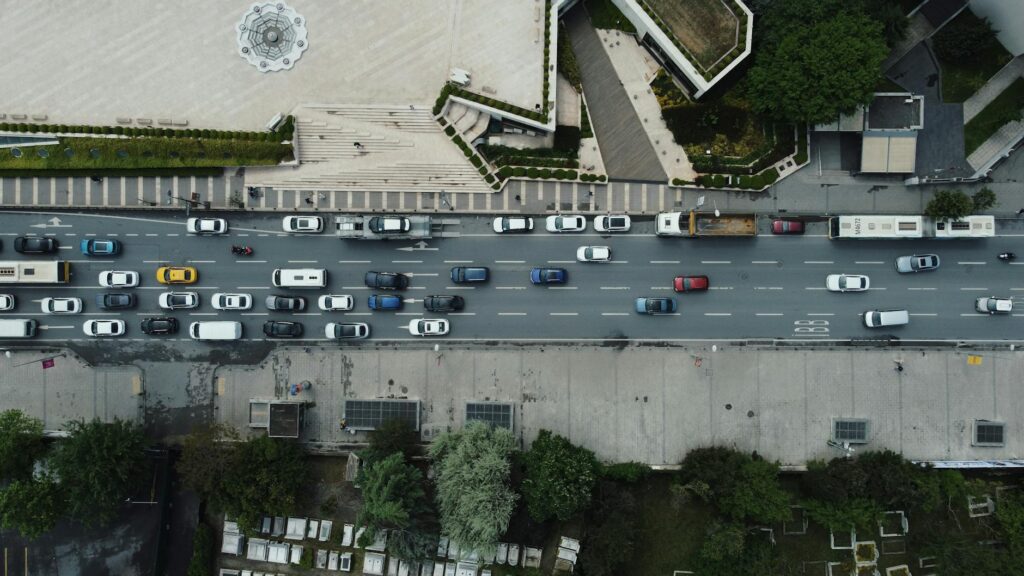
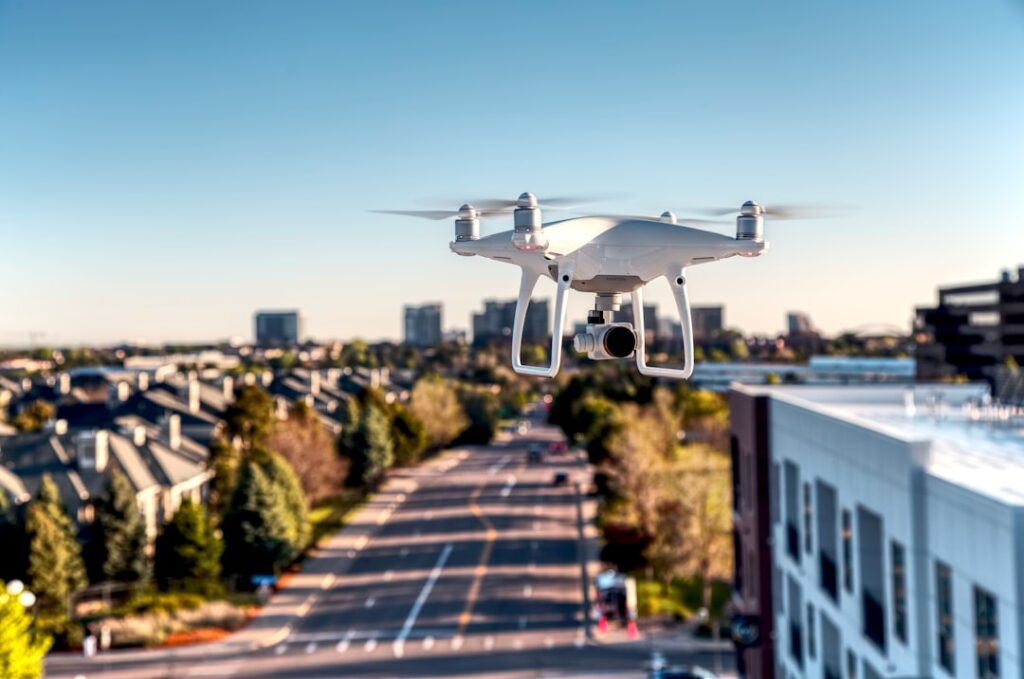
Modern inspection UAVs integrate high‑resolution RGB cameras, LiDAR scanners, thermal imagers, and multispectral sensors into a single airframe, enabling simultaneous capture of geometric, material, and thermal signatures. The sensor suite feeds into an AI‑augmented analytics pipeline that applies computer‑vision models—trained on over 150,000 annotated bridge components—to detect corrosion, crack propagation, and delamination with precision recall rates exceeding 92 % [2].
A pivotal advancement is sensor fusion, wherein LiDAR point clouds are georeferenced against photogrammetric meshes to produce meter‑scale digital twins. These twins support continuous structural health monitoring: deviations in deformation patterns trigger predictive maintenance alerts, reducing the decision latency from months to days. The Department of Transportation (DOT) in Austin, Texas, piloted such a system on the MoPac Expressway overpass, achieving a 74 % reduction in inspection labor hours and identifying a critical fatigue crack that would have eluded visual inspection [4].
Beyond defect detection, machine‑learning regression models extrapolate deterioration rates from historical UAV datasets, informing asset‑level life‑cycle cost models that align maintenance schedules with budget cycles.
You may also like
 AI & Technology
Schneider Expands in AI With $23 Billion Acquisition
Schneider Electric's $23 billion acquisition of PTC marks a pivotal moment in the AI landscape, creating new job opportunities and driving innovation across various sectors.
Read More →Beyond defect detection, machine‑learning regression models extrapolate deterioration rates from historical UAV datasets, informing asset‑level life‑cycle cost models that align maintenance schedules with budget cycles. This data‑centric approach transforms inspections from a compliance checkpoint into a strategic forecasting tool, reshaping the allocation of municipal capital from reactive repairs to proactive asset stewardship.
Regulatory Realignment and Market Reconfiguration
The proliferation of UAV inspections has catalyzed a regulatory cascade at federal, state, and municipal levels. The FAA’s 2023 Part 107 Waiver Expansion granted extended line‑of‑sight and beyond‑visual‑line‑of‑sight (BVLOS) operations for public‑sector infrastructure projects, effectively lowering the operational barrier for large‑scale deployments [5]. Concurrently, the American Association of State Highway and Transportation Officials (AASHTO) released the “Guidelines for UAV‑Based Bridge Inspection” in 2024, standardizing data formats, accuracy thresholds, and safety protocols.
These institutional shifts have spawned new business models. Companies such as SkyBridge Analytics and DroneSight now offer Inspection‑as‑a‑Service (IaaS) contracts, bundling UAV flight planning, data processing, and digital twin updates for a subscription fee. The data‑as‑a‑service (DaaS) layer, wherein municipalities license real‑time structural health dashboards, has attracted $1.3 billion in venture capital since 2022, reflecting an asymmetric capital flow toward platforms that can monetize the recurring value of inspection data [4].
Historically, the adoption of cable‑car inspection rigs in the 1930s reduced manual rope‑access costs but did not fundamentally alter the governance of bridge maintenance. In contrast, UAVs embed data capture within a digital governance framework, where the same data feeds into compliance reporting, procurement decisions, and public transparency portals, thereby redistributing institutional power from siloed engineering departments to integrated data‑centric offices.
Emergent Skill Vectors and Capital Reallocation
The UAV inspection ecosystem demands a triad of competencies: piloting and air‑space compliance, data science for model training, and domain expertise in structural engineering. According to the National Association of State Workforce Agencies, enrollment in UAV‑related certification programs has risen 210 % between 2021 and 2025, outpacing growth in traditional civil‑engineering graduate programs [6].
According to the National Association of State Workforce Agencies, enrollment in UAV‑related certification programs has risen 210 % between 2021 and 2025, outpacing growth in traditional civil‑engineering graduate programs [6].
Professional societies are responding with cross‑disciplinary credentialing. The Institute of Electrical and Electronics Engineers (IEEE) introduced the “Certified Drone Data Analyst” credential in 2024, targeting engineers who can translate raw sensor outputs into actionable maintenance recommendations. Simultaneously, municipal procurement offices are reallocating CAPEX from legacy inspection equipment—such as rope‑access gear and ground‑based laser scanners—to UAV fleets and cloud‑based analytics platforms. The City of Chicago’s 2025 Capital Improvement Plan earmarked $45 million for UAV acquisition and digital twin integration, a reallocation that represents a 15 % shift from conventional inspection budgets [7].
You may also like
 AI & Technology
Counter‑offer power hinges on five high‑impact skills
BLS data show median weekly earnings grew 4.1% in 2023, while Deloitte’s 2023 Global Human Capital.
Read More →These shifts produce a human‑capital feedback loop: as more engineers acquire UAV analytics skills, the marginal cost of deploying UAV inspections declines, prompting further investment and expanding the talent pipeline. The net effect is a structural rebalancing of career capital, where traditional field inspectors transition to data‑centric roles, and new entrants—often from software and geospatial backgrounds—enter the infrastructure sector.
Projected Trajectory to 2030: Integration and Scale
The market for drone‑based infrastructure inspections is projected to exceed $12.94 billion by 2027, driven by federal stimulus funding that earmarks $4.5 billion for “Smart Infrastructure” initiatives under the Infrastructure Investment and Jobs Act [8]. Over the next 3‑5 years, three systemic dynamics will dominate:
- Full‑Scale BVLOS Adoption – As BVLOS authorizations become routine, inspection coverage will expand from high‑profile bridges to secondary road networks, enabling city‑wide structural health baselines.
- Interoperable Digital Twin Ecosystems – Municipalities will converge on open‑source data standards (e.g., CityGML, IFC), allowing UAV‑derived twins to interface directly with Enterprise Asset Management (EAM) systems, thereby automating work‑order generation.
- Performance‑Based Funding Models – Federal and state grant programs will tie disbursements to data‑verified maintenance outcomes, incentivizing agencies to adopt UAV inspections as a compliance prerequisite.
By 2030, the inspection-to-maintenance latency is expected to contract from an average of 18 months to under 4 months, translating into $30 billion in avoided emergency repair costs nationally, according to a 2026 FHWA simulation study [9]. The cumulative effect will be a recalibration of urban infrastructure capital cycles, where data‑driven foresight supplants reactive spending, reshaping the power balance between engineering firms, technology providers, and public agencies.
Skill Realignment: The emergence of UAV inspection creates a new career axis—piloting, AI modeling, and structural interpretation—forcing traditional engineers to acquire data‑science competencies.
Key Structural Insights
Inspection Data as Capital: UAV‑generated digital twins convert physical assets into data assets, redirecting municipal capital toward analytics infrastructure rather than solely toward physical repairs.
Skill Realignment: The emergence of UAV inspection creates a new career axis—piloting, AI modeling, and structural interpretation—forcing traditional engineers to acquire data‑science competencies.
- Regulatory Leverage: Expanded FAA BVLOS waivers and AASHTO standards embed UAV inspections within the governance framework, shifting institutional authority from siloed inspection units to integrated data‑centric offices.
Sources
Drone Inspection for Infrastructure: Bridges, Roads & More — Heavy Vehicle Inspection
UAV-Based Infrastructure Inspections: A Literature Review and Proposed Framework for AEC+FM — arXiv
AI Autonomous Infrastructure Inspections: 20 Updated Directions (2026) — Yenra
Utilizing Drones For Infrastructure Inspection (2026) — Averroes AI
FAA Part 107 Waiver Expansion Overview — Federal Aviation Administration
National Association of State Workforce Agencies – UAV Certification Trends Report (2025) — NASWA
Chicago Capital Improvement Plan 2025 – Infrastructure Investment Overview — City of Chicago
Infrastructure Inspection Market Forecast 2026 – MarketWatch Research — MarketWatch
FHWA Simulation Study on UAV‑Enabled Maintenance Savings (2026) — Federal Highway Administration
You may also like
 AI & Technology
Strategic career pivots reshape professional capital
The labor market of 2026 is no longer defined by linear tenure but by fluid skill assemblages that institutions reward.
Read More →