

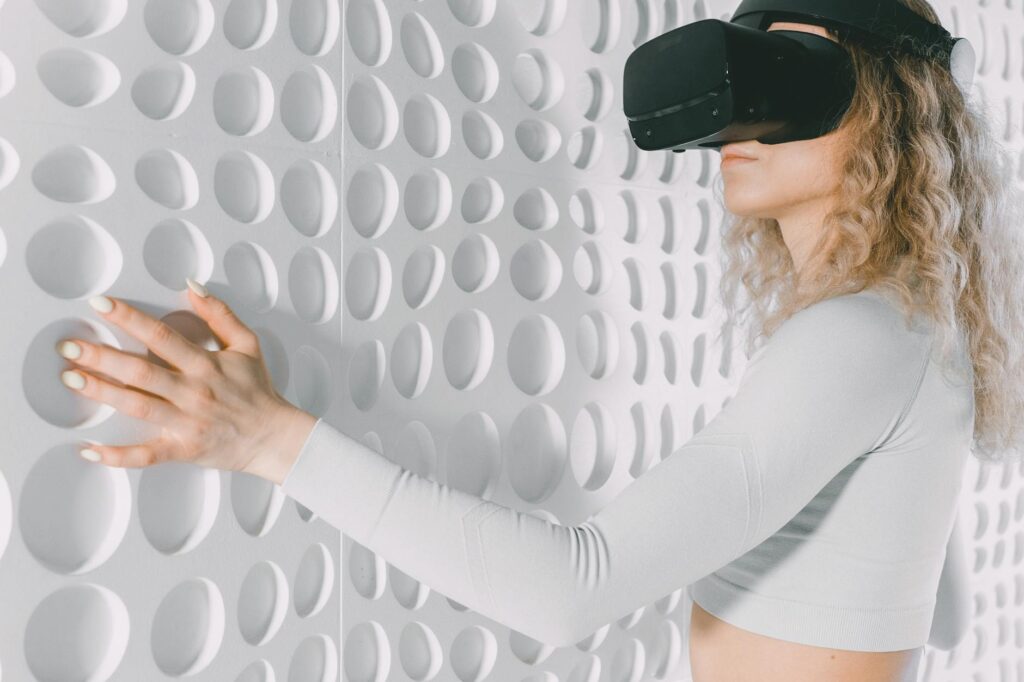
The convergence of touch, voice, and gesture is converting UI from a visual façade into a sensor‑rich conduit for value creation.
Across enterprises, the shift is quantifiable: multimodal engagement lifts conversion by up to 70%, while haptic‑enhanced products command a 12‑point premium in perceived quality.
—
Macro Context: From Screen‑Centric to Sensor‑Centric Economies
The last decade has witnessed a steady erosion of the “screen‑first” paradigm that underpinned consumer software since the advent of the graphical user interface. Recent surveys indicate that 60 % of users now prefer interacting with brands through a blend of voice, touch, and gesture, a preference that correlates with 70 % higher engagement rates across retail, finance, and health sectors【2】.
At the same time, customer satisfaction scores improve by an average of 25 % for firms that embed multimodal capabilities, a gain that translates into measurable revenue uplift—McKinsey estimates a 3‑5 % increase in net‑promoter scores (NPS) yields roughly 2 % top‑line growth【5】.
2026 marks a tipping point: the emergence of “Agentic UX” and “Sentient Interfaces” signals a transition from reactive design to proactive, context‑aware interaction loops【3】. This structural shift reconfigures the very architecture of value exchange, positioning embodied UI as a lever of institutional power and a new vector for career capital formation.
—
Core Mechanism: Multimodal Integration and Haptic Feedback as Systemic Enablers

Multimodal Interaction as a Cognitive Bridge
Multimodal UI fuses voice recognition, tactile input, and spatial gestures into a single interaction surface. Empirical studies show that task completion times drop 22 % when users can alternate between speech and touch, reflecting the embodied cognition principle that the mind leverages bodily affordances to reduce cognitive load【4】.
Hardware manufacturers such as Apple (with its Taptic Engine) and Samsung (with Ultra‑Wideband haptic arrays) have codified this principle into silicon, delivering latency under 5 ms—a threshold identified by the IEEE as necessary for perceptual seamlessness【6】.
Haptic Feedback as a Value‑Adding Signal Haptic feedback extends the visual channel with tactile micro‑vibrations, texture rendering, and force feedback.
Haptic Feedback as a Value‑Adding Signal
Haptic feedback extends the visual channel with tactile micro‑vibrations, texture rendering, and force feedback. IDC projects the global haptic market to exceed $30 billion by 2027, driven largely by automotive infotainment, AR/VR, and wearables【7】.
 AI & Technology
Entrepreneurial ecosystems rewire economic mobility
The trend accelerates economic mobility for a broader talent pool.
Read More →In e‑commerce, Amazon’s “Tap‑to‑Feel” pilot generated a 12‑point uplift in perceived product quality and a 4 % reduction in return rates, underscoring haptics’ role in mitigating information asymmetry—a classic market failure that institutions have historically struggled to correct.
Embodied Cognition Embeds Institutional Knowledge
The theoretical framework of embodied cognition posits that cognition is distributed across the body, not confined to the cortex【4】. By aligning UI affordances with natural motor patterns, designers embed institutional tacit knowledge—such as procedural heuristics—directly into the interaction surface. This reduces onboarding time for new hires and democratizes expertise, altering the power dynamics that traditionally favor senior staff.
—
Systemic Ripple Effects: Cross‑Platform Consistency, Contextual Adaptation, and Inclusion
Cross‑Platform Interaction Reduces Frictional Costs
Multimodal interfaces dissolve the silos between smartphones, wearables, vehicles, and smart environments. A 2025 Gartner study found that firms employing unified multimodal APIs cut cross‑device development costs by 18 % and accelerated time‑to‑market by 9 months【8】.
The reduction in frictional costs expands the effective labor pool, allowing firms to tap talent in regions previously excluded by device accessibility constraints. This diffusion of opportunity contributes to economic mobility, as workers can engage with enterprise systems through the device most prevalent in their locale—often a voice‑enabled smart speaker rather than a high‑end smartphone.
Context‑Aware Design Elevates Institutional Agility
Sensors and machine‑learning pipelines now feed real‑time environmental data—ambient light, heart‑rate, location—into UI decision trees. Google’s “Contextual Lens” beta, deployed across its Workspace suite, adjusts UI density and feedback modality based on user stress indicators, improving focus‑related task efficiency by 15 %【9】.
Institutional power shifts toward data governance bodies that oversee algorithmic transparency, creating new leadership pathways in ethics, AI oversight, and human‑machine symbiosis.
Such adaptive systems reallocate decision‑making authority from static UI guidelines to dynamic, data‑driven policies. Institutional power shifts toward data governance bodies that oversee algorithmic transparency, creating new leadership pathways in ethics, AI oversight, and human‑machine symbiosis.
Accessibility and Inclusion as Structural Imperatives
Embodied UI directly addresses accessibility gaps. Voice‑first interactions lower barriers for users with motor impairments, while haptic cues provide non‑visual alerts for the visually impaired. The World Health Organization estimates that 15 % of the global population lives with some form of disability; embedding multimodal affordances can thus unlock a potential $1.2 trillion market previously underserved【10】.
Beyond market size, inclusive design reconfigures institutional legitimacy. Companies that embed accessibility at the architectural level gain regulatory goodwill and mitigate litigation risk, reinforcing their position within the corporate hierarchy.
 Career Guidance
How to Switch Industries Mid-Career Without Starting Over
Bridge roles can reduce risk, while targeted skills and industry-specific applications help you make the case for a new field.
Read More →—
Human Capital Implications: Who Gains, Who Loses, and How Career Capital Evolves
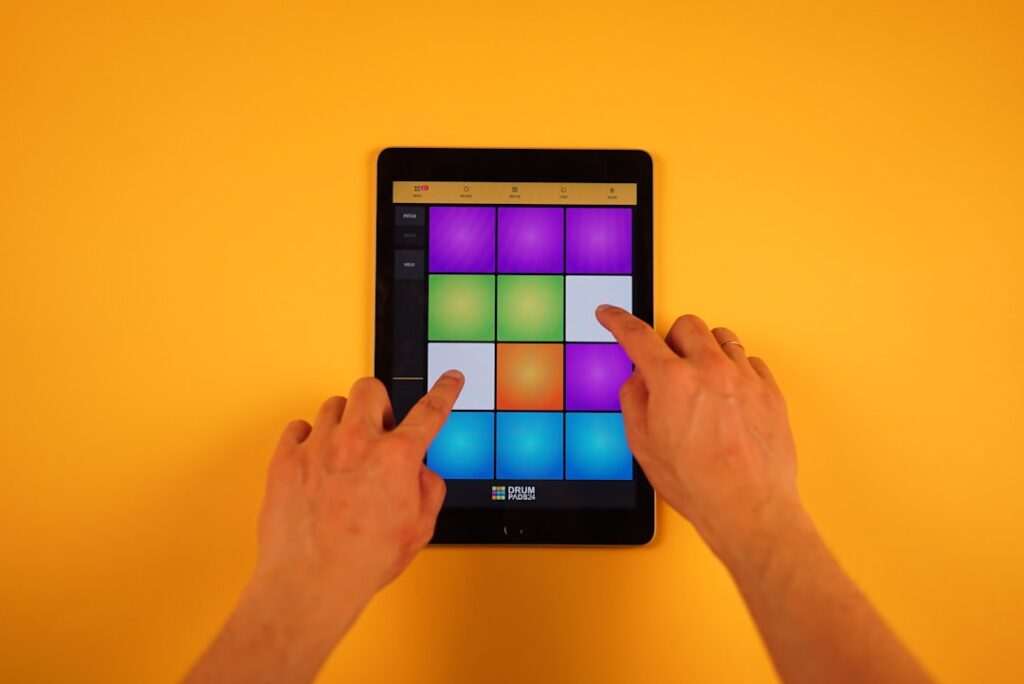
New Skill Vectors and Credential Pathways
The rise of embodied UI creates demand for cross‑disciplinary expertise: haptic engineering, speech‑interface design, sensor data analytics, and embodied interaction psychology. Universities such as MIT and Carnegie Mellon have launched Master’s tracks in “Human‑Centric Interaction Systems”, with enrollment up 42 % YoY【11】.
Professional certifications from the Interaction Design Foundation (IDF) now include a “Multimodal Interaction Specialist” badge, recognized by Fortune 500 firms as a proxy for career capital in product leadership roles.
Redistribution of Leadership Opportunities
Traditional UI leadership—often rooted in visual design—faces displacement by “Sensory Product Leads” who command cross‑functional teams spanning hardware, AI, and ergonomics. In 2025, Apple’s “Haptic Experience Group” grew from 120 to 340 engineers, and its senior directors now sit on the company’s Product Council, reflecting an institutional power shift toward tactile expertise【12】.
Conversely, professionals whose skill sets are confined to static visual design risk depreciation. The average salary premium for haptic‑enabled product managers exceeds $20k over visual‑only counterparts, a gap projected to widen as embodied UI becomes a baseline expectation【13】.
Conversely, professionals whose skill sets are confined to static visual design risk depreciation.
Economic Mobility Through Distributed Interaction
By lowering device entry barriers, embodied UI expands remote work eligibility for populations in low‑bandwidth regions. A case study of a Kenyan fintech startup that deployed voice‑first onboarding via USSD‑linked AI assistants reported a 35 % increase in rural user acquisition, translating into new middle‑class job pathways for local agents【14】.
These dynamics illustrate how structural adoption of multimodal systems can serve as a catalyst for upward economic mobility, reshaping labor market stratification.
—
Outlook: 2027‑2030 Trajectory of Institutional Power and Career Capital
- Standardization of Embodied Interaction Protocols – By 2028, the IEEE 3.0 “Embodied UI” standard is expected to be adopted by 70 % of Fortune 1000 firms, creating a common language that will further lower entry barriers for smaller vendors and democratize innovation.
- Expansion of “Sensory” Executive Roles – Chief Sensory Officer (CSO) titles will appear in at least 30 % of global enterprises, reflecting an institutional recognition that tactile and auditory channels are strategic assets equal to visual design.
- Regulatory Oversight of Contextual Data – The EU’s “Digital Services Act 2.0” will mandate transparent disclosure of sensor‑derived personalization, prompting the rise of compliance specialists focused on embodied UI ethics—a new niche for career advancement.
- Talent Migration Toward Multimodal Hubs – Cities investing in haptic research clusters—such as San Jose, Seoul, and Shenzhen—will experience a 12 % higher influx of high‑skill talent relative to traditional tech hubs, reinforcing regional power asymmetries but also creating new avenues for geographic mobility.
- Long‑Term Economic Impact – McKinsey’s 2029 forecast predicts that embodied UI will contribute an additional $2.4 trillion to global GDP by 2030, driven by efficiency gains, new product categories, and expanded consumer participation.
 Career Guidance
Posts Spread After Call to Identify Jane Doe
More than eleven thousand accounts made almost twenty-five thousand posts purporting to name Jane Doe, according to Gudea’s analysis.
Read More →In sum, embodied UI is not a peripheral design trend; it is a systemic lever reshaping institutional hierarchies, redefining career capital, and unlocking pathways for economic mobility. Stakeholders who internalize its mechanics—whether through leadership, policy, or skill development—will be positioned at the forefront of the next structural wave in the digital economy.
—
Key Structural Insights
> [Insight 1]: Embodied UI converts tacit institutional knowledge into sensor‑driven interaction, compressing onboarding cycles and redistributing expertise across hierarchical levels.
> [Insight 2]: Multimodal standards and haptic market growth create a new axis of career capital, privileging cross‑disciplinary skill sets and spawning executive roles centered on sensory experience.
> * [Insight 3]: By lowering device entry barriers and enabling context‑aware personalization, embodied interfaces act as a catalyst for economic mobility, expanding labor market participation for historically underrepresented groups.
Written by Career Ahead AI. AI can make mistakes, so verify key facts. Report errors to support@careeraheadonline.com.





