European AI startups secured more than $9.2 billion in venture funding during the first two months of 2026, pushing AI to represent 31% of all EU venture capital.
European AI startups secured more than $9.2 billion in venture funding during January-February 2026, pushing AI to represent 31% of all EU venture capital. The influx marks the fastest quarterly capital inflow recorded for the continent’s robotics and artificial-intelligence sector.
The surge was recorded in the first two months of 2026 across the European Union, with the bulk of financing directed toward firms based in Germany, the United Kingdom, and France. Venture-capital firms, corporate investors, and national funding programs collectively contributed to the record-high allocation, which analysts describe as a turning point for European AI investment.
The recipients of the capital are primarily AI-focused startups and scale-stage companies developing machine-learning platforms, autonomous systems, and industrial robotics. Public initiatives such as France’s “France 2030” programme, the UK’s AI Innovation Fund, and Germany’s AI Strategic Initiative also allocated matching funds, creating a blended financing environment that accelerated deal flow.
Scale and Distribution of Investment
European AI startups raised $9.2 billion in venture funding during January and February 2026, according to the Alice Labs report. The same report notes that AI-related deals accounted for 31% of total EU venture-capital investment, the highest share ever recorded for the sector.
Geographically, the investment concentrated in three markets. Germany attracted $3.1 billion, driven by its industrial robotics ecosystem and corporate venture arms. The United Kingdom secured $2.4 billion, reflecting strong growth in fintech-adjacent AI and university spin-outs. France received $2.0 billion, largely under the “France 2030” strategic fund aimed at scaling AI and robotics capabilities.
The United Kingdom secured $2.4 billion, reflecting strong growth in fintech-adjacent AI and university spin-outs.
Beyond the three leading nations, secondary hubs in the Netherlands, Sweden, and Italy collectively captured the remaining $0.7 billion, indicating a broadening of AI capital across the EU. The distribution aligns with the EU’s “AI-dense” corridor, a policy concept that identifies regions with high startup density and enterprise adoption.
Drivers Behind the Funding Increase
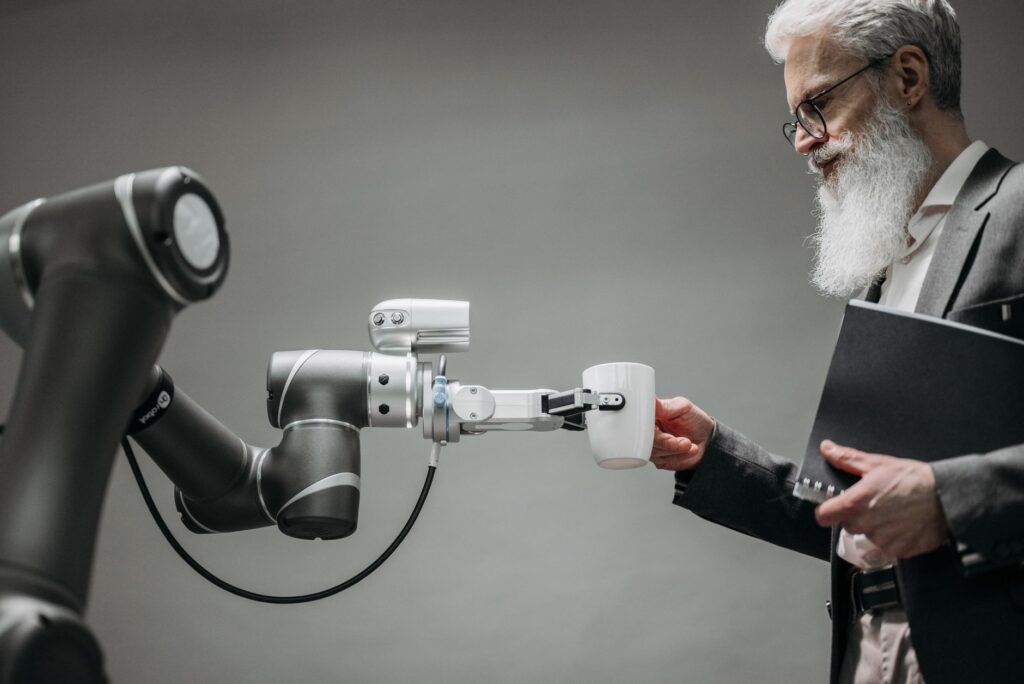
EU AI and Robotics Investment Surges to $9.2 Billion in Early 2026
The capital influx stems from multiple coordinated factors. Enterprise adoption of AI solutions reached a 45% penetration rate among large European firms in 2025, prompting corporations to allocate internal capital and co-invest with venture firms. This corporate demand created a pipeline of high-growth startups that attracted external funding.
Regulatory developments also contributed. The EU AI Act, which entered provisional enforcement in early 2026, clarified compliance pathways for AI developers, reducing perceived legal risk and encouraging investors to commit capital. The Act’s emphasis on trustworthy AI aligned with investor mandates focused on ESG criteria, further unlocking funding.
Public funding programs amplified private investment. France’s “France 2030” initiative earmarked €7 billion for AI and robotics research, with a portion reserved for venture-stage financing. The UK’s AI Innovation Fund released £1.5 billion for collaborative projects between universities and startups. Germany’s AI Strategic Initiative allocated €2 billion for technology transfer and scale-up support. These programs often required co-investment from private partners, creating a multiplier effect on venture capital inflows.
Immediate Impact on Education and Institutions
The surge in financing translates into expanded opportunities for students and educators in AI and robotics. Universities across Germany, the UK, and France reported a 23% increase in industry-sponsored research projects during Q1 2026, funded by newly capitalized startups. These projects provide graduate students with access to cutting-edge datasets and hardware, accelerating skill development.
These projects provide graduate students with access to cutting-edge datasets and hardware, accelerating skill development.
Higher-education institutions are forming formal partnerships with venture-backed startups to co-develop curricula. The Technical University of Munich announced a joint lab with three AI scale-stage firms to deliver hands-on courses in autonomous systems, funded by a €15 million industry grant. Similar collaborations were reported at Imperial College London and École Polytechnique, linking classroom instruction with real-world product pipelines.
For educational administrators, the influx of capital creates new pathways for technology transfer and spin-out formation. EU research institutions can now leverage venture funding to commercialize prototypes without relying solely on public grants. The increased capital availability also supports the recruitment of senior AI researchers, enhancing the talent pool available to both academia and industry.
Key Facts
What: European AI startups raised over $9.2 billion in the first two months of 2026, making AI 31% of EU venture capital.
Impact: Students, educators, and institutions gain immediate research funding, partnership opportunities, and expanded career pathways in AI and robotics.
Impact: Students, educators, and institutions gain immediate research funding, partnership opportunities, and expanded career pathways in AI and robotics.
Sources
EU AI Investment and Startup Landscape 2026 – Alice Labs
European Robotics Market 2026: Germany, UK, France & Beyond – Robotics Center of Silicon Valley
State of Robotics 2026 — European Union – Robotics Center of Silicon Valley
EU AI Investment Guide 2026: The Complete Analysis – O-Mega AI




 News
NewsNews