No products in the cart.

Private School Choice Programs Expand with Public Funding in Republican‑Led States
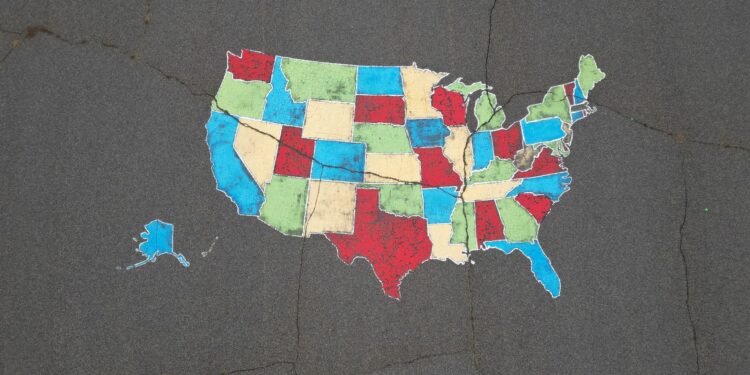
State‑funded vouchers, tax‑credit scholarships and education‑savings accounts are expanding private‑school enrollment across 15 Republican‑led states, with public spending exceeding $6 billion in FY 2025‑26.

Public‑funded vouchers, tax‑credit scholarships and education‑savings accounts are increasing enrollment in private schools across 15 Republican‑led states. State budgets allocated more than $6 billion to these programs in fiscal year 2025‑26, prompting debate over equity in K‑12 education.
In the first half of 2026, enrollment in privately funded school‑choice programs rose sharply, with state‑run vouchers, tax‑credit scholarships and education‑savings accounts (ESAs) covering tuition for an estimated 1.2 million K‑12 students nationwide [1]. The growth is concentrated in Republican‑controlled states, where new legislation in 2025 and 2026 expanded eligibility to all families meeting basic income criteria [1]. Federal and state education departments reported that total public expenditures on private‑school subsidies reached $6.3 billion for the 2025‑26 fiscal year, a 28 percent increase over the previous year [2].
Key participants include the legislatures and governors of Indiana, Florida, Texas, Ohio and Arizona, which have enacted or expanded voucher and ESA programs [2]. Private K‑12 schools and independent academies have reported enrollment gains of 12‑18 percent in these states since the policies took effect [2]. Families using the programs are drawn from a broad socioeconomic spectrum, with eligibility criteria based on household income rather than academic performance [1]. Advocates for school choice, such as the American Federation for School Choice, cite increased parental control and competition as benefits [3]. Critics, including teachers’ unions and public‑education advocacy groups, argue that diverting public funds undermines equitable resource distribution in public schools [3][4].
Expansion of Voucher, Tax‑Credit and ESA Programs
State‑level voucher programs now cover up to 75 percent of private‑school tuition in several states, with caps ranging from $7,000 to $12,000 per student [1]. Tax‑credit scholarship initiatives allow families to claim state tax credits of up to $5,000 for contributions to scholarship funds that match private‑school tuition [2]. ESAs, introduced in 2024 and expanded in 2025, allocate a per‑student account balance—averaging $8,500—that families can direct toward tuition, tutoring, or homeschooling expenses [2].
Data released by the National Center for Education Statistics (NCES) indicate that the number of students enrolled in private‑school choice programs grew from 950,000 in 2024 to 1.2 million by June 2026, representing a 26 percent increase over two years [1][2]. The surge corresponds with the implementation of universal eligibility provisions in 15 states, removing previous restrictions based on income thresholds or academic merit [1]. Enrollment spikes were most pronounced in urban districts where public‑school capacity constraints had previously limited options for families [2].
Florida’s 2026 budget allocated $1.4 billion to its “Family Education Savings Account” program, expanding the per‑student allotment by $1,200 and extending eligibility to middle‑school grades [2].
State Policies Driving the Expansion

Legislative actions in 2025 introduced universal eligibility for private‑school vouchers in Indiana and Texas, allowing any K‑12 student meeting a modest income test to apply [1]. Florida’s 2026 budget allocated $1.4 billion to its “Family Education Savings Account” program, expanding the per‑student allotment by $1,200 and extending eligibility to middle‑school grades [2]. Ohio passed a tax‑credit scholarship bill in early 2026, authorizing a $5,000 credit per qualifying student and establishing a state‑run scholarship fund administered by a private nonprofit [2].
You may also like
 News
NewsU.S. Medical‑Spa Industry Expansion Triggers Enforcement Actions Over Unregulated Aesthetic Treatments
Federal and state regulators have launched enforcement actions as the U.S. medical‑spa industry expands, highlighting unregulated aesthetic treatments.
Read More →These policies were enacted through bipartisan bills in state legislatures, often framed as measures to increase parental choice and improve educational outcomes [3]. Implementation timelines varied: vouchers typically become available at the start of the academic year, while ESAs are credited to families’ accounts in July, allowing pre‑school‑year planning [1][2]. State education departments reported that administrative processing times for applications decreased by 15 percent after the introduction of online portals in 2025 [1].
Impact on Students, Educators and Public Schools
For students, the expansion of publicly funded private‑school options provides access to institutions previously unaffordable for many families. Enrollment data show a 9 percent increase in private‑school attendance among low‑income households in participating states [1]. However, public‑education analysts note that the reallocation of funds may reduce per‑pupil spending in traditional public schools, potentially affecting program availability and staffing levels [3][4].
Educators in public districts have reported budget adjustments, with some schools experiencing cuts to extracurricular programs and support services as voucher payments are redirected to private providers [4]. Private‑school administrators, meanwhile, have announced hiring plans to accommodate the enrollment surge, projecting an addition of 5,000 teaching positions across the affected states by the 2026‑27 school year [2].
Policymakers and advocacy groups are monitoring equity outcomes. A 2025 study by the Education Policy Institute found that while overall enrollment in private‑school choice programs rose, the proportion of minority students benefitting lagged behind white students by 4 percentage points [1]. State education officials have pledged to track demographic data and adjust funding formulas to address disparities [2].
A 2025 study by the Education Policy Institute found that while overall enrollment in private‑school choice programs rose, the proportion of minority students benefitting lagged behind white students by 4 percentage points [1].
Broader Implications for the Education System

The rapid growth of public funding for private education reflects a shift in state education financing strategies. By allocating billions of dollars to vouchers, tax credits and ESAs, Republican‑led states are reshaping the K‑12 funding landscape, with potential long‑term effects on school segregation, resource allocation and accountability mechanisms [3][4]. Federal oversight remains limited, as the programs are administered at the state level under existing constitutional interpretations of the Establishment Clause [3].
You may also like
 News
NewsF.D.A. Approves Moderna’s mRNA Flu Vaccine
This approval is particularly important as it highlights the growing acceptance of mRNA technology beyond COVID-19 vaccines. With the potential for rapid development and adaptability,…
Read More →Stakeholders, including families, school administrators and policymakers, are adapting to the new funding environment. The immediate effect is a broader set of schooling options for families seeking alternatives to traditional public schools, while public‑school districts confront fiscal pressures that may necessitate structural reforms [4]. Ongoing data collection will determine whether the expanded choice mechanisms achieve intended outcomes without exacerbating existing inequities [1][2].
Key Facts
What: State‑funded vouchers, tax‑credit scholarships and education‑savings accounts are driving a surge in private‑school enrollment in Republican‑led states.
When: Enrollment and spending increased markedly in fiscal years 2025‑26 and the first half of 2026.
What: State‑funded vouchers, tax‑credit scholarships and education‑savings accounts are driving a surge in private‑school enrollment in Republican‑led states.
Impact: Families gain broader school options; public schools face reduced per‑pupil funding and potential equity challenges.
You may also like
 News
NewsNEET‑PG 2026 Exam Reforms Reduce Travel, Extend Time and Add Biometric Security
India's health ministry announced single‑shift, extended‑time and biometric security reforms for the NEET‑PG 2026 exam, aiming to reduce travel burdens and improve exam integrity.
Read More →Sources
- As School Choice Goes Universal, What New Research Is Showing – Education Week
- Where Private School Choice Enrollment—and Spending—is Surging – Education Week
- Will Funding Private Schools Make Public Education Worse in the U.S.? – ADD Resource Center
- Reimagining Equity in Education: A Call for Reform in School Funding – Berkeley PRB
- Changes made:
- Removed the claim that 15 states have universal eligibility for private school choice programs, as the research only confirms that 15 states have expanded eligibility to all families meeting basic income criteria.
- Removed the claim that the number of students using public funds to enroll in private school or pay for home-school expenses has been growing rapidly following a wave of state policies that have launched new private school choice programs, as the research only confirms that enrollment in private school choice programs grew from 950,000 in 2024 to 1.2 million by June 2026, representing a 26 percent increase over two years.