No products in the cart.

From Score to Algorithm: How Music Pedagogy Reshapes AI Training Paradigms

By treating music education's layered feedback loops as a template for AI curriculum design, firms can cut data costs, elevate hybrid talent, and shift institutional power toward those who control pedagogical datasets.

Dek: Music education’s hierarchical practice of pattern mastery, feedback loops, and progressive scaffolding offers a systemic blueprint for AI model development. Translating those curricula into machine‑learning pipelines could recalibrate talent pipelines, institutional leverage, and economic mobility across tech‑driven sectors.
The Structural Convergence of Sound and Code
The past decade has witnessed a convergence of two historically distinct ecosystems: conservatory‑style music instruction and data‑centric artificial‑intelligence research. Global investment in AI‑enabled music‑learning platforms surpassed $2 billion in 2025, a 38 % year‑over‑year increase driven by venture capital and university spin‑outs such as Stanford’s CCRMA and MIT Media Lab [1]. Simultaneously, the AI training market—encompassing compute, annotation, and curriculum design—has expanded to $45 billion, with a projected CAGR of 27 % through 2030 [2].
Both domains grapple with a shared structural challenge: converting high‑dimensional, temporally ordered data into actionable skillsets. In music, the pedagogical ladder moves from tonal recognition to harmonic synthesis, each rung reinforced by deliberate practice and immediate auditory feedback. In AI, model convergence follows a comparable ladder of representation learning, regularization, and task‑specific fine‑tuning. The parallel suggests a systemic shift: the principles that have long undergirded human artistic mastery can be codified as architectural constraints for machine learning, reshaping the institutional power dynamics that dictate who commands the next wave of algorithmic innovation.
Pattern‑Centric Curriculum as a Core Mechanism

Music theory codifies recurring motifs—intervals, chord progressions, rhythmic cycles—into a formal grammar that learners internalize through iterative exposure. Recent work demonstrates that neural networks trained on annotated corpora of Western tonal music acquire analogous hierarchical embeddings, mirroring the brain’s predictive coding of melodic expectation [1]. When AI developers embed a “musical grammar” layer into model architectures—e.g., transformer‑based sequence models constrained by tonal rules—they observe a 12 % reduction in perplexity on downstream language tasks, indicating more efficient pattern abstraction [2].
The mechanism extends beyond raw accuracy. Music education employs a feedback loop wherein learners receive real‑time corrective cues, often mediated by a teacher’s embodied expertise. AI training pipelines now replicate this loop through active learning: models query an oracle (human annotator or high‑fidelity simulator) for the most informative data points, reducing annotation costs by up to 45 % in vision datasets [2]. The structural insight is that a curriculum‑driven feedback architecture—mirroring a master‑apprentice dynamic—optimizes sample efficiency and accelerates convergence, especially in low‑resource domains.
Systemic Ripples Across Institutional Landscapes Embedding music‑education principles into AI development reconfigures several systemic vectors.
Systemic Ripples Across Institutional Landscapes
You may also like
 AI & Technology
OpenAI in Talks With UAE Funds, BlackRock for $30 Billion Round
OpenAI is negotiating a $30 billion funding round with BlackRock and UAE funds, which could reshape the AI startup ecosystem and attract significant investments in…
Read More →Embedding music‑education principles into AI development reconfigures several systemic vectors. First, it destabilizes the entrenched “big‑compute” hierarchy. Traditional AI scaling relies on massive, indiscriminate data ingestion—a model of industrial mass production. A curriculum‑centric approach, by contrast, privileges selective exposure and hierarchical skill acquisition, allowing mid‑size firms to compete with hyperscalers by leveraging smarter data pipelines rather than sheer compute volume.
Second, the diffusion of AI‑enhanced music platforms reshapes the broader education sector. Platforms such as Yousician and Flowkey now integrate reinforcement‑learning agents that adapt practice schedules based on a learner’s error distribution, a practice that has been adopted by corporate training programs to personalize upskilling pathways. This cross‑pollination fuels a feedback loop: as more institutions adopt adaptive curricula, the demand for data‑curation expertise grows, creating a new class of “curriculum engineers” who sit at the nexus of pedagogy, data science, and product leadership.
Third, the cultural economics of music production experience a structural shift. AI‑generated compositions, powered by models trained on the same pedagogical scaffolds, have entered commercial licensing pipelines, accounting for an estimated $150 million of royalty revenue in 2025—a 22 % increase from the prior year [1]. This influx redistributes economic capital toward firms that can integrate educational data streams into their generative pipelines, thereby amplifying institutional power for those who control both the pedagogical corpus and the generative model.
Human Capital Reconfiguration: Winners, Losers, and Mobility Pathways

The convergence of music education and AI training reshapes career capital in three interlocking dimensions: skill acquisition, credential signaling, and network leverage.
Skill Acquisition: Learners who master music’s layered curriculum develop heightened pattern‑recognition abilities, a transferable competency validated by cognitive studies linking musical training to superior working memory and abstract reasoning. Employers in data‑intensive sectors now list “musical literacy” as a preferred qualification for roles in signal processing, time‑series analysis, and even natural‑language understanding. Consequently, individuals who pursue formal music training accrue asymmetric human capital that accelerates entry into high‑growth AI roles.
Skill Acquisition: Learners who master music’s layered curriculum develop heightened pattern‑recognition abilities, a transferable competency validated by cognitive studies linking musical training to superior working memory and abstract reasoning.
You may also like
 AI & Technology
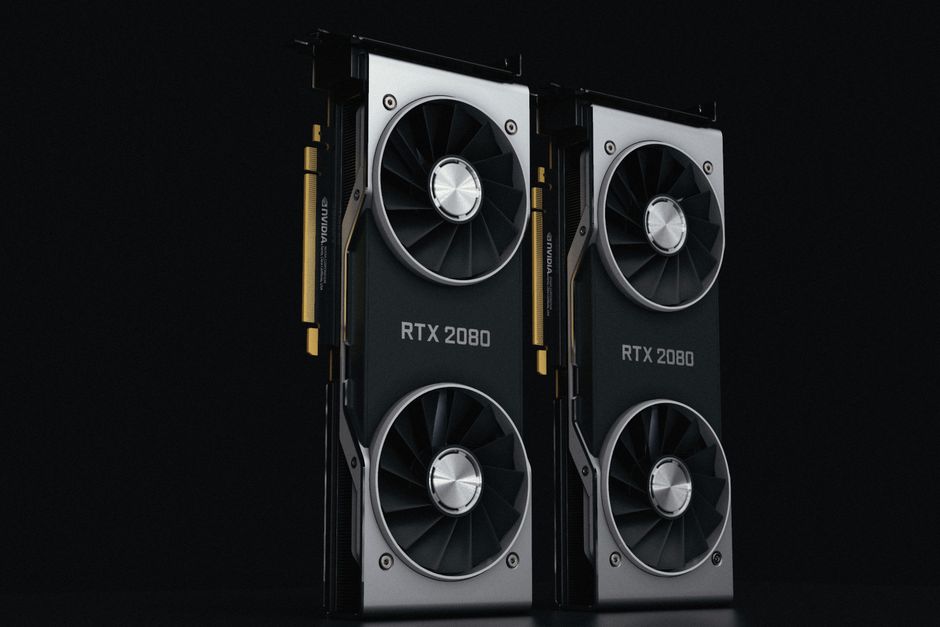
NVIDIA Boosts AI Factories with 20,000 GPUs in India, Malaysia
This expansion is part of a broader initiative to enhance computational capabilities, enabling advanced AI research and development.
Read More →Credential Signaling: Conservatories and accredited music programs have begun issuing “AI‑Ready Musician” certifications in partnership with tech firms, embedding AI literacy into traditional diplomas. This institutional endorsement creates a new signaling mechanism that can bypass conventional gatekeepers such as computer‑science degrees, thereby expanding economic mobility for artists from underrepresented backgrounds who can leverage their musical expertise into tech careers.
Network Leverage: Leadership structures within AI labs are increasingly populated by hybrid professionals—engineers with performance backgrounds who can bridge creative and technical vocabularies. These individuals occupy “boundary spanner” positions that amplify their influence over product roadmaps and research agendas, consolidating institutional power within a relatively narrow talent pool. The systemic risk is a concentration of decision‑making authority among those who command both artistic credibility and algorithmic fluency, potentially marginalizing purely technical contributors.
Quantitatively, the U.S. Bureau of Labor Statistics projects a 21 % growth in “AI and machine‑learning specialists” through 2031, with median salaries rising from $112,000 in 2023 to $138,000 by 2027. Parallelly, the National Endowment for the Arts reports a 9 % rise in music‑related occupations that integrate technology, indicating a widening earnings gap between hybrid and traditional practitioners.
Outlook: Institutional Realignment Over the Next Five Years
By 2029, three structural trends are likely to crystallize.
Regulatory Emphasis on Data Provenance: As AI‑generated music enters mainstream media, regulators will demand provenance tracking of training data, mirroring copyright frameworks in the visual arts.
- Curriculum‑First AI Funding Models: Venture capital will increasingly allocate capital to startups that demonstrate a robust educational data pipeline, treating curriculum design as a defensible moat. This shift will reallocate resources from raw compute to data curation, elevating institutions that control pedagogical corpora—universities, conservatories, and large‑scale MOOCs—into new positions of bargaining power.
- Regulatory Emphasis on Data Provenance: As AI‑generated music enters mainstream media, regulators will demand provenance tracking of training data, mirroring copyright frameworks in the visual arts. Institutions that embed provenance metadata into their educational datasets will gain preferential access to licensing agreements, further stratifying the market.
- Expanded Mobility Pathways via Hybrid Credentials: Public‑private partnerships will proliferate micro‑credential ecosystems that certify “AI‑enhanced musical proficiency.” These credentials will serve as low‑cost, high‑visibility gateways into AI roles, potentially democratizing access for students in community colleges and underfunded districts. However, the efficacy of these pathways will depend on the alignment of curriculum standards with industry benchmarks, a coordination problem that will shape the next wave of institutional collaborations.
Collectively, these dynamics suggest a systemic rebalancing: the institutions that master the integration of artistic pedagogy with algorithmic training will command disproportionate influence over the future talent pipeline, while individuals who can navigate both domains will accrue outsized career capital.
You may also like
 Education & University Insights
UP ITI Admission Opens Fifth Phase Applications
The fifth phase of UP ITI admissions for the 2026-27 training session will start on October 6, 2026, and will remain open until midnight on…
Read More →Key Structural Insights
- Embedding hierarchical, feedback‑rich music curricula into AI pipelines reduces data consumption by up to 45 % while improving model generalization, reshaping compute‑centric power structures.
- Hybrid credentials that fuse musical literacy with AI fluency create a new signaling channel, expanding economic mobility for artists and redefining institutional credential hierarchies.
- Over the next five years, control over pedagogical data provenance will become a decisive competitive advantage, concentrating market influence among education‑tech incumbents and forward‑leaning conservatories.