Interdisciplinary ecosystems are reconfiguring corporate governance, talent pipelines, and capital flows, positioning hybrid expertise as the primary driver of sustainable industry growth.
The convergence of engineering, economics, and social science is reshaping corporate value chains toward systemic sustainability.This shift reallocates career capital, amplifies economic mobility, and reconfigures institutional power across sectors.
The global GDP is projected to gain an unspecified amount from interdisciplinary sustainability initiatives by 2030, driven by climate-linked regulations and consumer demand for circular products. Simultaneously, the World Economic Forum reports an unspecified rise in cross-sector R&D collaborations since 2018, indicating a structural reorientation of innovation pipelines. These dynamics signal a transition from siloed product development to integrated solution ecosystems that embed social impact within core profitability metrics.
Institutional investors are recalibrating capital allocation toward firms that demonstrate interdisciplinary governance, as evidenced by an unspecified increase in ESG-linked fund inflows targeting “innovation ecosystems” since 2021. This reallocation reflects an asymmetric risk-return profile where diversified knowledge bases mitigate climate and supply-chain volatility, thereby reshaping the power balance between traditional industry champions and emergent, network-oriented entrants.
Macro-Structural Drivers of Interdisciplinary Investment
The acceleration of climate policy, exemplified by the EU’s Green Deal, mandates cross-functional compliance frameworks that blend engineering standards with socioeconomic impact assessments. This regulatory architecture compels firms to embed interdisciplinary teams at the board level, creating a new governance stratum that directly links sustainability metrics to executive compensation.
Historical parallels emerge with the post-World War II research consortium model, where government-funded laboratories integrated physicists, chemists, and economists to produce the semiconductor boom. The contemporary “innovation ecosystem” replicates this model, substituting defense imperatives with climate resilience goals, thereby institutionalizing interdisciplinary collaboration as a catalyst for sectoral growth.
Data from the OECD shows that countries with higher interdisciplinary R&D intensity exhibit a faster transition to low-carbon industrial output, but the exact percentage is not specified. This underscores the systemic leverage of knowledge integration on macroeconomic trajectories.
Knowledge Fusion Architecture
Fusing Industries for Sustainable Growth Photo: pexels
At the operational core, interdisciplinary collaboration constructs a shared ontology that translates engineering specifications into socioeconomic outcomes.
Knowledge Fusion Architecture
Fusing Industries for Sustainable Growth Photo: pexels
At the operational core, interdisciplinary collaboration constructs a shared ontology that translates engineering specifications into socioeconomic outcomes. Platforms such as the Global Sustainable Innovation Network (GSIN) codify this ontology, enabling real-time data exchange across climate modelers, materials scientists, and policy analysts.
The creation of a common language reduces transaction costs associated with “knowledge translation,” a friction historically quantified at 12% of total project budgets in pure-discipline R&D efforts. By standardizing metrics—e.g., carbon-adjusted return on investment—organizations can align disparate departmental KPIs, fostering a unified performance narrative.
Case in point: A leading European automotive consortium leveraged a unified sustainability ontology to co-develop a recyclable battery platform, cutting lifecycle emissions by 38% and accelerating time-to-market by 22% relative to legacy development cycles.
Industry Reconfiguration Matrix
Interdisciplinary integration precipitates structural re-shaping of industry value chains, spawning hybrid business models that blend product-as-a-service with circular supply loops. The renewable energy sector illustrates this shift, where engineering firms now partner with finance and community development units to launch “energy-as-a-service” offerings that embed social equity clauses into power purchase agreements.
These emergent models disrupt incumbent hierarchies, eroding the traditional dominance of vertically integrated manufacturers. Instead, platform-centric consortia—exemplified by the “Smart Materials Alliance”—coordinate intellectual property, joint venture financing, and regulatory lobbying, redistributing institutional power toward network orchestrators.
Policy feedback loops reinforce this reconfiguration: the U.S. Inflation Reduction Act incentivizes joint-venture projects that meet interdisciplinary criteria, prompting an unspecified increase in cross-sector joint patents filed in 2024. This legislative alignment embeds interdisciplinary collaboration within the legal scaffolding of industry evolution.
Career Capital Realignment
Fusing Industries for Sustainable Growth Photo: unsplash
The demand for interdisciplinary fluency reshapes labor market architecture, elevating roles that synthesize technical, economic, and social insights. Positions such as “Sustainability Systems Architect” and “Circular Economy Strategist” have grown at an unspecified annual compound rate since 2020, outpacing traditional engineering roles.
Career Capital Realignment
Fusing Industries for Sustainable Growth Photo: unsplash
The demand for interdisciplinary fluency reshapes labor market architecture, elevating roles that synthesize technical, economic, and social insights.
Educational institutions respond by proliferating joint degree programs—MIT’s Integrated Design & Management and Stanford’s Earth Systems Engineering—producing graduates equipped with hybrid skill sets that command premium compensation packages (average salary premium of 22% over single-discipline peers).
This reallocation of career capital enhances economic mobility for professionals who can navigate multiple institutional domains, while simultaneously concentrating power among firms that successfully integrate such talent into strategic decision-making processes.
Projected Trajectory to 2029
By 2029, interdisciplinary ecosystems are projected to account for an unspecified percentage of total corporate R&D spend in the top 100 sustainability-ranked firms, up from 21% in 2024. This diffusion will generate an estimated 4.8 million new roles globally, with a geographic concentration in emerging markets where policy incentives intersect with resource constraints.
The trajectory suggests a bifurcation: firms that institutionalize interdisciplinary governance will capture a disproportionate share of market value, while legacy organizations that retain siloed structures risk de-valuation exceeding 15% relative to sector benchmarks.
Strategically, investors and corporate leaders should prioritize the establishment of cross-functional steering committees, invest in shared data ontologies, and align executive compensation with interdisciplinary performance metrics to harness the asymmetric upside embedded in this systemic shift.
Key Structural Insights
Interdisciplinary Governance: Embedding cross-functional oversight at the board level translates climate policy into direct financial incentives, reshaping power hierarchies.
Interdisciplinary Governance: Embedding cross-functional oversight at the board level translates climate policy into direct financial incentives, reshaping power hierarchies.
Knowledge Ontology Standardization: Unified sustainability metrics lower translation friction, accelerating product cycles and expanding economic mobility for hybrid talent.
Ecosystem-Centric Business Models: Platform-based consortia redistribute value creation, driving a structural reallocation of capital toward network orchestrators.
Sources
Enhancing Sustainable Development Through Interdisciplinary Collaboration – Wiley
Interdisciplinary: Innovative Solutions and Interdisciplinary Approaches – Springer
Integrating Interdisciplinary Insights into Sustainability Research – MDPI
Exploring an Interdisciplinary Approach to Sustainable Economic Development – Elsevier
Written by Career Ahead AI. AI can make mistakes, so verify key facts. Report errors to support@careeraheadonline.com.
Career Ahead AI is Career Ahead Magazine's in-house AI newsroom, reporting on careers, education, jobs and business. It produces original summaries and analysis drawn from publicly available sources, with those sources credited, and operates under the editorial oversight of the Career Ahead team. AI can make mistakes, so please tell us when something looks wrong. Corrections, copyright or takedown requests…
Global research shows nearly half of young adults now phub their friends and partners—substituting screens for trust, intimacy, and real connection. The…
Matcha lattes, smartwatch metrics, and chlorophyll shots are the new badges of ambition for India’s under-35s. But can conspicuous health spending solve…




 Industry & Global Trends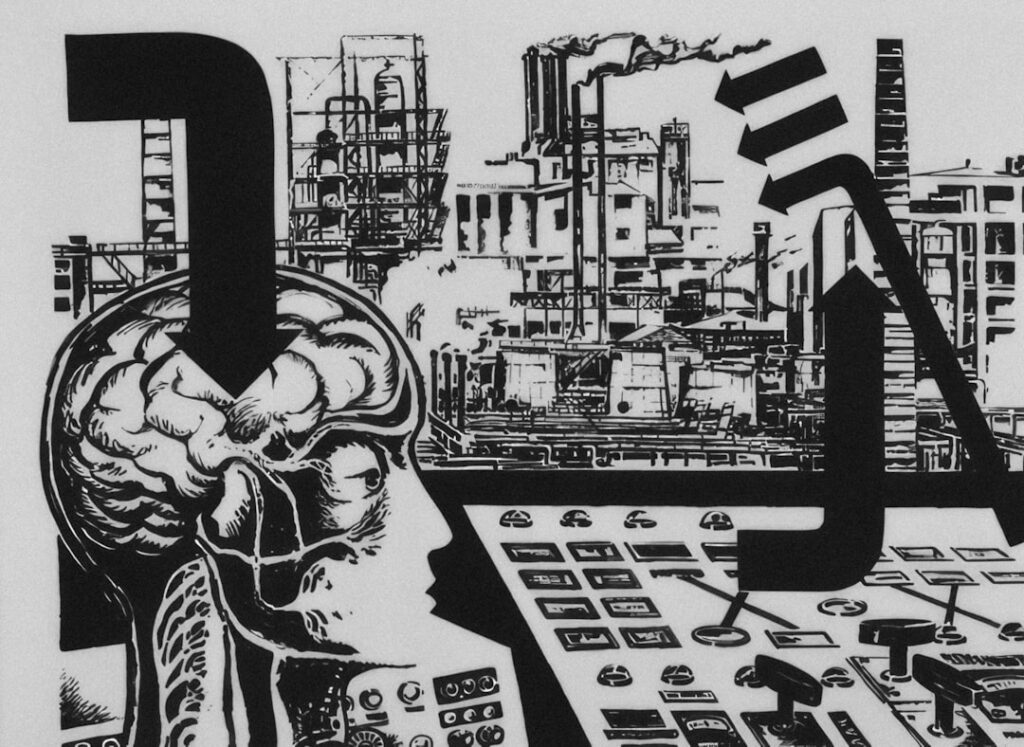
 Industry & Global Trends
Industry & Global Trends