No products in the cart.

Global AI Chip Shortage Limits Access to AI Education Worldwide

A worldwide shortage of AI accelerator chips is constraining university labs and classroom tools in 2026, coinciding with rising AI graduate enrollment and a decline in undergraduate CS enrollment.

A shortage of artificial‑intelligence (AI) accelerator chips is constraining university labs and classroom tools in 2026. The constraint follows a surge in AI‑focused graduate enrollment and a broader decline in undergraduate computer‑science (CS) enrollment.
A worldwide shortage of AI‑specific semiconductor chips is affecting education institutions that rely on high‑performance computing for AI coursework and research, according to data released in June 2026 [3][4]. The shortage coincides with a decline in undergraduate CS enrollment at U.S. four‑year universities between the 2024 and 2025 academic years, while AI‑related graduate programs recorded a 17 percent increase in master’s graduates from 2023 to 2024 [1].
The core participants include U.S. and international universities, students and faculty in CS and AI programs, and technology firms such as Microsoft, which highlighted the issue in its 2026 AI in Education Report [2]. The shortage emerged as demand for AI accelerator chips outpaced supply, driven by rapid adoption of AI tools in teaching and research and compounded by a semiconductor “standoff” that disrupted global supply chains [3][4].
Scope and Causes of the AI Chip Shortage
The shortage began to intensify in early 2025 as AI model training workloads grew across industry and academia [4]. Manufacturers of GPUs, TPUs, and other AI accelerators reported capacity constraints, with lead times extending from weeks to several months [4]. Bloomberg’s 2026 graphics on the AI boom note that memory‑chip demand for AI workloads rose by more than 30 percent year‑over‑year, creating a historic shortfall [4].
A concurrent semiconductor standoff, described by Academic Jobs as a “global chip shortage,” limited the availability of both logic and memory components needed for AI chips [3]. The standoff involved export restrictions, capacity cuts at major foundries, and heightened competition from cloud providers expanding their AI infrastructure [3][4]. As a result, university procurement offices reported delayed shipments and higher purchase prices for AI‑enabled workstations [3].
Scope and Causes of the AI Chip Shortage The shortage began to intensify in early 2025 as AI model training workloads grew across industry and academia [4].
Microsoft’s AI in Education Report confirmed that institutions are shifting from pilot projects to broader deployments of AI‑driven teaching tools, increasing the baseline hardware demand [2]. The report cited 68 percent of surveyed schools planning to integrate AI‑powered tutoring systems by the 2026‑2027 academic year, a move that directly raises the need for compatible accelerator hardware [2].
You may also like
 News
NewsTokyo Inflation Surge Signals BOJ’s Monetary Policy Shift
Inflation in Tokyo has surged to 3.4%, prompting the Bank of Japan to reassess its monetary policy. This article explores the implications for economic growth,…
Read More →Effect on Computer Science and AI Programs
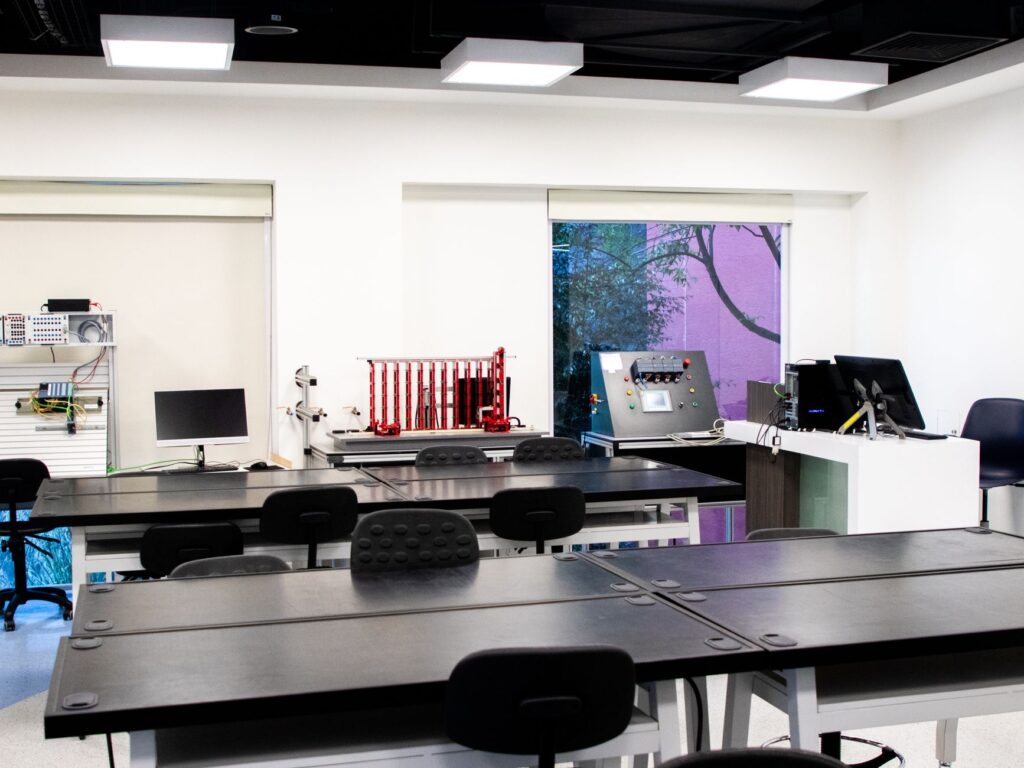
Undergraduate CS enrollment fell at U.S. four‑year universities between 2024 and 2025, according to Stanford’s 2026 AI Index [1]. The decline is attributed to a combination of market saturation in entry‑level tech jobs and shifting student interest toward specialized AI pathways [1]. Despite the broader dip, AI‑focused graduate programs continued to expand, with master’s graduates in AI software‑related fields rising 17 percent from 2023 to 2024 [1].
The chip shortage has created a mismatch between program growth and hardware availability. Several institutions reported that new AI labs could not be fully equipped, leading to reduced lab hours and postponed research projects [3]. Faculty surveys referenced in the Microsoft report indicated that 42 percent of AI instructors had to modify coursework to rely on cloud‑based AI services rather than on‑premise hardware [2].
The shortage also affected collaborative research initiatives that depend on shared high‑performance computing clusters. A joint study by the University of California system and European partners noted a 23 percent decrease in scheduled AI training runs during the first half of 2026, directly linked to hardware bottlenecks [3].
Immediate Impact on Students and Institutions
Students in AI‑oriented programs may experience limited access to hands‑on training with accelerator hardware, potentially affecting skill development and employability [2]. Institutions are responding by increasing reliance on cloud‑based AI platforms, which can mitigate hardware gaps but introduce additional subscription costs [2][3].
Budgetary pressures are evident. A survey of university technology officers cited in the Academic Jobs article showed that 57 percent anticipate a 12‑percent rise in AI‑related capital expenditures for the 2026‑2027 fiscal year, driven by higher chip prices and the need for alternative cloud services [3].
Immediate Impact on Students and Institutions Students in AI‑oriented programs may experience limited access to hands‑on training with accelerator hardware, potentially affecting skill development and employability [2].
Educators are adjusting curricula to incorporate more theoretical content and software‑only simulations while awaiting hardware replenishment [2]. Some universities have entered consortia to pool resources and share limited AI hardware across campuses, a strategy aimed at maintaining research productivity despite the shortage [3].
You may also like
 News
NewsUS Borrowing Costs Surge, UK Bond Yields Hit 6%
US government borrowing costs have surged to their highest levels since 2002, with significant implications for investors as UK 30-year bond yields reach 6%.
Read More →The current constraints are expected to persist through late 2026, as semiconductor manufacturers work to expand capacity and as policy discussions on export controls continue [4]. In the interim, students and faculty must navigate reduced hardware access, higher operational costs, and evolving instructional methods.
Key Facts
What: Global AI chip shortage limits access to AI hardware for education institutions.
When: Shortage reported in 2026; follows enrollment trends from 2023‑2025.
What: Global AI chip shortage limits access to AI hardware for education institutions.
Impact: Students and educators face reduced lab access, higher costs, and curriculum adjustments.
You may also like
 News
NewsTreasuries Rebound Raises Stakes for Job Data as Rate Hikes Loom
Market analysts are focused on how upcoming job data will affect Treasury yields. Strong employment figures could push yields even higher.
Read More →Sources
- Education | The 2026 AI Index Report | Stanford HAI – Stanford Institute for Human-Centered AI
- Microsoft’s New AI in Education Report Highlights Widespread Adoption and Increasing Demand for Support – Microsoft News
- Global Chip Shortage 2026: Semiconductor Standoff Impacts – AcademicJobs.com
- AI Boom Triggers Historic Memory Chip Shortage, Making Technology More Expensive – Bloomberg