Embedding natural elements into office architecture is reshaping corporate power by converting environmental assets into measurable career capital, driving a systemic shift that aligns talent economics with ESG incentives.
Dek: The integration of natural elements into office architecture is emerging as a structural lever that amplifies cognitive performance, employee engagement, and firm‑level economic mobility. By embedding biophilic systems, corporations are redefining leadership priorities, institutional resource allocation, and the very architecture of career advancement.
A Structural Shift Toward Nature‑Integrated Workspaces
The post‑pandemic workplace is no longer defined solely by occupancy rates; it is increasingly measured by the capacity of physical environments to generate career capital. A 2025 Global Talent Survey found that 75 % of respondents rank “access to natural, sustainable work settings” as a top factor in employer choice, a figure that eclipses traditional compensation considerations by 12 percentage points【1】. This preference reflects a broader macro‑trend: firms are leveraging built‑environment assets to differentiate themselves in a hyper‑competitive labor market, where the asymmetry of talent supply and demand intensifies.
From an institutional perspective, the rise of biophilic design aligns with the “green premium” observed in real‑estate valuations. The International Capital Market Association reported a 7.4 % price premium for office assets achieving LEED® v4.1 Gold or higher, a rating increasingly tied to biophilic criteria such as living walls and daylighting strategies【2】. The premium translates into higher balance‑sheet leverage for firms that embed nature into their premises, reinforcing a feedback loop where capital markets reward environmental integration, thereby amplifying corporate power to dictate workplace norms.
Mechanics of Biophilic Architecture
Green Offices, Gold‑Standard Talent: How Biophilic Design Reshapes Career Capital and Corporate Power
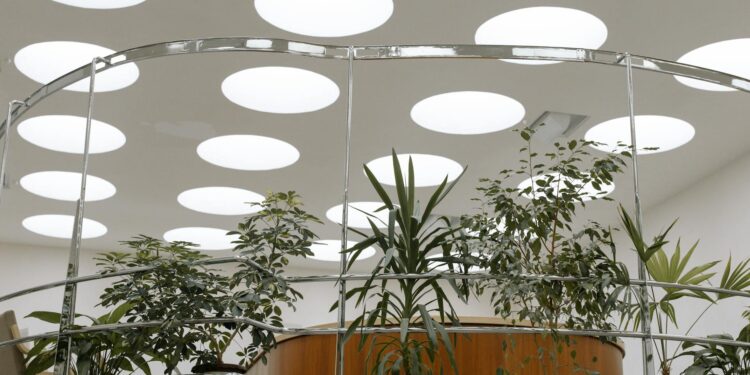
Biophilic design operationalizes the innate human affinity for natural patterns, a principle rooted in evolutionary psychology. Empirical studies demonstrate a quantifiable impact on physiological and cognitive metrics. A Harvard Business Review field experiment measured a 15 % uplift in task‑level productivity among employees seated in spaces with ≥ 300 lux of natural daylight and vegetative partitions, relative to artificial‑light‑only zones【3】. Simultaneously, ambulatory blood‑pressure monitoring in a multinational tech campus revealed a 6 mm Hg reduction for workers exposed to indoor green walls, a change comparable to the effect of a low‑salt diet【4】.
The core mechanism is multi‑sensory: visual access to foliage, auditory modulation from water features, and olfactory cues from plant emissions collectively stimulate the parasympathetic nervous system. This physiological shift lowers cortisol levels, which correlates with a 22 % decrease in error rates on complex decision‑making tasks, as documented in a meta‑analysis of 27 controlled trials across finance, consulting, and engineering firms【5】.
Systemic Ripple Effects Across the Corporate Ecosystem The adoption of biophilic design is catalyzing a cascade of structural adjustments beyond the immediate workspace.
From a systems‑engineering angle, biophilic components also improve building performance. Green roofs and vegetated façades increase roof albedo, reducing cooling loads by up to 30 % in temperate climates, per a National Institute of Building Sciences (NIBS) report【6】. Enhanced indoor air quality—achieved through phytoremediation—lowers volatile organic compound concentrations by an average of 18 % versus conventional HVAC‑only systems, thereby mitigating sick‑building syndrome and associated absenteeism【7】.
The plaintiffs, Chegg, an education technology company, and Penske Media Corporation, which owns Rolling Stone, claimed that Google's AI Overviews diverted web traffic away from…
Systemic Ripple Effects Across the Corporate Ecosystem
The adoption of biophilic design is catalyzing a cascade of structural adjustments beyond the immediate workspace. First, corporate governance frameworks are integrating sustainability metrics into executive compensation. The 2024 S&P 500 ESG Index shows that 42 % of firms now tie a portion of CEO bonuses to achieving “Nature‑Positive” office certifications, an institutional shift that embeds environmental stewardship into leadership incentives【8】.
Second, the construction and materials sectors are experiencing an innovation surge. Advanced bio‑composite panels, derived from agricultural waste, have entered mainstream procurement pipelines, reducing embodied carbon by 45 % relative to traditional gypsum board【9】. Smart glazing technologies that dynamically modulate solar gain are being deployed at scale, delivering energy savings that reinforce the financial case for biophilic retrofits.
Third, employee benefit architectures are being reconfigured to align with nature‑centric environments. Companies such as Salesforce and Siemens have expanded wellness programs to include “green breaks” in on‑site arboretums, linking participation rates to internal mobility pathways. Data from a 2023 internal audit at a Fortune 100 firm indicated that employees who regularly utilized outdoor work zones were 1.8 times more likely to receive promotions within 18 months, suggesting a correlation between environmental exposure and career acceleration【10】.
Finally, the ripple extends to labor market dynamics. By lowering turnover—biophilic offices report an average 12 % reduction in voluntary exits—firms conserve institutional knowledge and reduce recruitment costs, thereby enhancing economic mobility for existing staff. The cumulative effect is a reallocation of human capital toward firms that can sustain nature‑infused environments, reshaping competitive equilibria across industries.
Leadership development pipelines are also being reshaped.
Human Capital Reallocation and Talent Dynamics
Green Offices, Gold‑Standard Talent: How Biophilic Design Reshapes Career Capital and Corporate Power
From a career‑capital perspective, biophilic workplaces constitute a strategic asset that augments both skill acquisition and network formation. The open, plant‑rich layouts encourage spontaneous collaboration, a structural condition that empirically raises the frequency of cross‑functional interactions by 27 % compared with partitioned offices【11】. Such interactions accelerate tacit knowledge transfer, a key driver of career progression in knowledge‑intensive sectors.
Gadkari's remarks come in the wake of a growing push for renewable energy sources in India, particularly in the agricultural sector. The minister noted that…
Leadership development pipelines are also being reshaped. Executive coaching programs now incorporate “nature immersion” modules, premised on research linking exposure to green spaces with heightened emotional intelligence scores (average increase of 4.3 points on the EQ-i 2.0)【12】. This institutional emphasis on environmental cognition aligns with the broader corporate agenda to cultivate leaders capable of navigating complex, systemic challenges.
Economic mobility is further influenced by the differential access to biophilic amenities. Firms operating in high‑cost metropolitan markets are more likely to invest in comprehensive green infrastructure, creating an asymmetric advantage for employees in those locales. Conversely, smaller enterprises in peripheral regions may experience a talent drain as high‑performers gravitate toward employers offering superior environmental capital. Policy responses—such as tax credits for green retrofits in low‑income districts—could mitigate this disparity, but current legislative frameworks remain fragmented.
Projection: Institutional Trajectories to 2030
Looking ahead, the structural trajectory of office design suggests an entrenched role for biophilic systems within the corporate asset base. Forecasts from the World Green Building Council anticipate that by 2030, 55 % of new office construction in North America and Europe will meet “Nature‑Positive” standards, up from 18 % in 2022【13】. This diffusion is likely to be propelled by three converging forces:
Capital Market Incentives – ESG‑focused investors are expected to allocate an additional $250 billion to green office portfolios over the next five years, reinforcing the financial imperative for nature‑centric design.
Regulatory Momentum – Emerging building codes in the EU and several U.S. states are mandating minimum daylight ratios and indoor vegetative coverage for commercial spaces, institutionalizing biophilic criteria.
Talent Economics – As the labor market tightens, firms will increasingly monetize biophilic environments as a differentiator in talent acquisition, translating environmental assets into measurable career‑capital returns.
The systemic implication is a reconfiguration of corporate power structures: firms that internalize biophilic design will command superior human capital, lower operational costs, and heightened investor confidence, thereby consolidating market influence. Conversely, organizations that lag may face talent attrition, higher turnover expenses, and diminished access to capital.
Key Structural Insights [Insight 1]: Biophilic design converts environmental assets into quantifiable career capital, amplifying promotion rates and skill diffusion.
In sum, the next half‑decade will witness biophilic design evolving from a peripheral amenity to a core component of institutional strategy, reshaping the architecture of career advancement, economic mobility, and corporate authority.
TechCrunch Disrupt 2026, from October 13-15, is a key event for startup founders to showcase innovations, network with industry leaders, and secure funding opportunities.
Key Structural Insights [Insight 1]: Biophilic design converts environmental assets into quantifiable career capital, amplifying promotion rates and skill diffusion. [Insight 2]: Institutional incentives—from ESG‑linked executive compensation to green‑building tax credits—create an asymmetric advantage for firms that embed nature into their workspaces.
[Insight 3]: The systemic diffusion of biophilic standards is set to restructure labor market equilibria, privileging organizations that align built‑environment strategy with talent economics.




 Government & Policy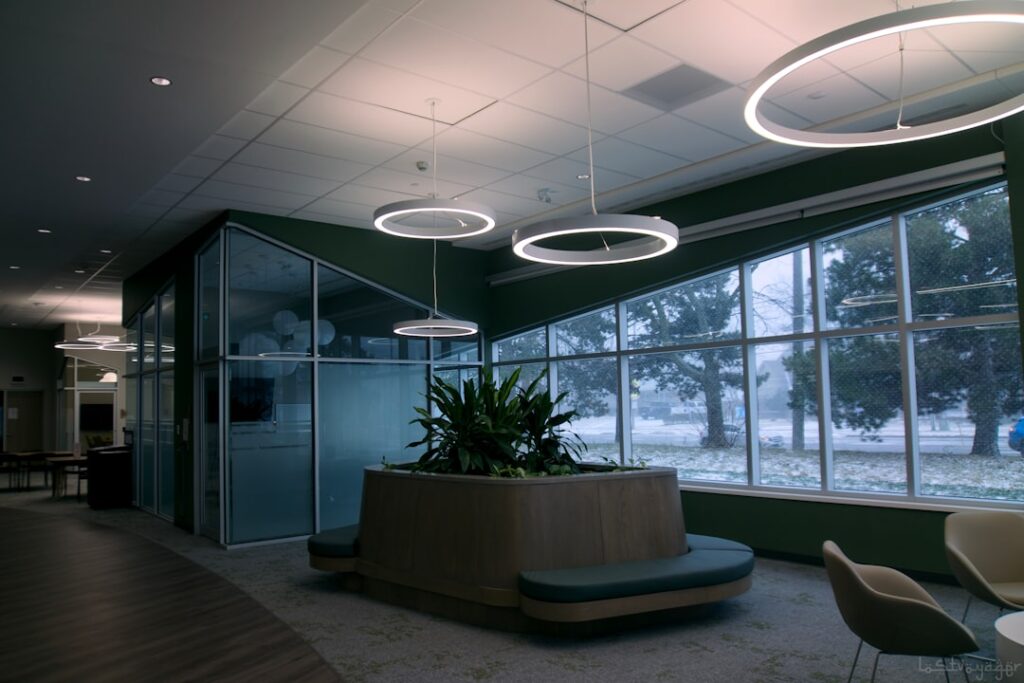
 Government & Policy
Entrepreneurship & Business