When Tesla’s board approved a $25 billion capital-expenditure plan for 2026, the headline read like a challenge to every venture capital firm: match our ambit...
Investors are betting billions on ideas that have yet to prove they work, turning hype into a high-risk engine that reshapes capital flows.
When Tesla’s board approved a $25 billion capital-expenditure plan for 2026, the headline read like a challenge to every venture capital firm: match our ambition or be left behind. The budget earmarked massive spending on autonomous driving software, humanoid robots, and a suite of AI-driven services—none of which had delivered a single profitable product line at the time. Within weeks, a wave of limited-partner meetings featured pitch decks for quantum-computing startups, brain-machine-interface labs, and synthetic-biology ventures, all promising “the next breakthrough” that would justify similar spending sprees.
A handful of high-profile investors, led by figures such as Elon Musk, have turned this single decision into a market signal. In the first quarter of 2026, global venture investment surged 150% quarter-over-quarter, reaching $300 billion across 6,000 startups. The disproportionate share of that money—70% of all venture capital spending in 2025—flowed into sectors that, by most metrics, remain experimental. The pattern is no accident; it is the product of a feedback loop between capital, hype, and the fear of missing the next “big thing.”
The case as a symptom of capital-driven speculation
Tesla’s capex is not an isolated gamble; it is a vivid illustration of what we call the Unproven Innovation Premium (UIP). The UIP describes the extra valuation that investors attach to companies whose technologies have not yet crossed the “product-market fit” threshold, simply because the market perceives them as potential disruptors. The premium is amplified when a marquee player stakes a public bet, because limited partners interpret the endorsement as a de-risking signal, even though the underlying technology may still be years away from commercialization.
“If you think that Elon Musk’s view that Optimus will be ultimately their most worthy, most value-creating platform, and you think you’re skeptical, then the capex doesn’t make sense, and it’s probably not a good investment.” — Seth Goldstein, Morningstar analyst
The case as a symptom of capital-driven speculation
Tesla’s capex is not an isolated gamble; it is a vivid illustration of what we call the Unproven Innovation Premium (UIP).
David Robinson's resignation from OpenAI raises significant concerns about AI safety protocols and ethical practices in the tech industry, reflecting a growing trend of discontent…
The quote captures the paradox: the very act of announcing massive spending can create a self-fulfilling belief that the investment is sound, regardless of the technology’s readiness. This dynamic fuels a cascade of capital allocations that prioritize headline-grabbing concepts over incremental, proven innovations.
Why the trend is structural, not fleeting
How investors are fueling the market for unproven technologies Photo: pexels
Scale of capital and the “FOMO” engine
The sheer magnitude of funds chasing unproven ideas is a structural shift. With $300 billion poured into venture capital in a single quarter, limited partners are under pressure to deliver outsized returns. The competitive landscape forces them to chase the highest-growth narratives, even when those narratives rest on speculative science. The 150% quarter-over-quarter surge in investment underscores that the appetite is not a temporary spike but a sustained escalation.
Institutional incentives and risk dispersion
Modern fund structures dilute individual accountability. General partners earn fees based on assets under management, while limited partners can spread risk across dozens of bets. This architecture reduces the personal cost of a misfire, encouraging a “spray-and-pray” approach. The result is a market where the barrier to entry for funding untested technologies is low, and the cost of failure is socialized across the investor ecosystem.
Regulatory vacuum
Unlike banking or insurance, venture capital operates with minimal regulatory oversight. The lack of mandatory due-diligence standards means that speculative pitches can secure funding based on narrative strength alone. This regulatory gap enables investors to double down on hype without the safety nets that would otherwise temper exuberance.
The opportunity cost for proven sectors
Capital flowing into speculative domains inevitably starves more mature, cash-generating sectors. Companies developing incremental improvements to existing platforms—such as energy-efficient battery management or scalable cloud infrastructure—find themselves competing for a shrinking pool of growth capital. The long-term implication is a potential slowdown in sectors that historically deliver steady returns and broad economic benefits.
Edge cases: when speculation pays off—and when it doesn’t
Neko Health, co-founded by Spotify's Daniel Ek, has launched its body scan services in the U.S., aiming to transform preventative healthcare with advanced technology.
Not every bet on unproven technology ends in loss. A minority of ventures—think of early-stage AI models that later become foundational platforms—do translate speculative capital into transformative value. However, the success rate is low. Historical data suggests that for every breakthrough, there are dozens of “dead-ends” that consume billions without ever reaching market relevance.
Companies developing incremental improvements to existing platforms—such as energy-efficient battery management or scalable cloud infrastructure—find themselves competing for a shrinking pool of growth capital.
In contrast, some investors adopt a disciplined “thesis-first” approach, allocating a fixed percentage of their portfolio to high-risk bets while preserving the majority for proven opportunities. This hybrid strategy can capture upside without exposing the entire fund to the volatility of speculative bubbles.
Our view is that the current climate rewards narrative over nuance. The UIP inflates valuations beyond what fundamentals can justify, creating a fragile ecosystem that is vulnerable to a correction. When the next wave of unproven technologies fails to deliver, the fallout will reverberate across the broader venture landscape, tightening capital and reshaping investment theses for years to come.
What you should do differently
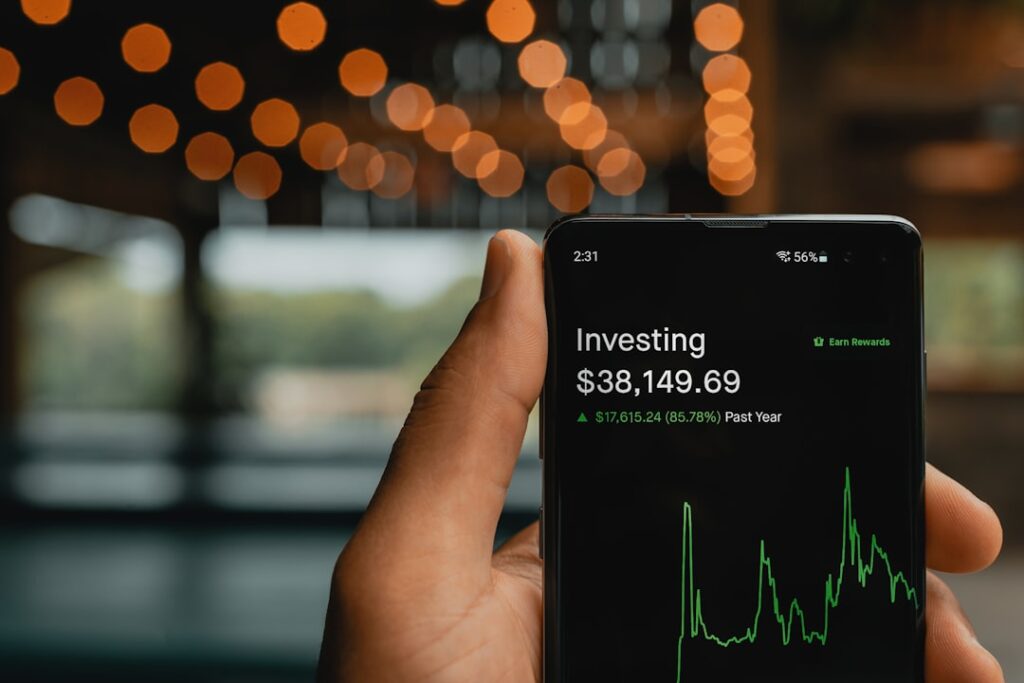
How investors are fueling the market for unproven technologies Photo: unsplash
Treat hype as a data point, not a decision driver. Allocate a modest, clearly defined slice of your portfolio to speculative bets, and demand concrete milestones before committing additional capital. By anchoring your strategy in disciplined risk management, you can participate in the upside of breakthrough innovation without jeopardizing the stability of your broader investment plan.




AI & Technology

 AI & Technology