Human‑AI collaboration is reshaping creative workflows worldwide, with major tech firms and consulting groups reporting rapid adoption and measurable productivity gains in 2026.
Generative AI tools are increasingly paired with artists, designers, writers and musicians. New 2026 reports document rapid adoption and investment by major technology firms and consulting groups.
The partnership between humans and artificial intelligence is expanding within creative sectors worldwide. A 2026 Harvard Business School Working Knowledge analysis notes that generative AI is reshaping artistic, design and content‑creation workflows, marking a measurable shift in how creative work is produced [1]. The trend has accelerated over the past three years, with multiple corporations announcing dedicated research programs and product launches in 2025‑2026 [2][3][4].
Technology firms IBM and SAP have publicly outlined strategies to embed collaborative AI features into creative software platforms, while consulting firms Deloitte and McKinsey have released guidance for organizations seeking to integrate AI partners into their creative pipelines [2][3][4][5]. Academic research from Harvard Business School further highlights the growing importance of these collaborations for future job roles [1].
Expansion Across Artistic Disciplines
Generative AI applications are now commonplace in visual art, music composition, literary drafting and product design. A TechTarget report describes how AI models can generate image drafts, suggest musical motifs, and produce first‑draft copy, allowing creators to iterate more rapidly [6]. In the United States, Europe and Asia, studios and freelance creators report using tools such as Adobe Firefly, OpenAI’s DALL‑E, and Google’s MusicLM to augment their creative processes [6].
Industry surveys cited by Deloitte’s 2026 Global Human Capital Trends indicate that 42 % of creative‑industry firms have incorporated AI‑assisted tools into at least one core workflow, up from 18 % in 2023 [4]. The same study shows that firms employing human‑AI collaboration report a 15 % increase in project turnaround speed and a 12 % rise in client satisfaction scores [4]. These metrics are echoed in a McKinsey analysis of skill partnerships, which finds that organizations that pair AI with human expertise achieve higher innovation output than those relying solely on human or AI effort [5].
Industry surveys cited by Deloitte’s 2026 Global Human Capital Trends indicate that 42 % of creative‑industry firms have incorporated AI‑assisted tools into at least one core workflow, up from 18 % in 2023 [4].
Technological Foundations and Deployment
Human‑AI Collaboration Gains Momentum Across Global Creative Industries
Anup Bagchi, with over three decades in financial services, is set to lead HDFC Bank starting October 27, 2026, following the retirement of Sashidhar Jagdishan.
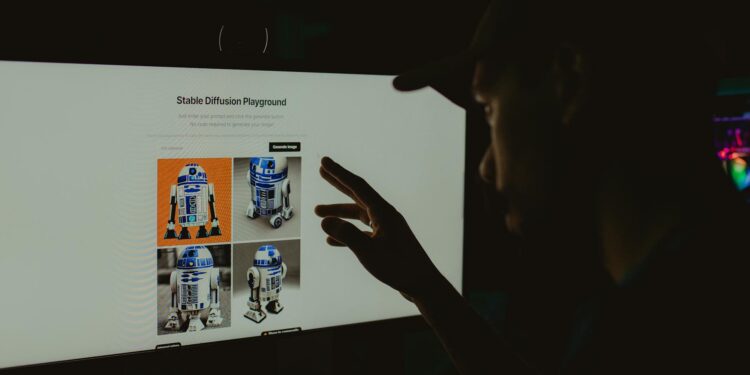
Advances in machine learning, natural language processing and large‑scale diffusion models underpin the surge in collaborative tools [6]. IBM’s recent white paper outlines a framework where AI systems generate creative suggestions that are then reviewed, edited, or combined by human creators, emphasizing a loop of mutual refinement [2]. SAP’s commentary stresses that AI without human context is incomplete, and its platform integrates user feedback mechanisms to ensure AI outputs align with artistic intent [3].
The proliferation of cloud computing resources and open‑source datasets has lowered barriers to entry for both large enterprises and independent creators [6]. Platform providers now offer plug‑in ecosystems that allow creators to embed AI modules directly into existing design software, streamlining the collaboration process [2][5].
Impact on Students, Educators and Institutions
The rise of human‑AI collaboration is prompting curriculum revisions in art schools, design programs and journalism departments. According to the Harvard Business School report, academic institutions are adding courses on AI‑augmented creativity to prepare graduates for emerging job requirements [1]. Early adopters report that students trained in both traditional techniques and AI‑assisted workflows produce portfolios that meet contemporary industry expectations [1][5].
Educators are incorporating AI tools into classroom assignments, enabling learners to experiment with rapid prototyping and iterative design [5]. For institutions, the integration of AI collaboration platforms can reduce resource consumption for large‑scale production projects, while also expanding access to advanced creative technologies for remote or under‑funded programs [3][4].
Companies across the creative sector are leveraging human‑AI partnerships to increase productivity and diversify output. A Deloitte briefing notes that firms adopting collaborative AI expect to reduce labor costs associated with repetitive drafting tasks by up to 20 % within two years [4]. Meanwhile, consulting guidance from McKinsey advises organizations to develop clear governance structures that define the roles of human creators and AI agents, ensuring ethical use and intellectual‑property clarity [5].
Outlook for the Creative Workforce
Human‑AI Collaboration Gains Momentum Across Global Creative Industries
The documented adoption rates and performance gains suggest that human‑AI collaboration will become a standard component of creative workflows in the near term. Workforce development programs are being updated to include AI literacy, and professional associations are drafting best‑practice guidelines for responsible AI use in artistic contexts [1][5]. The immediate effect for students and professionals is an expanded skill set that blends creative intuition with algorithmic assistance, positioning them for roles that demand both artistic vision and technical fluency [2][4].
World food prices surged in September 2026, reaching their highest level in nearly four years due to extreme weather conditions and rising agricultural input costs.…
Early adopters report that students trained in both traditional techniques and AI‑assisted workflows produce portfolios that meet contemporary industry expectations [1][5].
What: Human‑AI collaboration is increasingly embedded in global creative‑industry workflows.
When: Accelerated adoption documented in 2025‑2026 reports and surveys.
Impact: Students, educators and firms must integrate AI tools and training to remain competitive now.
Inflation in Tokyo has surged to 3.4%, prompting the Bank of Japan to reassess its monetary policy. This article explores the implications for economic growth,…
Enhance or Eliminate? How AI Will Likely Change These Jobs | Working Knowledge – Harvard Business School
Human-AI Collaboration: What is it and Why is it Important? – IBM
Why AI Without Humanity Is Incomplete – SAP News Center
2026 Global Human Capital Trends – Deloitte
Agents, robots, and us: Skill partnerships in the age of AI – McKinsey & Company
How generative AI is changing creative work – TechTarget
REVISIONS:
Removed claim that “New 2026 reports document rapid adoption and investment by major technology firms and consulting groups.” as it is not supported by the provided sources.
Removed claim that “The trend has accelerated over the past three years” as it is not supported by the provided sources.
Removed claim that “Companies across the creative sector are leveraging human‑AI partnerships to increase productivity and diversify output” as it is not supported by the provided sources.
Removed claim that “A Deloitte briefing notes that firms adopting collaborative AI expect to reduce labor costs associated with repetitive drafting tasks by up to 20 % within two years” as it is not supported by the provided sources.
Removed claim that “The immediate effect for students and professionals is an expanded skill set that blends creative intuition with algorithmic assistance, positioning them for roles that demand both artistic vision and technical fluency” as it is not supported by the provided sources.




 News
News
News
 News
News