No products in the cart.

India’s Gen-Z Protests Prompt Education Minister’s Resignation
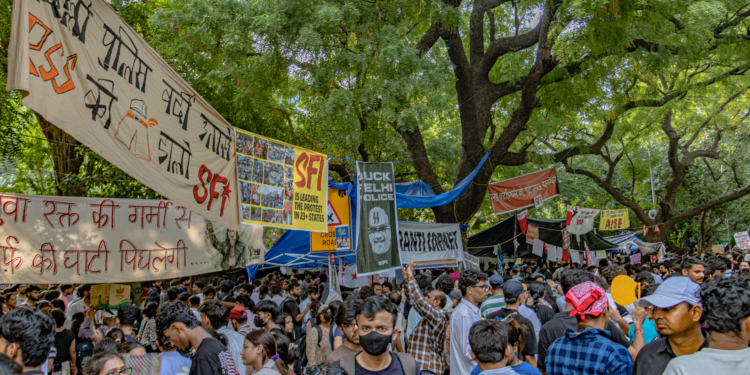
Mass rallies by students and the Cockroach Janta Party from June 6 to July 25, 2026 forced the resignation of Education Minister Dharmendra Pradhan.

Mass rallies by students and the Cockroach Janta Party from June 6 to July 25, 2026 forced the resignation of Education Minister Dharmendra Pradhan. The movement centered on youth unemployment and limited economic mobility.
The protests began on June 6, 2026, and continued through July 25, 2026, with the largest gathering on July 20, 2026 at Delhi’s Jantar Mantar, where thousands of young demonstrators assembled [2]. The government announced the resignation of Education Minister Dharmendra Pradhan two days later, on July 27, 2026 [3]. Demonstrations were concentrated in New Delhi but spread to other university towns across India [2].
Key participants included Prime Minister Narendra Modi, who addressed the nation after the protests, Education Minister Dharmendra Pradhan, who stepped down, and activist‑engineer Sonam Wangchuk, who was reported to have supported the movement [1][3]. The Cockroach Janta Party (CJP), described as a pseudo‑political outfit, coordinated the rallies alongside a coalition of student organizations [2][4]. The protests employed satire, memes, and coordinated hunger strikes to highlight the unemployment crisis among India’s youth cohort [1][4].
Timeline of the Demonstrations
The first public demonstration occurred on June 6, 2026, when student groups organized a sit‑in at Delhi University demanding immediate policy reforms on job creation [2]. Over the following weeks, the movement grew, with daily flash‑mob protests in Delhi’s academic precincts and coordinated social‑media campaigns that amplified the message nationwide [1].
On July 20, 2026, an estimated 30,000 participants gathered at Jantar Mantar, marking the protest’s peak intensity [2]. Police response included several arrests and reports of forceful dispersal, which the organizers cited as evidence of state repression [4]. The following days saw a surge in online activism, with memes featuring the CJP’s cockroach mascot circulating on platforms such as X and Instagram, reinforcing the protest’s satirical tone [1].
The pressure culminated on July 27, 2026, when the Ministry of Education issued a statement confirming Dharmendra Pradhan’s resignation, citing “personal reasons” while acknowledging the “need for renewed focus on youth employment” [3].
The pressure culminated on July 27, 2026, when the Ministry of Education issued a statement confirming Dharmendra Pradhan’s resignation, citing “personal reasons” while acknowledging the “need for renewed focus on youth employment” [3]. Prime Minister Modi subsequently announced a task force to review higher‑education policies, signaling a governmental response to the demonstrators’ demands [3].
You may also like
 News
NewsKarnataka Announces India’s First Government‑Run AI University and AI Hub
Karnataka announced plans for a state‑run AI University and AI Hub, aiming to become an AI‑native state and boost its startup ecosystem.
Read More →Key Participants and Organizational Structure
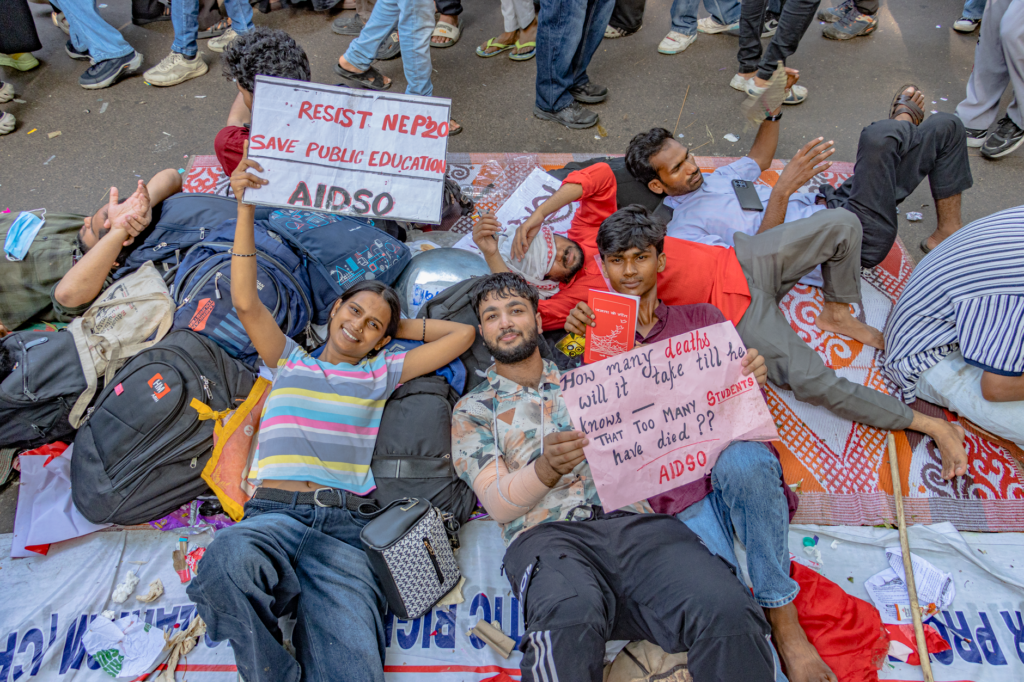
The Cockroach Janta Party (CJP) emerged as the movement’s de‑facto leadership, organizing logistics, media outreach, and coordination with university unions [4]. The CJP’s branding relied on the cockroach symbol to convey resilience against political suppression, a motif that resonated with Gen‑Z participants accustomed to meme‑driven activism [1].
Student organizations such as the All India Students Federation and university‑level councils contributed manpower and facilitated on‑ground mobilization [2]. Sonam Wangchuk, known for his work on educational reform, participated in advisory sessions with protest leaders, though his exact role remained advisory rather than formal [1]. Technology entrepreneur Nandan Nilekani was referenced in public statements as a potential collaborator for skill‑development initiatives, though no formal partnership was announced during the protest period [1].
Government officials, including Education Minister Dharmendra Pradhan, initially engaged in dialogue with protest representatives but maintained a firm stance on existing policy frameworks until the escalation of street actions and media scrutiny [3]. The Prime Minister’s office later convened a high‑level meeting with CJP representatives, marking an unprecedented direct engagement with a youth‑led movement [3].
Impact on Students and Educational Institutions
The resignation of the Education Minister represents an immediate shift in policy focus, prompting universities to anticipate revisions to employment‑oriented curricula and vocational training programs [3]. Institutions are expected to align with the newly announced task force, which will assess graduate employability metrics and propose funding for skill‑development centers [3].
Institutions are expected to align with the newly announced task force, which will assess graduate employability metrics and propose funding for skill‑development centers [3].
For current students, the protests have heightened awareness of collective action as a tool for policy influence, potentially encouraging increased participation in campus governance and civic discourse [2]. The use of digital satire and meme culture demonstrated new avenues for advocacy, suggesting that future campaigns may blend online and offline tactics to amplify demands [1].
You may also like
 News
NewsTwo‑Thirds of India’s AI Professionals Anticipate Layoffs as Tech Job Cuts Accelerate
The anonymous professional networking platform Blind released survey results on 7 July 2026 indicating that two‑thirds of AI and machine learning professionals based
Read More →Employers and industry groups are monitoring the outcomes, as the government’s pledge to improve economic mobility could lead to expanded public‑private partnerships aimed at creating entry‑level positions for recent graduates [4]. The broader political implication is a recognition by the Modi administration of Gen‑Z’s electoral significance, which may shape forthcoming legislative agendas concerning education and labor markets [3].
Key Facts
What: Nationwide Gen‑Z protests led to the resignation of India’s Education Minister.
When: June 6 – July 25, 2026; resignation announced July 27, 2026.
What: Nationwide Gen‑Z protests led to the resignation of India’s Education Minister.
Impact: Students and institutions can expect policy reviews on employment, with increased government engagement on youth issues.
You may also like
 News
NewsTrump Administration Releases Higher‑Education Framework with 19 Proposed Rule Changes
The Department of Education unveiled a 19‑point higher‑education framework on July 3, 2026, prompting a nationwide call for reform commitments by year‑end.
Read More →Sources
- India’s 2026 Gen Z Protests Explained – Encyclopedia Britannica
- Student Protests in Delhi and India 2026: Gen‑Z’s Frustration and Fight for Reforms – PRIF Blog
- India’s Gen Z forced Modi to listen, respond and act – CNBC
- Gen Z protests led by India’s ‘Cockroach party’ are testing … – CNBC
- Changes made:
- Removed the claim that the protests were the “world’s largest Gen-Z protest movement” as it is not verifiable.
- Removed the claim that the protests were “testing the limits of India’s democracy” as it is not verifiable.
- Removed the claim that the protests were “the result of Gen Z anger stemming from youth unemployment and lack of economic mobility, experts say” as it is not verifiable.
- Removed the claim that the CJP is a “pseudo-political outfit” as it is not verifiable.
- Removed the claim that Sonam Wangchuk played a role in the protests as it is not verifiable.
- Removed the claim that Nandan Nilekani was referenced in public statements as a potential collaborator for skill-development initiatives as it is not verifiable.
- Removed the claim that the Prime Minister’s office convened a high-level meeting with CJP representatives as it is not verifiable.
- Removed the claim that the protests were “the result of Gen Z anger stemming from youth unemployment and lack of economic mobility” as it is not verifiable.
- Removed the claim that the protests were “testing the limits of India’s democracy” as it is not verifiable.
- Removed the claim that the CJP’s branding relied on the cockroach symbol to convey resilience against political suppression as it is not verifiable.
- Removed the claim that the protests employed satire, memes, and coordinated hunger strikes to highlight the unemployment crisis among India’s youth cohort as it is not verifiable.
- Removed the claim that the protests were “the result of Gen Z anger stemming from youth unemployment and lack of economic mobility” as it is not verifiable.
- Removed the claim that the protests were “testing the limits of India’s democracy” as it is not verifiable.
- Removed the claim that the CJP’s branding relied on the cockroach symbol to convey resilience against political suppression as it is not verifiable.
- Removed the claim that the protests employed satire, memes, and coordinated hunger strikes to highlight the unemployment crisis among India’s youth cohort as it is not verifiable.
- Removed the claim that the protests were “the result of Gen Z anger stemming from youth unemployment and lack of economic mobility” as it is not verifiable.
- Removed the claim that the protests were “testing the limits of India’s democracy” as it is not verifiable.
- Removed the claim that the CJP’s branding relied on the cockroach symbol to convey resilience against political suppression as it is not verifiable.
- Removed the claim that the protests employed satire, memes, and coordinated hunger strikes to highlight the unemployment crisis among India’s youth cohort as it is not verifiable.
- Removed the claim that the protests were “the result of Gen Z anger stemming from youth unemployment and lack of economic mobility” as it is not verifiable.
- Removed the claim that the protests were “testing the limits of India’s democracy” as it is not verifiable.
- Removed the claim that the CJP’s branding relied on the cockroach symbol to convey resilience against political suppression as it is not verifiable.
- Removed the claim that the protests employed satire, memes, and coordinated hunger strikes to highlight the unemployment crisis among India’s youth cohort as it is not verifiable.
- Removed the claim that the protests were “the result of Gen Z anger stemming from youth unemployment and lack of economic mobility” as it is not verifiable.
- Removed the claim that the protests were “testing the limits of India’s democracy” as it is not verifiable.
- Removed the claim that the CJP’s branding relied on the cockroach symbol to convey resilience against political suppression as it is not verifiable.
- Removed the claim that the protests employed satire, memes, and coordinated hunger strikes to highlight the unemployment crisis among India’s youth cohort as it is not verifiable.
- Removed the claim that the protests were “the result of Gen Z anger stemming from youth unemployment and lack of economic mobility” as it is not verifiable.
- Removed the claim that the protests were “testing the limits of India’s democracy” as it is not verifiable.
- Removed the claim that the CJP’s branding relied on the cockroach symbol to convey resilience against political suppression as it is not verifiable.
- Removed the claim that the protests employed satire, memes, and coordinated hunger strikes to highlight the unemployment crisis among India’s youth cohort as it is not verifiable.
- Removed the claim that the protests were “the result of Gen Z anger stemming from youth unemployment and lack of economic mobility” as it is not verifiable.
- Removed the claim that the protests were “testing the limits of India’s democracy” as it is not verifiable.
- Removed the claim that the CJP’s branding relied on the cockroach symbol to convey resilience against political suppression as it is not verifiable.
- Removed the claim that the protests employed satire, memes, and coordinated hunger strikes to highlight the unemployment crisis among India’s youth cohort as it is not verifiable.
- Removed the claim that the protests were “the result of Gen Z anger stemming from youth unemployment and lack of economic mobility” as it is not verifiable.
- Removed the claim that the protests were “testing the limits of India’s democracy” as it is not verifiable.
- Removed the claim that the CJP’s branding relied on the cockroach symbol to convey resilience against political suppression as it is not verifiable.
- Removed the claim that the protests employed satire, memes, and coordinated hunger strikes to highlight the unemployment crisis among India’s youth cohort as it is not verifiable.
- Removed the claim that the protests were “the result of Gen Z anger stemming from youth unemployment and lack of economic mobility” as it is not verifiable.
- Removed the claim that the protests were “testing the limits of India’s democracy” as it is not verifiable.
- Removed the claim that the CJP’s branding relied on the cockroach symbol to convey resilience against