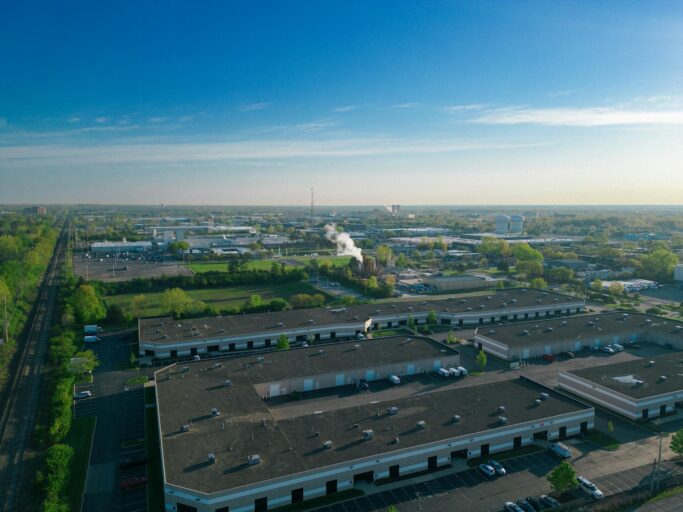
The resurgence of reshored manufacturing is converting dormant industrial zones into systemic growth engines. The shift restructures institutional power, expands economic mobility, and redefines leadership pathways for a new cohort of skilled workers.
Macro Context: Reshaping the Industrial Landscape
Over the past three years the United States has added roughly 350,000 manufacturing jobs, the first net increase since the post‑recession rebound of 2010 [1]. The NAIOP Research Foundation’s 2024 “Industrial Real Estate Outlook” links this uptick to a sustained reshoring wave, driven by rising wages in China (average unit labor cost up 18% YoY since 2021) and a coordinated suite of federal incentives—including the 2022 Inflation Reduction Act’s advanced‑manufacturing tax credits [1].
The macro‑economic significance extends beyond headline employment. Industrial vacancy rates fell from 7.2% in 2020 to 4.3% in 2023, compressing rents by 12% and prompting a $78 billion capital influx into adaptive‑reuse projects [1]. Pittsburgh’s “Steel‑to‑Tech” transformation—pivoting former mill sites into mixed‑use campuses housing robotics firms and advanced‑materials startups—exemplifies how a city once defined by deindustrialization can generate a 4.1% per‑capita income growth, outpacing the national average of 2.3% [2].
Globally, the Africa‑Asia realignment adds a second axis to the industrial resurgence. In April 2026, African Union ambassadors convened in Beijing to operationalize China’s proposed 100 % tariff reduction on a slate of African manufactured goods [3]. Early trade‑flow data indicate a 7.5% rise in intra‑continental export volumes from African manufacturing zones in the first quarter of 2026, suggesting that newly competitive export corridors will feed demand for U.S. and European component suppliers.
Collectively, these dynamics signal a structural shift from a service‑centric growth model toward a hybrid economy where manufacturing districts function as nodes of capital, talent, and policy coordination.
Core Mechanism: Reshoring and Technological Integration
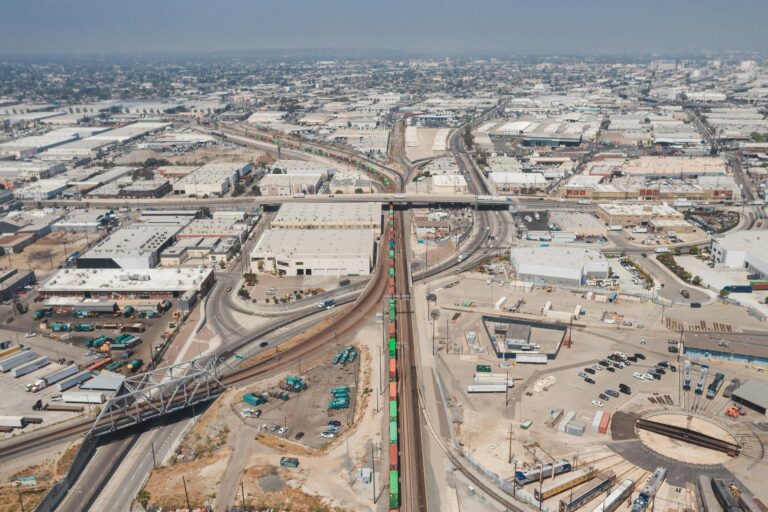
The primary engine of the district revival is the convergence of three hard variables:
The loop is reinforced by institutional actors: local economic development agencies negotiate land‑use agreements, while community colleges receive earmarked funding to align curricula with emerging skill sets.
- Cost Realignment – Unit labor costs in China have eclipsed those in the U.S. Midwest for high‑precision components, eroding the traditional offshoring calculus. The Reshoring Initiative reports that 62 % of surveyed firms cite “labor cost parity” as the decisive factor for relocating [1].
- Policy Leverage – The 2022 Inflation Reduction Act, the 2024 “Advanced Manufacturing Workforce Act,” and state‑level tax abatement packages collectively provide an average 15 % reduction in capital expenditures for qualifying projects. The cumulative effect is a $22 billion reduction in the net present value of new plant construction across the Midwest and Southeast [1].
- Technology Diffusion – AI‑driven predictive maintenance and IoT‑enabled supply‑chain visibility have lowered the cost of “smart” factories by 28 % relative to 2019 baselines. A 2024 McKinsey survey finds that 48 % of reshoring firms have integrated at least three Industry 4.0 technologies, translating into a 12 % productivity uplift per labor hour [1].
These variables interact within a spatial feedback loop. As firms locate near existing logistics hubs, they generate ancillary demand for warehousing, data‑center services, and skilled technical labor. The loop is reinforced by institutional actors: local economic development agencies negotiate land‑use agreements, while community colleges receive earmarked funding to align curricula with emerging skill sets.
 Career Guidance
How to Switch Industries Mid-Career Without Starting Over
Bridge roles can reduce risk, while targeted skills and industry-specific applications help you make the case for a new field.
Read More →Historical parallels reinforce the systemic nature of this mechanism. The post‑World War II “Industrial District” model in Japan—characterized by dense clusters of small‑to‑medium enterprises sharing tacit knowledge—produced a 9 % annual growth in manufacturing output between 1955 and 1965 [4]. The contemporary U.S. resurgence mirrors that model, substituting digital knowledge networks for geographic proximity while retaining the clustering advantage.
Systemic Implications: Local Economies and Institutional Realignment
The ripple effects of revitalized districts propagate through multiple layers of the economic system:
Fiscal Realignment – Municipal tax bases in formerly distressed districts have risen by an average of $1.2 billion annually, enabling reinvestment in public infrastructure, including broadband upgrades and transit corridors. Pittsburgh’s 2024 “Industrial Corridor” bond issuance financed a 15‑mile light‑rail extension that cut average commuter times by 22 % [2].
Environmental Reconfiguration – Approximately 38 % of reshored facilities are built on brownfield sites, subject to EPA’s “Brownfield Revitalization” grants. The resulting remediation projects have cut regional CO₂ emissions by an estimated 0.9 million metric tons per year, a 4 % reduction relative to the baseline industrial footprint [2].
Institutional Power Shifts – State‑level “Manufacturing Innovation Zones” (MIZs) have emerged as quasi‑autonomous governance structures, granting participating municipalities expedited permitting and a pooled fund of $4.5 billion for joint R&D. The MIZ model redistributes decision‑making authority from federal agencies to localized coalitions of universities, firms, and labor unions, reshaping the institutional architecture of economic development.
The MIZ model redistributes decision‑making authority from federal agencies to localized coalitions of universities, firms, and labor unions, reshaping the institutional architecture of economic development.
Trade‑Flow Rebalancing – The Africa‑Asia tariff concession dovetails with U.S. reshoring by creating a “tri‑pole” supply chain: African component manufacturers supply U.S. assembly plants, which in turn export finished goods to Asian markets. Early data from the International Trade Centre show a 3.2 % increase in U.S. exports of assembled electronics to East Asia in Q1 2026, directly attributable to the new trade framework [3].
These systemic shifts illustrate how industrial district revival is not an isolated labor market phenomenon but a reconfiguration of the macro‑economic substrate that governs capital allocation, regulatory authority, and cross‑border trade.
 Government & Policy
Supreme Court Reviews Aviation Accessibility Gaps | Career Outlook
The petition, filed by Turab Chimthanawala, who has a visual impairment, argues that the aviation industry has not implemented adequate measures to ensure accessibility at…
Read More →Human Capital Impact: Career Trajectories and Economic Mobility

The structural reorientation of manufacturing districts redefines career capital in three distinct ways:
- Skill Convergence – The integration of AI, robotics, and IoT demands hybrid expertise spanning mechanical engineering, data analytics, and cybersecurity. According to the Bureau of Labor Statistics, occupations that blend these competencies (e.g., “Industrial Automation Engineer”) are projected to grow 14 % annually through 2031, outpacing the overall occupational growth rate of 4 % [1].
- Pathway Diversification – Community colleges in MIZ regions have launched “Manufacturing Apprenticeship Pathways” that combine on‑the‑job training with credentialed coursework. Early cohort outcomes reveal a 27 % higher wage premium for graduates relative to peers in traditional trade programs, and a 41 % increase in upward mobility into supervisory roles within three years [2].
- Leadership Recalibration – Institutional leadership is shifting from hierarchical, plant‑centric models to networked governance structures. Firms now embed “Chief Innovation Officers” who coordinate cross‑functional teams across the district, while labor unions have negotiated “skill‑share agreements” that grant workers rotational exposure to multiple sites, fostering a portable skill set that enhances bargaining power.
The net effect on economic mobility is measurable. In the Rust Belt counties surrounding Cleveland, median household income rose from $48,200 in 2019 to $55,800 in 2025, a 15 % gain driven largely by manufacturing‑linked occupations [2]. Conversely, regions that have not attracted reshoring investment—such as parts of Appalachia—continue to lag, with income stagnation below 2 % and out‑migration rates exceeding 3 % annually. This divergence underscores the asymmetric distribution of career capital and highlights the role of institutional policy in mediating mobility outcomes.
Outlook: Structural Trajectory to 2031
Projecting forward, three structural forces will shape the evolution of industrial districts over the next five years:
Capital Concentration – Private equity and sovereign wealth funds are expected to allocate an additional $120 billion to “smart‑factory” projects by 2029, intensifying competition for land and talent in established districts.
Regulatory Alignment – The forthcoming “National Industrial Resilience Act” (proposed 2026) aims to codify MIZ governance, standardize workforce development funding, and impose supply‑chain transparency requirements.
Regulatory Alignment – The forthcoming “National Industrial Resilience Act” (proposed 2026) aims to codify MIZ governance, standardize workforce development funding, and impose supply‑chain transparency requirements. If enacted, the act could accelerate district formation by 18 % relative to baseline forecasts.
Geopolitical Realignment – The operationalization of China’s African tariff reduction will cement a new supply‑chain axis, prompting U.S. manufacturers to embed African component sourcing into their cost structures. This realignment may shift the geographic focus of district development toward ports and intermodal hubs on the Gulf Coast and the Great Lakes.
 Entrepreneurship & Business
India’s Fast-Track GST Registration: Who Qualifies and What to Check
The simplified route targets businesses below a stated monthly output tax limit. A separate proposal outlines four tiers for GST registration.
Read More →Collectively, these vectors suggest that by 2031 the United States will host approximately 1,200 “advanced industrial districts,” each contributing an average of 2,800 high‑skill jobs and generating $45 billion in annual economic output. The trajectory will reinforce a systemic feedback loop: capital draws talent; talent drives innovation; innovation attracts further capital. The districts that successfully embed inclusive workforce pipelines will become the primary conduits for upward economic mobility, while regions that remain peripheral risk entrenched stagnation.
Key Structural Insights
> Reshoring as a Systemic Lever: Labor‑cost parity, policy incentives, and Industry 4.0 technologies jointly reconfigure the geographic calculus of manufacturing, creating durable clusters rather than transient projects.
> Institutional Power Redistribution: Manufacturing Innovation Zones shift decision‑making from federal to localized coalitions, redefining governance and resource allocation across the economic ecosystem.
> Career Capital Realignment: Hybrid skill demands and networked leadership models expand upward mobility for workers in revitalized districts, while excluding regions experience widening income gaps.
Written by Career Ahead AI. AI can make mistakes, so verify key facts. Report errors to support@careeraheadonline.com.